Upgrade & Secure Your Future with DevOps, SRE, DevSecOps, MLOps!
We spend hours scrolling social media and waste money on things we forget, but won’t spend 30 minutes a day earning certifications that can change our lives.
Master in DevOps, SRE, DevSecOps & MLOps by DevOps School!
Learn from Guru Rajesh Kumar and double your salary in just one year.
ntroduction
Attack Surface Management (ASM) tools are specialized platforms designed to help organizations identify, monitor, and mitigate potential vulnerabilities across their entire digital footprint. In simple terms, ASM solutions continuously map and assess every public-facing asset—including websites, cloud environments, APIs, and third-party integrations—to uncover hidden risks before attackers can exploit them. Unlike traditional vulnerability scanners that focus on internal systems, ASM provides an outside-in perspective, offering a real-world view of an organization’s attack surface.
In today’s rapidly evolving cyber landscape, where remote work, multi-cloud deployments, and third-party dependencies have become the norm, maintaining visibility across the attack surface is critical. ASM tools help organizations proactively detect shadow IT, exposed assets, misconfigurations, and compliance gaps. By providing actionable intelligence, these platforms enable security teams to prioritize remediation efforts effectively and reduce overall risk.
Real-world use cases:
- Discovering forgotten or unmonitored web applications and cloud instances.
- Continuous monitoring for new digital assets or shadow IT exposure.
- Identifying misconfigured servers, open ports, and weak SSL/TLS settings.
- Prioritizing high-risk external vulnerabilities for remediation.
- Monitoring third-party services and vendor-related exposure.
Evaluation criteria buyers should consider:
- Coverage of external and internal assets.
- Continuous monitoring and real-time alerting capabilities.
- Integration with SIEM, ticketing, and DevSecOps workflows.
- Accuracy and prioritization logic of discovered vulnerabilities.
- Automation and remediation guidance.
- Reporting and compliance support (GDPR, SOC 2, ISO 27001, HIPAA).
- Scalability to handle large enterprises and dynamic cloud environments.
- User interface and ease of onboarding.
- Threat intelligence integration and actionable recommendations.
Best for: Security teams, CISOs, IT administrators, DevSecOps professionals, and organizations with large or dynamic digital footprints. Particularly valuable for enterprises in finance, healthcare, technology, and regulated industries.
Not ideal for: Small organizations with minimal online presence or limited IT resources; simpler vulnerability scanners may suffice.
Key Trends in Attack Surface Management (ASM) Tools
AI-Powered Asset Discovery: Machine learning models automatically detect previously unknown assets and categorize risk levels.
- Continuous, Real-Time Monitoring: ASM platforms provide ongoing assessment rather than periodic scans, ensuring rapid detection of exposure.
- Cloud and Multi-Cloud Coverage: Tools now support dynamic cloud environments including AWS, Azure, and GCP with continuous assessment.
- Integration with DevSecOps: ASM is increasingly embedded into CI/CD pipelines, enabling early detection of exposed endpoints during development.
- Third-Party Risk Assessment: Monitoring vendor and partner environments to reduce supply chain attack exposure.
- Automated Remediation and Alerting: Integration with ticketing and patch management to accelerate response.
- Prioritization with Risk Scoring: Tools focus on exploitable vulnerabilities with high business impact, reducing alert fatigue.
- Compliance and Audit Reporting: Built-in templates for GDPR, SOC 2, ISO 27001, and other regulatory frameworks.
- Container and API Security: Emerging trend to monitor containerized environments and exposed APIs.
- Flexible Deployment and Subscription Models: Cloud, hybrid, and on-prem deployments with usage-based pricing for scaling with organizational needs.
How We Selected These Tools (Methodology)
- Evaluated market adoption and mindshare among security professionals.
- Assessed feature completeness, including external asset discovery, risk scoring, and API monitoring.
- Reviewed reliability and performance, ensuring minimal false positives and accurate alerting.
- Examined security posture, including encryption, access controls, and SOC 2/ISO compliance where known.
- Checked integration capabilities with SIEM, ticketing systems, DevSecOps pipelines, and threat intelligence sources.
- Analyzed customer fit across SMB, mid-market, and enterprise segments.
- Considered scalability for large and dynamic digital environments.
- Reviewed automation and remediation capabilities for efficiency in security operations.
- Verified support and community resources, including documentation and training.
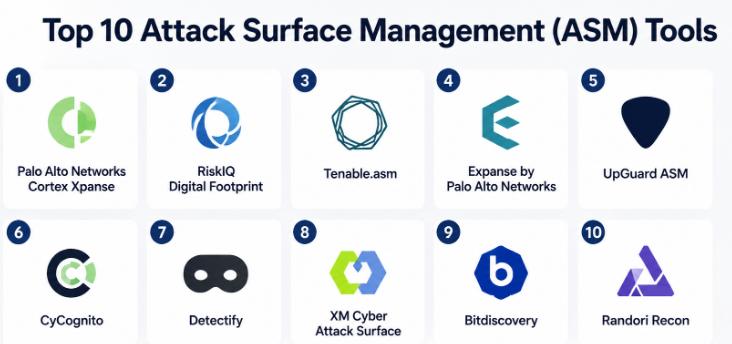
Top 10 Attack Surface Management (ASM) Tools
#1 — Palo Alto Networks Cortex Xpanse
Short description: A leading ASM platform that discovers, monitors, and maps external assets continuously, providing risk insights for enterprises and large organizations.
Key Features
- Continuous asset discovery and mapping
- Risk-based prioritization of vulnerabilities
- Monitoring for shadow IT and misconfigurations
- Integration with SIEM and ticketing systems
- Automated alerting for new exposures
- API scanning and container visibility
Pros
- Enterprise-grade coverage and reporting
- Strong integration with security operations workflows
Cons
- High cost for small teams
- Requires skilled personnel for advanced configuration
Platforms / Deployment
- Web / Windows / macOS / Linux
- Cloud / Hybrid
Security & Compliance
- MFA, encryption, RBAC
- SOC 2, ISO 27001
Integrations & Ecosystem
Supports SIEM, ticketing, and orchestration platforms:
- Splunk, ServiceNow, Jira
- REST APIs for automation
- Threat intelligence feeds
Support & Community
- Professional support and training programs
- Active user community and knowledge base
#2 — RiskIQ Digital Footprint
Short description: Provides visibility into external attack surfaces, digital assets, and brand exposure to identify potential threats.
Key Features
- Internet-wide asset discovery
- Domain and SSL/TLS monitoring
- External vulnerability identification
- Threat prioritization and scoring
- Integration with SOAR and SIEM platforms
Pros
- Comprehensive digital footprint visibility
- Prioritizes actionable risks
Cons
- Focused primarily on external assets
- Learning curve for non-security personnel
Platforms / Deployment
- Web / Windows / Linux
- Cloud
Security & Compliance
- Not publicly stated
Integrations & Ecosystem
- SIEM and SOAR integrations
- API access for automated workflows
- Threat intelligence enrichment
Support & Community
- Dedicated support tiers
- Community forums and resources
#3 — Tenable.asm
Short description: Cloud-native ASM solution that discovers and manages all externally facing assets, integrating risk intelligence for prioritization.
Key Features
- Continuous external asset discovery
- Risk scoring and prioritization
- Monitoring for shadow IT and cloud misconfigurations
- API and web application scanning
- Integration with vulnerability management tools
Pros
- Cloud-native and scalable
- Real-time attack surface mapping
Cons
- Requires expertise to optimize scans
- Limited offline/on-prem deployment
Platforms / Deployment
- Web / Windows / Linux
- Cloud
Security & Compliance
- MFA, encryption
- Not publicly stated for SOC 2/ISO
Integrations & Ecosystem
- Integrates with SIEM, CMDB, and ticketing
- REST API for automation
- Works with DevSecOps pipelines
Support & Community
- Extensive documentation
- Professional support available
#4 — Expanse by Palo Alto Networks
Short description: Advanced ASM tool providing continuous monitoring of global internet-facing assets to mitigate exposure and attack risk.
Key Features
- Dynamic asset discovery
- Continuous monitoring for exposures
- Risk-based prioritization
- API and domain scanning
- Automated alerts
Pros
- Enterprise-scale asset coverage
- Supports complex networks
Cons
- Expensive for smaller organizations
- Complex configuration for beginners
Platforms / Deployment
- Web / Windows / Linux
- Cloud
Security & Compliance
- MFA, RBAC, encryption
- SOC 2, ISO 27001
Integrations & Ecosystem
- SIEM, SOAR, ticketing integrations
- APIs for automation
- Threat intelligence integration
Support & Community
- Enterprise support tiers
- Documentation and training resources
#5 — UpGuard ASM
Short description: Provides external attack surface visibility, digital risk monitoring, and actionable insights to reduce cyber exposure.
Key Features
- Asset discovery and mapping
- Third-party risk monitoring
- Risk scoring and prioritization
- Compliance reporting
- Continuous alerting for new exposures
Pros
- Easy to deploy
- Third-party risk insights
Cons
- Limited API scanning capabilities
- Not as deep for large enterprise networks
Platforms / Deployment
- Web / Windows / Linux
- Cloud
Security & Compliance
- Not publicly stated
Integrations & Ecosystem
- SIEM integration
- API for automation
- Custom dashboards
Support & Community
- Online documentation
- Support via ticketing
#6 — CyCognito
Short description: ASM platform focusing on uncovering shadow IT, SaaS apps, and cloud exposures for organizations with complex environments.
Key Features
- Automated asset discovery
- SaaS and cloud monitoring
- Exposure prioritization
- API security checks
- Compliance reporting
Pros
- Strong SaaS and cloud focus
- Continuous monitoring
Cons
- May require tuning for large organizations
- Premium pricing
Platforms / Deployment
- Web / Linux / Windows
- Cloud
Security & Compliance
- Not publicly stated
Integrations & Ecosystem
- SIEM, ticketing, DevSecOps tools
- API access for automation
Support & Community
- Professional support available
- Knowledge base resources
#7 — Detectify
Short description: Web application-focused ASM tool that automatically discovers assets and tests for common web vulnerabilities.
Key Features
- Automated web asset discovery
- Continuous vulnerability scanning
- Security testing for OWASP Top 10
- Risk prioritization
- CI/CD integration
Pros
- Easy for developers to use
- Frequent automated testing
Cons
- Limited network exposure coverage
- Focused on web applications
Platforms / Deployment
- Web / Windows / Linux
- Cloud
Security & Compliance
- Not publicly stated
Integrations & Ecosystem
- Integrates with GitHub, GitLab, Jenkins
- REST API for automation
Support & Community
- Online tutorials
- Community support available
#8 — XM Cyber Attack Surface
Short description: ASM and continuous red teaming platform that simulates attacker behavior to detect vulnerabilities and misconfigurations.
Key Features
- Continuous external attack surface assessment
- Attack simulation and path analysis
- Automated alerting
- Risk scoring
- Compliance reporting
Pros
- Simulates attacker perspective
- Actionable remediation guidance
Cons
- Premium pricing
- Complex setup
Platforms / Deployment
- Web / Linux / Windows
- Cloud
Security & Compliance
- Not publicly stated
Integrations & Ecosystem
- SIEM, CMDB, API automation
- Integration with threat intelligence feeds
Support & Community
- Dedicated enterprise support
- Documentation available
#9 — Bitdiscovery
Short description: Provides global asset discovery and continuous ASM insights, helping organizations identify blind spots and misconfigurations.
Key Features
- Global digital asset mapping
- Continuous monitoring
- Risk prioritization
- API and cloud scanning
- Compliance reporting
Pros
- Strong asset visibility
- Easy-to-read dashboards
Cons
- Limited integrations for some SIEM tools
- Focused on external exposure
Platforms / Deployment
- Web / Linux / Windows
- Cloud
Security & Compliance
- Not publicly stated
Integrations & Ecosystem
- APIs for automation
- Integration with DevSecOps pipelines
Support & Community
- Documentation and ticketing support
- Community resources
#10 — Randori Recon
Short description: ASM platform emphasizing attacker simulation and proactive discovery to reduce risk exposure.
Key Features
- Continuous external scanning
- Attack simulation and risk scoring
- Prioritization of high-risk assets
- Alerts and dashboards
- Integration with security workflows
Pros
- Attacker-focused insights
- Helps prioritize remediation
Cons
- Expensive for SMBs
- Requires training to use fully
Platforms / Deployment
- Web / Linux / Windows
- Cloud
Security & Compliance
- Not publicly stated
Integrations & Ecosystem
- SIEM, ticketing, API automation
- Threat intelligence feeds
Support & Community
- Enterprise support tiers
- Documentation and tutorials
Comparison Table (Top 10)
| Tool Name | Best For | Platform(s) Supported | Deployment | Standout Feature | Public Rating |
|---|---|---|---|---|---|
| Cortex Xpanse | Large enterprises | Web / Win / macOS / Linux | Cloud / Hybrid | Continuous asset discovery | N/A |
| RiskIQ Digital Footprint | External asset visibility | Web / Win / Linux | Cloud | Digital footprint mapping | N/A |
| Tenable.asm | Multi-cloud monitoring | Web / Win / Linux | Cloud | Real-time attack surface mapping | N/A |
| Expanse | Enterprise network monitoring | Web / Win / Linux | Cloud | Global internet-facing asset coverage | N/A |
| UpGuard ASM | Third-party risk assessment | Web / Win / Linux | Cloud | Third-party risk insights | N/A |
| CyCognito | SaaS & cloud-heavy orgs | Web / Linux / Windows | Cloud | Shadow IT and SaaS monitoring | N/A |
| Detectify | Web application security | Web / Win / Linux | Cloud | Automated OWASP Top 10 testing | N/A |
| XM Cyber Attack Surface | Red teaming & attack simulation | Web / Linux / Windows | Cloud | Simulated attacker perspective | N/A |
| Bitdiscovery | Global asset discovery | Web / Linux / Windows | Cloud | Blind spot detection | N/A |
| Randori Recon | Proactive attack simulation | Web / Linux / Windows | Cloud | Attacker-focused ASM insights | N/A |
Evaluation & Scoring of Attack Surface Management Tools
| Tool Name | Core (25%) | Ease (15%) | Integrations (15%) | Security (10%) | Performance (10%) | Support (10%) | Value (15%) | Weighted Total (0–10) |
|---|---|---|---|---|---|---|---|---|
| Cortex Xpanse | 9 | 7 | 8 | 8 | 8 | 8 | 7 | 8.2 |
| RiskIQ Digital Footprint | 8 | 7 | 7 | 7 | 8 | 7 | 7 | 7.5 |
| Tenable.asm | 9 | 7 | 8 | 8 | 8 | 7 | 7 | 8.0 |
| Expanse | 8 | 6 | 7 | 7 | 7 | 7 | 7 | 7.3 |
| UpGuard ASM | 7 | 8 | 6 | 7 | 7 | 7 | 6 | 7.0 |
| CyCognito | 8 | 7 | 7 | 7 | 7 | 7 | 6 | 7.2 |
| Detectify | 7 | 8 | 6 | 6 | 7 | 7 | 6 | 6.9 |
| XM Cyber Attack Surface | 8 | 6 | 7 | 7 | 7 | 7 | 6 | 7.1 |
| Bitdiscovery | 7 | 7 | 6 | 6 | 7 | 7 | 6 | 6.8 |
| Randori Recon | 8 | 6 | 7 | 7 | 7 | 7 | 6 | 7.0 |
Interpretation: Scores are comparative and help organizations evaluate features, usability, integrations, security, performance, support, and cost relative to their operational needs. Weighted totals highlight the overall value proposition.
Which Attack Surface Management Tool Is Right for You?
Solo / Freelancer
- Detectify or Bitdiscovery for cost-effective monitoring of web applications and digital assets.
SMB
- UpGuard ASM or CyCognito for affordable external asset discovery and risk monitoring.
Mid-Market
- Tenable.asm or RiskIQ Digital Footprint for scalable asset mapping and risk prioritization.
Enterprise
- Cortex Xpanse, Expanse, or XM Cyber for full-scale external attack surface visibility and simulation.
Budget vs Premium
- Open-source or smaller ASM platforms reduce cost but may require more manual setup.
- Premium platforms provide automation, threat intelligence, and integration at a higher cost.
Feature Depth vs Ease of Use
- Enterprise tools offer deep scanning, reporting, and automation.
- Developer-focused tools like Detectify prioritize simplicity and web asset coverage.
Integrations & Scalability
- Tools with API support allow integration into DevSecOps pipelines, SIEM, and ticketing workflows.
- Cloud-native ASM platforms scale efficiently with dynamic environments.
Security & Compliance Needs
- Enterprises with strict compliance should consider Cortex Xpanse or Tenable.asm.
- Smaller organizations or web-focused teams can leverage Detectify or Bitdiscovery.
Frequently Asked Questions (FAQs)
1: What is an attack surface in cybersecurity?
An attack surface refers to all the points where an attacker could potentially interact with an organization’s digital environment, including websites, APIs, cloud services, and network endpoints.
2: How often should ASM tools scan my environment?
Continuous monitoring is ideal; at minimum, critical assets should be scanned weekly with automated alerts for new exposures.
3: Can ASM tools detect shadow IT?
Yes, most ASM platforms identify unmanaged cloud services, forgotten web apps, and other shadow IT assets.
4: Are ASM tools suitable for small businesses?
Yes, but simpler or developer-focused platforms may be more cost-effective than enterprise-grade solutions.
5: How do ASM tools integrate with existing security workflows?
Premium ASM solutions support APIs, SIEM, SOAR, and ticketing systems for automated alerts and remediation workflows.
6: Can ASM tools help with compliance?
Many ASM platforms provide reports and dashboards aligned with GDPR, SOC 2, ISO 27001, and HIPAA requirements.
7: Do these tools reduce false positives?
Modern ASM tools incorporate risk scoring and threat intelligence to prioritize real risks, reducing false positives.
8: How do I prioritize vulnerabilities and exposures?
Tools assign risk scores based on exploitability, business impact, and exposure context to guide remediation.
9: Can ASM tools monitor third-party risks?
Yes, many platforms track vendors, partner environments, and SaaS services for potential vulnerabilities.
10: Are ASM tools suitable for DevSecOps pipelines?
Yes, continuous scanning and APIs allow integration into CI/CD workflows, enabling early detection of exposures.
Conclusion
Attack Surface Management tools are essential for organizations seeking proactive cybersecurity and external threat visibility. The right ASM platform depends on the organization’s size, digital footprint, regulatory requirements, and budget. Smaller teams may benefit from developer-focused or cost-effective tools, while large enterprises require comprehensive, automated solutions with advanced integration capabilities. A practical approach is to shortlist 2–3 tools, run pilot scans, and evaluate how each aligns with operational workflows, integrations, and compliance requirements. By continuously monitoring and remediating exposures, organizations can significantly reduce their risk of cyber attacks.
