Upgrade & Secure Your Future with DevOps, SRE, DevSecOps, MLOps!
We spend hours scrolling social media and waste money on things we forget, but won’t spend 30 minutes a day earning certifications that can change our lives.
Master in DevOps, SRE, DevSecOps & MLOps by DevOps School!
Learn from Guru Rajesh Kumar and double your salary in just one year.
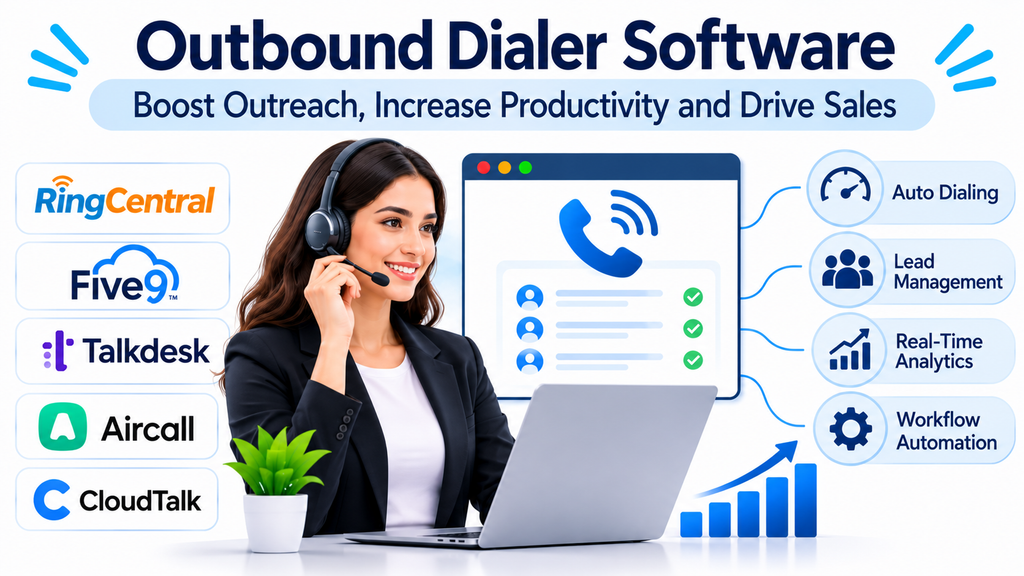
Automating Sales Communication with Outbound Dialer Technology
Outbound calling remains an important part of sales development, lead generation, customer engagement, appointment scheduling, and business growth. Organizations use telephone communication to reach prospective customers, follow up on inquiries, conduct surveys, and maintain relationships with existing clients.
However, manually dialing telephone numbers and managing large contact lists can consume valuable employee time. Sales representatives may spend more time navigating busy signals, unanswered calls, and administrative tasks than actually speaking with potential customers.
Outbound dialer software helps address these challenges by automating parts of the calling process. It allows organizations to organize contact lists, initiate calls, distribute conversations among available agents, and monitor campaign performance.
Modern solutions also incorporate analytics, CRM integrations, and AI-powered capabilities to help businesses improve calling efficiency and manage customer interactions more systematically.
What Is Outbound Dialer Software?
Outbound dialer software is a communication solution that automates or simplifies the process of making outgoing telephone calls.
It is commonly used by sales teams, telemarketing departments, customer engagement organizations, financial service providers, and appointment-setting businesses.
Depending on the platform, capabilities may include:
- Automated outbound calling.
- Predictive and progressive dialing.
- Preview dialing.
- Power dialing.
- Contact list management.
- Campaign scheduling.
- Call disposition tracking.
- CRM integration.
- Call recording and monitoring.
- Agent performance reporting.
- Call analytics and dashboards.
- Compliance and calling restrictions.
Instead of requiring employees to manually dial every number, the software manages selected calling activities according to configured campaign rules.
The appropriate system depends on call volume, team size, sales processes, regulatory requirements, and the level of automation required.
Leading Outbound Dialer Software Platforms to Evaluate
1. Five9
Five9 provides cloud contact center technology with outbound dialing capabilities designed for sales and customer engagement operations.
Its platform supports outbound campaigns, dialing workflows, agent management, reporting, and integration with customer service environments.
Organizations can use it to coordinate large-scale calling activities and monitor campaign performance.
It is relevant to businesses that manage substantial outbound call volumes and require structured dialing operations.
Important evaluation areas include predictive dialing, campaign management, CRM integrations, compliance controls, and licensing requirements.
2. NICE CXone
NICE CXone provides contact center technology that supports outbound engagement and workforce management.
Its capabilities can help organizations coordinate calling campaigns, manage agent activities, and evaluate communication performance.
Businesses can use its broader contact center environment to connect outbound calling with customer interaction management and analytics.
It is particularly relevant to larger organizations that require advanced campaign oversight and operational reporting.
Organizations should evaluate dialing modes, data integrations, campaign controls, and the availability of required features within their selected subscription.
3. Genesys Cloud CX
Genesys Cloud CX offers cloud-based contact center capabilities that support outbound customer engagement.
Its platform can help organizations coordinate calling campaigns, manage agent workflows, and connect customer interactions with broader communication operations.
It is relevant to businesses that want outbound calling as part of a larger customer experience environment.
Potential evaluation areas include campaign management, routing, analytics, integrations, and administrative controls.
4. Talkdesk
Talkdesk provides cloud contact center solutions with capabilities supporting outbound customer communication.
Its environment can help businesses organize calling workflows, manage agents, and connect customer conversations with other service operations.
Organizations can evaluate its outbound engagement features alongside its automation and analytics capabilities.
It is particularly relevant to businesses that want cloud-based customer communication with configurable workflows.
Buyers should examine dialing options, campaign requirements, integration availability, and pricing.
5. CloudTalk
CloudTalk provides cloud-based business calling solutions designed for sales and customer support teams.
Its capabilities include outbound calling, dialing workflows, contact management, call monitoring, and CRM integrations.
Sales teams can use it to organize contact lists and manage calling activities from a centralized environment.
It is relevant to growing businesses that need structured outbound communication without maintaining complex traditional telephone infrastructure.
Organizations should evaluate international calling coverage, supported dialing modes, integrations, and usage costs.
6. Aircall
Aircall provides cloud-based business telephony with capabilities supporting sales and customer service teams.
Its platform offers calling workflows, integrations, call management, and team collaboration features.
Sales representatives can use connected business applications to manage customer conversations and maintain relevant interaction information.
It is particularly useful to organizations that want outbound calling connected with their CRM and sales processes.
Before selecting it, businesses should review available dialing functionality, calling coverage, integrations, and plan limitations.
7. Dialpad
Dialpad combines business calling with AI-assisted communication capabilities.
Its platform can support outbound business communication, call transcription, conversation summaries, and communication analytics, depending on the selected product.
These capabilities can help sales teams review conversations and identify opportunities to improve customer engagement.
Organizations should examine its outbound calling features, AI functionality, language support, privacy controls, and integrations.
8. JustCall
JustCall provides cloud-based business calling and communication solutions designed for sales and support teams.
Its capabilities include outbound calling, dialing automation, call recording, analytics, and CRM integrations.
Sales teams can use it to manage customer outreach and organize communication activities through connected business workflows.
It is particularly relevant to growing organizations that want accessible calling tools for distributed teams.
Businesses should compare dialing modes, international number availability, integrations, and subscription requirements.
9. PhoneBurner
PhoneBurner focuses on power dialing and sales productivity.
Its platform is designed to help sales representatives work through contact lists and manage outbound communication more efficiently.
It can support calling workflows, contact management, follow-up activities, and sales performance tracking.
PhoneBurner is worth evaluating for sales teams that prioritize outbound prospecting and structured follow-up processes.
Organizations should examine its dialing workflow, CRM compatibility, calling requirements, and suitability for their sales methodology.
10. Orum
Orum provides AI-powered sales dialer technology designed to support outbound sales teams.
Its approach focuses on helping representatives connect with prospects and manage high-volume sales outreach.
Its capabilities may include automated dialing workflows, conversation management, and sales engagement functionality.
It is particularly relevant to organizations with dedicated sales development teams and structured prospecting operations.
Buyers should evaluate connection workflows, CRM integrations, compliance features, and the suitability of its automation for their sales processes.
Comparing Outbound Dialer Platforms
| Platform | Primary focus | Relevant business requirement |
|---|---|---|
| Five9 | Enterprise outbound calling | High-volume campaigns |
| NICE CXone | Contact center engagement | Large customer service operations |
| Genesys Cloud CX | Cloud customer engagement | Enterprise sales and service |
| Talkdesk | Cloud contact center | Automated communication workflows |
| CloudTalk | Sales and support calling | Growing sales teams |
| Aircall | Business telephony | CRM-connected sales operations |
| Dialpad | AI-assisted communication | Conversation analytics |
| JustCall | Sales and support calling | Distributed teams |
| PhoneBurner | Power dialing | Sales prospecting |
| Orum | AI-powered sales dialing | High-volume outbound sales |
These platforms differ in their dialing methods, automation capabilities, integrations, and deployment models. Organizations should compare them based on their actual calling requirements rather than relying exclusively on feature lists.
Different Types of Outbound Dialers
Understanding dialing methods is important when selecting outbound dialer software.
Preview dialer
A preview dialer displays relevant contact information to an agent before a call begins.
The representative can review customer details and decide when to initiate the call.
This approach is useful for personalized sales conversations, account management, and customer follow-ups where preparation is important.
Progressive dialer
A progressive dialer automatically initiates the next call when an agent becomes available.
It helps reduce manual dialing while maintaining a controlled calling workflow.
This method is useful for businesses that want to improve productivity without automatically placing multiple calls ahead of agent availability.
Power dialer
A power dialer automatically moves through a contact list and initiates calls according to configured rules.
It can help sales representatives manage larger prospect lists and reduce repetitive dialing tasks.
It is commonly used for structured outbound sales campaigns.
Predictive dialer
A predictive dialer uses algorithms to estimate agent availability and call connection patterns.
It can initiate multiple calls based on predicted availability, helping larger teams manage high-volume campaigns.
However, predictive dialing requires careful configuration to avoid excessive abandoned calls and other compliance problems.
Progressive and predictive hybrid workflows
Some systems combine features from different dialing approaches.
These configurations can help businesses balance calling efficiency with agent availability and customer experience.
The right approach depends on campaign size, call complexity, agent capacity, and applicable regulations.
Essential Features to Consider
Automated dialing
Automated dialing reduces the need for agents to manually enter telephone numbers.
The software can initiate calls according to configured campaign settings, allowing representatives to focus more on customer conversations.
Organizations should compare the available dialing modes and determine which is appropriate for their operations.
Contact list management
Outbound campaigns depend on accurate and organized contact information.
A useful dialer should help businesses import, organize, segment, and manage contact lists.
It should also support duplicate management, contact updates, and appropriate exclusion lists.
CRM integration
CRM integration connects calling activity with customer records and sales pipelines.
Agents may be able to access contact information, previous interactions, and relevant customer details before or during a call.
Call outcomes can also be recorded against the corresponding customer record.
Call disposition tracking
Call disposition allows agents to record the result of an outbound interaction.
Common outcomes include:
- Connected.
- No answer.
- Busy.
- Voicemail.
- Follow-up required.
- Interested prospect.
- Not interested.
- Appointment scheduled.
These classifications help businesses understand campaign results and organize subsequent actions.
Call recording
Call recording can support sales coaching, quality assurance, training, and dispute resolution.
Managers can review conversations to understand how representatives communicate with prospects and customers.
Organizations must establish appropriate recording policies, including consent, retention, and access controls.
Campaign scheduling
Campaign scheduling allows businesses to organize calling activities around specific business requirements.
Features may include campaign start times, agent assignments, contact segmentation, and calling windows.
Scheduling should account for local time zones and applicable calling restrictions.
Performance analytics
Analytics help managers evaluate campaign effectiveness.
Common metrics include:
- Calls attempted.
- Calls connected.
- Connection rate.
- Average talk time.
- Contact rate.
- Conversion rate.
- Appointments scheduled.
- Follow-up completion.
- Agent productivity.
Businesses should use these metrics to understand the quality of customer engagement rather than measuring success only through the number of calls placed.
Benefits of Outbound Dialer Software
Reduced manual dialing: Automation reduces repetitive number entry and helps agents focus on conversations.
Improved sales productivity: Structured calling workflows can help representatives manage more prospects efficiently.
Better campaign organization: Contact segmentation and scheduling make it easier to coordinate outreach activities.
Improved customer records: CRM integrations help maintain more complete communication histories.
Performance visibility: Reporting provides information about agent activity and campaign outcomes.
Consistent follow-ups: Disposition tracking and scheduled activities help sales teams manage future conversations.
Scalable calling operations: Cloud-based solutions can support changing team sizes and communication requirements.
Actual productivity improvements depend on campaign quality, contact accuracy, agent training, and the suitability of the selected dialing method.
Common Challenges in Outbound Calling
Low connection rates
Many outbound calls may go unanswered or reach unavailable numbers.
Organizations should maintain accurate contact records, segment prospects, and review calling strategies.
Poor contact data quality
Incorrect or outdated telephone numbers can waste agent time and reduce campaign effectiveness.
Businesses should regularly update contact databases and maintain appropriate data quality procedures.
Unproductive calling workflows
An unsuitable dialing method can create unnecessary delays or place too much pressure on agents.
Organizations should select dialing modes based on campaign complexity and customer expectations.
Customer frustration
Excessive calling frequency and irrelevant communication can damage customer relationships.
Businesses should establish reasonable contact limits, honor opt-out requests, and ensure outreach is relevant.
Agent performance management
High-volume calling can create pressure on sales representatives.
Managers should balance productivity expectations with conversation quality, training, and realistic performance goals.
Compliance and Security Considerations
Outbound calling is subject to privacy, consumer protection, and telemarketing regulations that vary by country and region.
Organizations should evaluate the following:
- Consent and lawful contact requirements.
- Do-not-call list management.
- Calling-hour restrictions.
- Caller identification requirements.
- Automated dialing restrictions.
- Abandoned-call controls.
- Call recording consent.
- Customer opt-out management.
- Data protection and retention.
- Secure access to contact records.
Businesses operating internationally should review the regulations applicable to each destination.
For example, Indian businesses should consider applicable TRAI requirements and relevant commercial communication rules when conducting regulated promotional calling.
Compliance should be built into campaign configuration and employee procedures rather than treated as an additional step after deployment.
How to Choose the Right Outbound Dialer Software
The selection process should begin with an assessment of the organization’s sales and communication workflows.
A small sales team may need a power dialer with CRM integration and basic reporting. A large telemarketing operation may require predictive dialing, campaign management, advanced analytics, and centralized compliance controls.
Before making a decision, evaluate:
- Number of agents and expected call volume.
- Required dialing methods.
- CRM and sales application integrations.
- Contact list management capabilities.
- Campaign scheduling and segmentation.
- Call recording and monitoring.
- Analytics and reporting.
- Compliance and opt-out management.
- International calling availability.
- Complete licensing and usage costs.
A pilot campaign can help determine whether the platform improves agent productivity without compromising customer experience.
Frequently Asked Questions
What is outbound dialer software used for?
It automates or simplifies outgoing telephone calls. Businesses use it for sales prospecting, customer follow-ups, appointment scheduling, surveys, and telemarketing.
What is the difference between a predictive dialer and a power dialer?
A predictive dialer estimates agent availability and can initiate multiple calls in advance. A power dialer generally moves through a contact list and places calls according to agent and campaign availability.
Is outbound dialer software suitable for small businesses?
Yes. Smaller organizations can use cloud-based dialers to organize prospect lists, manage follow-ups, and reduce manual calling activities.
Can outbound dialers integrate with CRM systems?
Many platforms support CRM integrations that connect call records, contact details, and sales activities. The specific integrations vary by provider.
Does outbound dialer software support remote sales teams?
Many cloud-based solutions provide desktop applications and web-based interfaces that allow distributed sales representatives to manage calling campaigns remotely.
How can businesses measure outbound calling performance?
Organizations can track connection rates, conversion rates, appointments scheduled, calls completed, follow-up activities, and agent productivity.
Improving Sales Outreach Through Intelligent Calling Technology
Outbound dialer software has become an important tool for organizations that depend on telephone-based sales and customer engagement.
Five9, NICE CXone, Genesys Cloud CX, and Talkdesk offer broader contact center capabilities, while CloudTalk, Aircall, Dialpad, JustCall, PhoneBurner, and Orum address different business calling and sales productivity requirements.
The right solution depends on team size, calling volume, sales processes, CRM infrastructure, and compliance obligations.
Businesses should compare dialing methods, test integrations, evaluate reporting capabilities, and review total operating costs before selecting a platform.
Most importantly, automation should support meaningful customer communication rather than simply increase the number of calls placed.
A well-configured outbound dialer can help sales representatives spend less time on repetitive tasks, maintain better customer records, and build more organized and productive outreach operations.
