Upgrade & Secure Your Future with DevOps, SRE, DevSecOps, MLOps!
We spend hours scrolling social media and waste money on things we forget, but won’t spend 30 minutes a day earning certifications that can change our lives.
Master in DevOps, SRE, DevSecOps & MLOps by DevOps School!
Learn from Guru Rajesh Kumar and double your salary in just one year.
Introduction
GRC (Governance, Risk & Compliance) Identity Verification (IDV) Tools are specialized software solutions designed to verify the identities of users, customers, or employees efficiently and securely. In plain terms, these platforms ensure that individuals are who they claim to be, reducing risks associated with identity fraud, unauthorized access, and regulatory non-compliance.
In +, organizations face increasingly stringent regulations like AML, KYC, GDPR, and other regional compliance requirements. With the rise of digital services, e-commerce, and remote workforce operations, IDV tools have become critical for mitigating identity-related risks while ensuring seamless onboarding and customer experience.
Real-world use cases:
- Verifying new customer identities in banking, fintech, or insurance.
- Ensuring regulatory compliance for Know Your Customer (KYC) processes.
- Authenticating users for online platforms, marketplaces, and SaaS applications.
- Detecting fraudulent identities and preventing account takeover.
- Validating employee or contractor identities for remote access to systems.
Evaluation criteria buyers should consider:
- Accuracy of document verification and identity matching
- AI and machine learning-driven anomaly detection
- Multi-channel support (web, mobile, remote verification)
- Integration with onboarding, CRM, and GRC platforms
- Real-time verification and response
- Regulatory compliance support (AML, KYC, GDPR)
- Fraud detection capabilities
- User experience and ease of use
- Scalability for enterprise operations
- Reporting and audit trail capabilities
Best for: Financial institutions, fintech companies, insurance providers, large enterprises, and digital-first businesses requiring identity verification.
Not ideal for: Small businesses with low-volume onboarding needs, internal-only verification use cases, or organizations where manual identity checks are sufficient.
Key Trends in Identity Verification Tools
- AI-Driven Verification: Automated detection of fake documents and synthetic identities using machine learning.
- Biometric Authentication: Facial recognition, fingerprint, and voice verification to enhance security.
- Multi-Channel Verification: Real-time identity checks across mobile apps, web portals, and in-person workflows.
- Regulatory Compliance Automation: Built-in support for global KYC, AML, and privacy regulations.
- Continuous Identity Monitoring: Ongoing verification to detect account compromise or identity drift.
- Integration with GRC and CRM Platforms: Seamless workflow and risk management.
- Fraud Analytics: Pattern detection and anomaly scoring to identify suspicious accounts.
- Cloud-Native Deployment: Scalable, flexible verification services for global operations.
- User Experience Optimization: Balancing security and frictionless onboarding.
- Adaptive Risk-Based Verification: Applying variable verification steps depending on risk scoring.
How We Selected These Tools (Methodology)
- Reviewed market adoption and mindshare among regulated industries and digital-first organizations.
- Evaluated feature completeness, including document verification, biometrics, and fraud detection.
- Assessed accuracy and performance in detecting fraudulent identities.
- Examined security posture with encryption, access controls, and audit trails.
- Analyzed integration ecosystem with GRC, CRM, onboarding, and HR systems.
- Considered customer fit across segments including SMB, mid-market, and enterprise.
- Checked support for regulatory compliance globally.
- Reviewed real-world deployment scenarios and user experience feedback.
- Evaluated scalability for high-volume onboarding and identity verification.
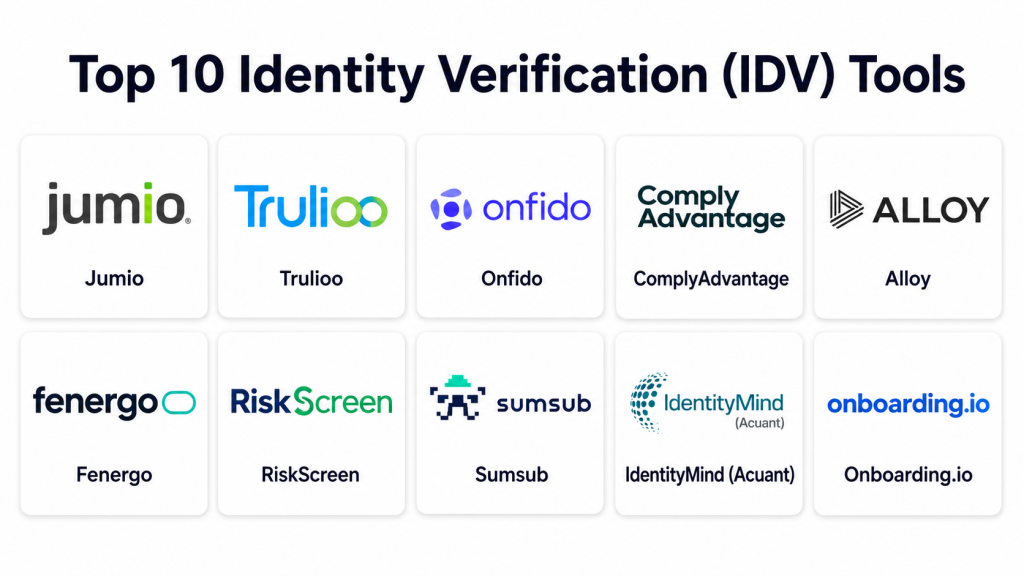
Top 10 Identity Verification (IDV) Tools
#1 — Jumio
Short description: Jumio offers AI-powered identity verification for businesses, combining document verification, biometric facial recognition, and liveness checks to prevent identity fraud. It is designed for financial institutions, online marketplaces, and digital service providers.
Key Features
- ID document verification (passport, driver’s license, ID cards)
- Biometric facial recognition and liveness detection
- AI-based anomaly detection and fraud scoring
- Real-time verification with mobile and web support
- Compliance automation for KYC and AML regulations
- Risk scoring and reporting dashboards
Pros
- High accuracy in detecting fraudulent identities
- Scalable for global operations
Cons
- Premium pricing may be high for small businesses
- Implementation requires technical expertise
Platforms / Deployment
- Web / iOS / Android
- Cloud
Security & Compliance
- MFA, encryption, RBAC
- SOC 2, ISO 27001, GDPR
Integrations & Ecosystem
- CRM platforms
- Onboarding and KYC workflow systems
- API for automated verification
Support & Community
- 24/7 support
- Extensive documentation and onboarding guides
#2 — Trulioo
Short description: Trulioo provides global identity verification services, supporting over 5 billion identities worldwide. It is designed for banks, fintech companies, and e-commerce platforms requiring cross-border verification.
Key Features
- Global ID verification
- Biometric and document verification
- AML/KYC compliance automation
- Risk scoring and fraud detection
- API-driven integrations for automated workflows
- Multi-channel support (web, mobile)
Pros
- Comprehensive global coverage
- Strong compliance support
Cons
- Complexity in setup for smaller organizations
- Limited offline verification options
Platforms / Deployment
- Web / Cloud / API
- Cloud-native
Security & Compliance
- Encryption, MFA
- GDPR, SOC 2
Integrations & Ecosystem
- CRM and onboarding systems
- ERP and financial platforms
- API support
Support & Community
- Professional support
- Documentation and tutorials
#3 — Onfido
Short description: Onfido offers AI-driven ID verification, combining document scanning, facial biometrics, and fraud detection to validate customer identities in real time for digital onboarding.
Key Features
- Document verification (passport, ID cards)
- Facial biometrics and liveness detection
- AI-powered fraud detection
- Real-time mobile and web verification
- Risk scoring dashboards
- Compliance reporting (KYC/AML)
Pros
- Fast verification process
- Easy integration with mobile and web apps
Cons
- Subscription costs may be high for SMBs
- Limited offline support
Platforms / Deployment
- Web / iOS / Android
- Cloud
Security & Compliance
- MFA, encryption, RBAC
- SOC 2, ISO 27001, GDPR
Integrations & Ecosystem
- CRM and onboarding platforms
- API for automated verification
- Workflow automation tools
Support & Community
- Professional support tiers
- Online documentation
#4 — ComplyAdvantage
Short description: ComplyAdvantage focuses on AML and KYC compliance with real-time identity verification and transaction monitoring, supporting financial institutions and fintech platforms.
Key Features
- AML screening and monitoring
- Global identity verification
- Real-time fraud alerts
- Risk scoring and reporting
- API integrations for automated workflows
- Compliance dashboards
Pros
- Strong AML/KYC compliance support
- Real-time risk alerts
Cons
- Primarily suited for financial services
- Learning curve for configuration
Platforms / Deployment
- Web / Cloud
- Cloud-native
Security & Compliance
- Encryption, MFA
- SOC 2, GDPR
Integrations & Ecosystem
- Banking systems
- CRM and onboarding platforms
- API for workflow automation
Support & Community
- 24/7 professional support
- Documentation and training
#5 — Alloy
Short description: Alloy offers a platform for automated identity verification and onboarding, with AI-powered document checks and risk scoring for fintech and digital services.
Key Features
- AI-based identity verification
- Biometric and document scanning
- Risk scoring and fraud detection
- AML/KYC compliance automation
- API integration for onboarding workflows
- Multi-channel support
Pros
- Streamlined onboarding
- Cloud-native and scalable
Cons
- May not cover global IDs extensively
- Requires technical integration
Platforms / Deployment
- Web / Cloud / API
- Cloud-native
Security & Compliance
- MFA, encryption, RBAC
- SOC 2, GDPR
Integrations & Ecosystem
- CRM and ERP platforms
- API for automated onboarding
- Workflow automation
Support & Community
- Professional support
- Online resources
#6 — Fenergo
Short description: Fenergo provides end-to-end client lifecycle management with embedded identity verification, risk scoring, and regulatory compliance tools for financial services.
Key Features
- Identity verification and validation
- Risk scoring and fraud detection
- AML/KYC compliance automation
- Onboarding workflow management
- Reporting and audit trail dashboards
- API integrations
Pros
- Comprehensive lifecycle management
- Strong financial compliance capabilities
Cons
- Enterprise-focused, may be overkill for SMBs
- Requires implementation resources
Platforms / Deployment
- Web / Cloud
- Cloud / Hybrid
Security & Compliance
- MFA, encryption, RBAC
- SOC 2, GDPR
Integrations & Ecosystem
- CRM, ERP, GRC systems
- API for onboarding automation
- Workflow integration
Support & Community
- Enterprise support tiers
- Documentation and training
#7 — RiskScreen
Short description: RiskScreen delivers identity verification, AML screening, and risk scoring for financial institutions, fintech, and regulated enterprises.
Key Features
- Global identity verification
- AML and sanctions screening
- Biometric and document verification
- Real-time risk scoring
- API integrations for onboarding
- Compliance dashboards
Pros
- Accurate risk assessment
- Streamlined onboarding
Cons
- Primarily financial sector focus
- Learning curve for setup
Platforms / Deployment
- Web / Cloud / API
- Cloud-native
Security & Compliance
- MFA, encryption, RBAC
- SOC 2, GDPR
Integrations & Ecosystem
- Banking and financial systems
- Onboarding platforms
- API workflow integration
Support & Community
- Professional support
- Knowledge base
#8 — Sumsub
Short description: Sumsub provides identity verification, document authentication, and AML/KYC compliance automation, optimized for fintech and digital services.
Key Features
- Document verification and facial biometrics
- AML/KYC compliance workflows
- Fraud detection and risk scoring
- Multi-channel verification
- API integration
- Compliance dashboards
Pros
- Flexible verification options
- Easy integration with web and mobile apps
Cons
- Cost may be high for SMBs
- Focused on financial services
Platforms / Deployment
- Web / iOS / Android
- Cloud-native
Security & Compliance
- MFA, encryption
- SOC 2, GDPR
Integrations & Ecosystem
- CRM and onboarding systems
- API-based workflow automation
- ERP integration
Support & Community
- Professional support
- Documentation
#9 — IdentityMind (Acuant)
Short description: IdentityMind (acquired by Acuant) provides digital identity verification, risk scoring, and compliance tools for online financial and e-commerce platforms.
Key Features
- Digital identity verification
- Fraud and risk scoring
- AML/KYC compliance
- Transaction monitoring
- API and workflow integrations
- Multi-channel verification
Pros
- Strong fraud prevention
- Comprehensive AML/KYC coverage
Cons
- Enterprise-oriented, may be overkill for SMBs
- Implementation requires IT resources
Platforms / Deployment
- Web / Cloud
- Cloud-native
Security & Compliance
- MFA, encryption
- SOC 2, GDPR
Integrations & Ecosystem
- CRM, ERP, onboarding systems
- API workflow automation
Support & Community
- Professional support
- Knowledge base
#10 — Onboarding.io
Short description: Onboarding.io offers streamlined identity verification and customer onboarding, with document authentication and compliance tools for fintech and SaaS companies.
Key Features
- ID document verification
- Biometric facial recognition
- AML/KYC compliance automation
- Risk scoring and alerts
- API for workflow integration
- Multi-channel onboarding
Pros
- Fast and user-friendly onboarding
- Cloud-native and scalable
Cons
- May have limited global ID coverage
- SMB-focused features
Platforms / Deployment
- Web / iOS / Android
- Cloud-native
Security & Compliance
- MFA, encryption
- SOC 2, GDPR
Integrations & Ecosystem
- CRM and onboarding platforms
- API for workflow automation
- ERP system integration
Support & Community
- Professional support
- Documentation
Comparison Table (Top 10)
| Tool Name | Best For | Platform(s) Supported | Deployment | Standout Feature | Public Rating |
|---|---|---|---|---|---|
| Jumio | Global enterprises | Web/iOS/Android | Cloud | AI & biometrics verification | N/A |
| Trulioo | Cross-border verification | Web/Cloud/API | Cloud-native | Global ID coverage | N/A |
| Onfido | Digital onboarding | Web/iOS/Android | Cloud | Facial biometrics & document scanning | N/A |
| ComplyAdvantage | Financial services | Web/Cloud | Cloud-native | AML & KYC compliance | N/A |
| Alloy | Fintech & SaaS onboarding | Web/Cloud/API | Cloud-native | Automated onboarding workflows | N/A |
| Fenergo | Banking & enterprise | Web/Cloud | Cloud/Hybrid | End-to-end client lifecycle | N/A |
| RiskScreen | Financial institutions | Web/Cloud/API | Cloud-native | Risk scoring & AML screening | N/A |
| Sumsub | Fintech & digital services | Web/iOS/Android | Cloud-native | Multi-channel verification | N/A |
| IdentityMind | Online financial platforms | Web/Cloud | Cloud-native | Digital ID verification | N/A |
| Onboarding.io | Fintech & SaaS onboarding | Web/iOS/Android | Cloud-native | Fast, user-friendly onboarding | N/A |
Evaluation & Scoring of Identity Verification Tools
| Tool Name | Core (25%) | Ease (15%) | Integrations (15%) | Security (10%) | Performance (10%) | Support (10%) | Value (15%) | Weighted Total |
|---|---|---|---|---|---|---|---|---|
| Jumio | 9 | 8 | 8 | 9 | 9 | 8 | 7 | 8.3 |
| Trulioo | 9 | 8 | 8 | 9 | 9 | 8 | 7 | 8.3 |
| Onfido | 8 | 9 | 8 | 8 | 8 | 8 | 7 | 8.0 |
| ComplyAdvantage | 8 | 8 | 8 | 9 | 8 | 8 | 7 | 8.0 |
| Alloy | 8 | 8 | 8 | 8 | 8 | 8 | 7 | 7.9 |
| Fenergo | 9 | 7 | 8 | 9 | 9 | 8 | 7 | 8.2 |
| RiskScreen | 8 | 8 | 8 | 8 | 8 | 7 | 7 | 7.8 |
| Sumsub | 8 | 8 | 8 | 8 | 8 | 7 | 7 | 7.8 |
| IdentityMind | 8 | 7 | 8 | 8 | 8 | 7 | 7 | 7.7 |
| Onboarding.io | 8 | 9 | 8 | 8 | 8 | 7 | 7 | 7.8 |
Interpretation: Weighted totals give a comparative view of platform capabilities, ease of use, integration flexibility, security, performance, support, and overall value.
Which Identity Verification Tool Is Right for You?
Solo / Freelancer
- Onboarding.io or Onfido provides simple, cloud-native verification for small-scale operations.
SMB
- Alloy or Sumsub for efficient onboarding with automated compliance.
Mid-Market
- Jumio or Trulioo for global verification and cross-border compliance.
Enterprise
- Fenergo or ComplyAdvantage for end-to-end lifecycle management, risk scoring, and compliance reporting.
Budget vs Premium
- Smaller organizations may opt for Onboarding.io or Onfido; large enterprises require Jumio, Trulioo, or Fenergo for advanced AI-driven verification.
Feature Depth vs Ease of Use
- Enterprises benefit from full-featured platforms with extensive compliance and risk scoring; mid-market companies benefit from cloud-native solutions emphasizing usability.
Integrations & Scalability
- Platforms with APIs and workflow integrations enable seamless embedding in CRM, GRC, and onboarding systems.
Security & Compliance Needs
- Organizations in regulated industries should prioritize Jumio, Trulioo, and Fenergo for audit-ready verification and global regulatory compliance.
Frequently Asked Questions (FAQs)
1: What is an IDV tool?
A solution that verifies individual identities using documents, biometrics, and AI to prevent fraud and ensure compliance.
2: Can these tools verify international identities?
Yes, global coverage is supported by platforms like Trulioo and Jumio.
3: Do these platforms provide KYC/AML compliance support?
Yes, all enterprise-grade IDV platforms include regulatory compliance features.
4: Are these tools suitable for SMBs?
Cloud-native solutions like Onboarding.io, Onfido, or Sumsub are ideal for smaller operations.
5: Can they detect fraudulent documents?
Yes, AI and machine learning detect forged or manipulated documents.
6: Do these platforms integrate with CRM and GRC systems?
Yes, APIs and native connectors are available for workflow automation.
7: Are IDV tools secure?
Yes, platforms use encryption, MFA, RBAC, and audit trails.
8: How do I choose the right platform?
Evaluate organizational size, verification volume, global coverage, AI capabilities, and compliance needs.
9: Can these tools scale for enterprise use?
Yes, Jumio, Trulioo, and Fenergo support high-volume and global deployments.
10: Do they support mobile verification?
Most modern IDV tools offer mobile-friendly apps and SDKs for remote verification.
Conclusion
GRC Identity Verification Tools are critical for preventing fraud, ensuring regulatory compliance, and providing secure onboarding. Enterprises benefit from Jumio, Trulioo, and Fenergo for global, AI-driven verification. Mid-market businesses can adopt Alloy, Sumsub, or Onfido for cloud-native, scalable solutions. Organizations should shortlist 2–3 platforms, pilot them in workflows, and evaluate integration, AI capabilities, and compliance reporting for effective identity verification.
