Upgrade & Secure Your Future with DevOps, SRE, DevSecOps, MLOps!
We spend hours scrolling social media and waste money on things we forget, but won’t spend 30 minutes a day earning certifications that can change our lives.
Master in DevOps, SRE, DevSecOps & MLOps by DevOps School!
Learn from Guru Rajesh Kumar and double your salary in just one year.
Introduction
GRC (Governance, Risk & Compliance) Database Security Tools are specialized platforms designed to protect databases against unauthorized access, breaches, and insider threats while ensuring regulatory compliance. In simple terms, these tools monitor, audit, and enforce security policies across relational and non-relational databases, safeguarding sensitive organizational data.
In +, with the explosion of cloud adoption, hybrid database environments, and increasingly sophisticated cyber threats, database security has become mission-critical. Organizations face mounting compliance obligations under GDPR, HIPAA, SOC 2, and other regulations, making GRC-aligned database security essential.
Real-world use cases:
- Monitoring database activity for anomalous behavior and insider threats.
- Automating compliance reporting for regulated industries.
- Encrypting sensitive data at rest and in transit.
- Implementing access controls and role-based permissions.
- Auditing and tracking database changes for risk mitigation.
Evaluation criteria buyers should consider:
- Real-time monitoring and anomaly detection
- Activity auditing and reporting capabilities
- Encryption and key management integration
- Role-based access controls and policy enforcement
- Regulatory compliance support (GDPR, HIPAA, SOC 2)
- Cloud, on-premises, and hybrid support
- Scalability for large enterprise environments
- Integration with SIEM, IAM, and analytics platforms
- Automation for alerts and incident response
- User experience and ease of administration
Best for: Enterprises, financial institutions, healthcare organizations, and cloud-first businesses requiring centralized database security management and compliance adherence.
Not ideal for: Small organizations with minimal database usage, limited regulatory requirements, or reliance on native database security without GRC oversight.
Key Trends in Database Security Tools
- AI-Powered Threat Detection: Leveraging machine learning to identify anomalous database access and potential breaches.
- Automated Compliance Reporting: Built-in templates for GDPR, HIPAA, SOC 2, and other frameworks.
- Cloud-Native Security: Tools integrated with AWS, Azure, and GCP for hybrid and multi-cloud database environments.
- Role-Based Access Control (RBAC): Fine-grained permission management and adaptive access policies.
- Database Activity Monitoring (DAM): Real-time monitoring of all database transactions for suspicious patterns.
- Encryption and Key Management Integration: Seamless support for data encryption at rest and in transit.
- Audit Trails and Immutable Logging: Secure, tamper-proof logs for forensic analysis and compliance.
- Threat Intelligence Integration: Leveraging external feeds to proactively mitigate emerging threats.
- Automation and Orchestration: Automated alerts, incident response workflows, and remediation actions.
- API-First Integration: Seamless connection with SIEM, IAM, and DevOps pipelines for security automation.
How We Selected These Tools (Methodology)
- Reviewed market adoption across enterprises and regulated industries.
- Assessed feature completeness including monitoring, auditing, and encryption capabilities.
- Evaluated reliability and performance across on-premises, cloud, and hybrid environments.
- Analyzed security posture, including anomaly detection, RBAC, and encryption support.
- Examined integration ecosystem with SIEM, IAM, and analytics platforms.
- Considered customer fit across SMB, mid-market, and enterprise segments.
- Verified regulatory compliance readiness for GDPR, HIPAA, and SOC 2.
- Checked scalability and redundancy for high-transaction databases.
- Reviewed user experience, including dashboards, administration, and automated reporting.
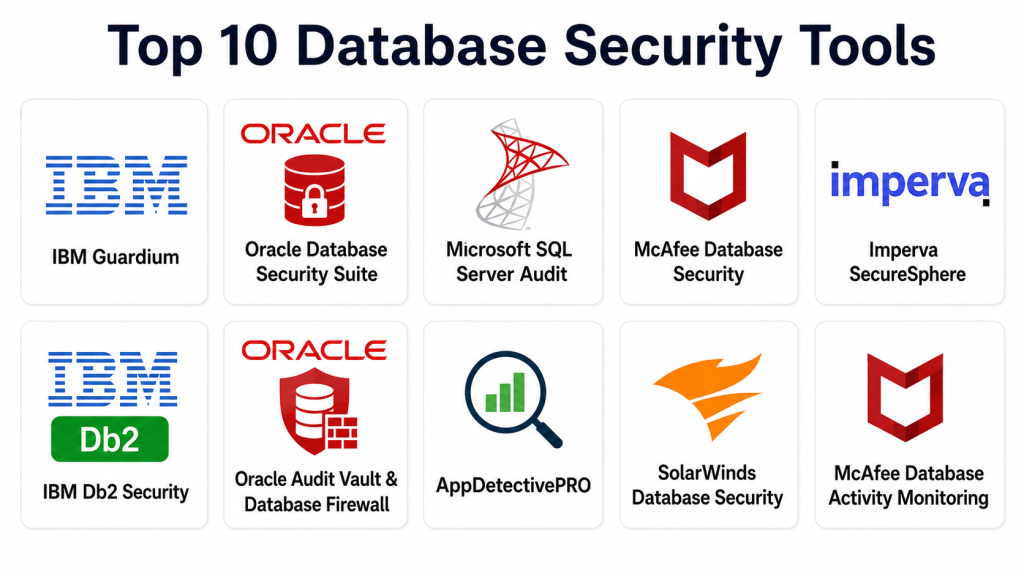
Top 10 Database Security Tools
#1 — IBM Guardium
Short description: IBM Guardium provides comprehensive database security, activity monitoring, and compliance reporting. It is ideal for enterprises with heterogeneous database environments, offering real-time threat detection and policy enforcement.
Key Features
- Database activity monitoring
- Policy-based access controls
- Data encryption and masking
- Automated compliance reporting
- Threat analytics and anomaly detection
- Multi-platform database support
Pros
- Enterprise-grade scalability
- Comprehensive compliance coverage
Cons
- Complex configuration for smaller teams
- Premium pricing
Platforms / Deployment
- Web / Windows / Linux
- Cloud / On-premises / Hybrid
Security & Compliance
- MFA, RBAC, encryption, audit logs
- SOC 2, ISO 27001, HIPAA
Integrations & Ecosystem
- SIEM platforms
- IAM solutions
- Cloud provider integrations
- APIs for custom automation
Support & Community
- Enterprise support tiers
- Extensive documentation and training
#2 — Oracle Database Security Suite
Short description: Oracle Database Security Suite secures Oracle databases with comprehensive access controls, auditing, and encryption, targeting enterprises using Oracle technologies.
Key Features
- Real-time activity monitoring
- Data encryption at rest and in transit
- Fine-grained access control
- Automated audit and compliance reports
- Threat detection and alerting
Pros
- Deep integration with Oracle ecosystem
- Advanced auditing and encryption features
Cons
- Limited to Oracle databases
- Costly for multi-vendor environments
Platforms / Deployment
- Web / Linux / Windows
- Cloud / On-premises
Security & Compliance
- MFA, RBAC, encryption, audit logs
- GDPR, SOC 2, HIPAA
Integrations & Ecosystem
- Oracle Cloud applications
- SIEM and analytics platforms
- APIs for automation
Support & Community
- Oracle enterprise support
- Detailed documentation
#3 — Microsoft SQL Server Audit
Short description: Microsoft SQL Server Audit provides monitoring, auditing, and compliance reporting for SQL Server databases, offering native integration for Microsoft ecosystems.
Key Features
- Native SQL Server auditing
- Role-based access control
- Compliance reporting
- Alerting on anomalous activity
- Encryption support
Pros
- Native integration with SQL Server
- Cost-effective for Microsoft environments
Cons
- Limited support for non-Microsoft databases
- Manual configuration may be needed for complex policies
Platforms / Deployment
- Windows / Linux
- On-premises / Cloud
Security & Compliance
- RBAC, encryption, audit logs
- SOC 2, ISO 27001, GDPR
Integrations & Ecosystem
- Microsoft Azure
- SIEM integration
- APIs for automation
Support & Community
- Microsoft support tiers
- Active documentation
#4 — McAfee Database Security
Short description: McAfee Database Security provides real-time monitoring, vulnerability assessment, and compliance reporting across multi-vendor databases, suitable for large-scale enterprises.
Key Features
- Database activity monitoring
- Vulnerability assessment
- Policy-based access control
- Encryption integration
- Compliance reporting
Pros
- Multi-database support
- Strong threat detection capabilities
Cons
- Complex setup for smaller environments
- Enterprise-focused pricing
Platforms / Deployment
- Web / Windows / Linux
- Cloud / On-premises / Hybrid
Security & Compliance
- MFA, RBAC, audit logs, encryption
- SOC 2, ISO 27001, HIPAA
Integrations & Ecosystem
- SIEM and IAM platforms
- Multi-cloud integrations
- APIs for automation
Support & Community
- Enterprise support
- Documentation and professional services
#5 — Imperva SecureSphere
Short description: Imperva SecureSphere delivers database activity monitoring, auditing, and security controls for enterprise environments, enabling regulatory compliance and threat prevention.
Key Features
- Real-time monitoring and alerting
- Vulnerability assessment
- Policy enforcement
- Compliance reporting
- Multi-database support
Pros
- High scalability and performance
- Effective threat detection
Cons
- Premium cost
- Steep learning curve
Platforms / Deployment
- Web / Windows / Linux
- Cloud / On-premises / Hybrid
Security & Compliance
- MFA, RBAC, encryption, audit logs
- SOC 2, ISO 27001, HIPAA
Integrations & Ecosystem
- SIEM platforms
- IAM solutions
- APIs for automation
Support & Community
- Enterprise support
- Documentation and training
#6 — IBM Db2 Security
Short description: IBM Db2 Security offers activity monitoring, auditing, and encryption for IBM Db2 databases, suitable for large-scale IBM-centric enterprise deployments.
Key Features
- Database activity monitoring
- Role-based access controls
- Encryption and masking
- Compliance reporting
- Threat analytics
Pros
- Deep Db2 integration
- Enterprise scalability
Cons
- Limited to IBM Db2
- Implementation complexity
Platforms / Deployment
- Web / Linux / Windows
- On-premises / Cloud
Security & Compliance
- MFA, RBAC, encryption, audit logs
- SOC 2, ISO 27001, HIPAA
Integrations & Ecosystem
- IBM Cloud
- SIEM integration
- APIs for automation
Support & Community
- IBM enterprise support
- Documentation
#7 — Oracle Audit Vault & Database Firewall
Short description: Oracle Audit Vault and Database Firewall provides database activity monitoring, alerting, and auditing to prevent unauthorized access and ensure compliance.
Key Features
- Database activity monitoring
- Real-time threat alerting
- Policy enforcement
- Compliance reporting
- Multi-database support
Pros
- Effective auditing and threat detection
- Integration with Oracle ecosystem
Cons
- Oracle-specific
- High cost
Platforms / Deployment
- Web / Linux / Windows
- Cloud / On-premises
Security & Compliance
- RBAC, encryption, audit logs
- SOC 2, ISO 27001, GDPR, HIPAA
Integrations & Ecosystem
- Oracle Cloud
- SIEM and analytics
- APIs
Support & Community
- Oracle enterprise support
- Documentation
#8 — AppDetectivePRO
Short description: AppDetectivePRO provides database vulnerability assessment and security monitoring, helping enterprises manage risks across multiple database platforms.
Key Features
- Vulnerability scanning
- Policy enforcement
- Compliance reporting
- Database monitoring
- Risk assessment dashboards
Pros
- Multi-database support
- Strong vulnerability insights
Cons
- Less suited for small deployments
- Requires configuration for full automation
Platforms / Deployment
- Windows / Linux / Web
- On-premises / Cloud
Security & Compliance
- MFA, RBAC, audit logs
- SOC 2, ISO 27001, HIPAA
Integrations & Ecosystem
- SIEM platforms
- APIs for integration
- Multi-cloud compatibility
Support & Community
- Professional support
- Documentation
#9 — SolarWinds Database Security
Short description: SolarWinds Database Security monitors and audits database activity while providing compliance reporting for enterprises, supporting multiple database types.
Key Features
- Real-time monitoring
- User activity auditing
- Compliance reporting
- Policy enforcement
- Vulnerability management
Pros
- Multi-database support
- Easy-to-use dashboards
Cons
- Limited advanced automation
- Enterprise pricing
Platforms / Deployment
- Web / Windows / Linux
- Cloud / On-premises / Hybrid
Security & Compliance
- RBAC, encryption, audit logs
- SOC 2, ISO 27001, HIPAA
Integrations & Ecosystem
- SIEM and analytics
- APIs
- Cloud integrations
Support & Community
- Enterprise support
- Documentation
#10 — McAfee Database Activity Monitoring
Short description: McAfee Database Activity Monitoring protects databases from unauthorized access, insider threats, and ensures compliance through continuous monitoring.
Key Features
- Real-time activity monitoring
- Policy enforcement
- Compliance reporting
- Threat detection
- Multi-platform support
Pros
- Effective monitoring
- Multi-database compatibility
Cons
- Complexity for small organizations
- Costly for SMBs
Platforms / Deployment
- Windows / Linux / Web
- Cloud / On-premises / Hybrid
Security & Compliance
- MFA, RBAC, encryption, audit logs
- SOC 2, ISO 27001, HIPAA
Integrations & Ecosystem
- SIEM systems
- IAM solutions
- APIs for automation
Support & Community
- Enterprise support
- Documentation
Comparison Table (Top 10)
| Tool Name | Best For | Platform(s) Supported | Deployment | Standout Feature | Public Rating |
|---|---|---|---|---|---|
| IBM Guardium | Large enterprises | Web/Windows/Linux | Cloud/On-prem/Hybrid | Real-time monitoring | N/A |
| Oracle Database Security Suite | Oracle environments | Web/Linux/Windows | Cloud/On-prem | Deep Oracle integration | N/A |
| Microsoft SQL Server Audit | Microsoft SQL environments | Windows/Linux | On-prem/Cloud | Native SQL Server integration | N/A |
| McAfee Database Security | Multi-database environments | Windows/Linux/Web | Cloud/On-prem/Hybrid | Activity monitoring | N/A |
| Imperva SecureSphere | Enterprise databases | Windows/Linux/Web | Cloud/On-prem/Hybrid | Threat detection | N/A |
| IBM Db2 Security | IBM Db2 environments | Web/Windows/Linux | On-prem/Cloud | Enterprise scalability | N/A |
| Oracle Audit Vault & Database Firewall | Oracle-focused enterprises | Web/Linux/Windows | Cloud/On-prem | Policy enforcement | N/A |
| AppDetectivePRO | Multi-database risk analysis | Windows/Linux/Web | On-prem/Cloud | Vulnerability scanning | N/A |
| SolarWinds Database Security | Enterprise monitoring | Web/Windows/Linux | Cloud/On-prem/Hybrid | User activity auditing | N/A |
| McAfee Database Activity Monitoring | Multi-platform enterprises | Windows/Linux/Web | Cloud/On-prem/Hybrid | Compliance reporting | N/A |
Evaluation & Scoring of Database Security Tools
| Tool Name | Core (25%) | Ease (15%) | Integrations (15%) | Security (10%) | Performance (10%) | Support (10%) | Value (15%) | Weighted Total |
|---|---|---|---|---|---|---|---|---|
| IBM Guardium | 9 | 8 | 8 | 9 | 9 | 8 | 7 | 8.3 |
| Oracle Database Security Suite | 9 | 8 | 7 | 9 | 9 | 8 | 7 | 8.2 |
| Microsoft SQL Server Audit | 8 | 8 | 7 | 8 | 8 | 8 | 7 | 7.8 |
| McAfee Database Security | 8 | 7 | 8 | 8 | 8 | 7 | 7 | 7.7 |
| Imperva SecureSphere | 9 | 7 | 8 | 9 | 9 | 8 | 7 | 8.1 |
| IBM Db2 Security | 8 | 7 | 7 | 8 | 8 | 7 | 7 | 7.6 |
| Oracle Audit Vault & Database Firewall | 8 | 7 | 7 | 8 | 8 | 7 | 7 | 7.6 |
| AppDetectivePRO | 7 | 7 | 7 | 7 | 7 | 7 | 7 | 7.0 |
| SolarWinds Database Security | 7 | 8 | 7 | 7 | 7 | 7 | 7 | 7.1 |
| McAfee Database Activity Monitoring | 8 | 7 | 7 | 8 | 8 | 7 | 7 | 7.6 |
Interpretation: Weighted totals reflect comparative strength in core features, usability, integration flexibility, security, performance, support, and overall value.
Which Database Security Tool Is Right for You?
Solo / Freelancer
- Smaller teams can leverage Microsoft SQL Server Audit or SolarWinds Database Security for simplified setups.
SMB
- McAfee Database Security or AppDetectivePRO offers scalable security and monitoring across multiple databases.
Mid-Market
- IBM Guardium or Imperva SecureSphere for comprehensive monitoring and compliance enforcement.
Enterprise
- Oracle Database Security Suite, IBM Db2 Security, or Oracle Audit Vault for regulated environments and complex multi-database deployments.
Budget vs Premium
- Cloud-native and single-platform tools like SQL Server Audit or SolarWinds Database Security are cost-effective.
- Premium enterprise solutions like IBM Guardium, Imperva, and Oracle Audit Vault offer advanced features and multi-database capabilities.
Feature Depth vs Ease of Use
- Enterprises needing advanced monitoring and compliance require IBM Guardium, Imperva, and Oracle solutions.
- Simpler dashboards and monitoring can be handled by SolarWinds or Microsoft SQL Server Audit.
Integrations & Scalability
- API and SIEM integrations are key for automation and centralized monitoring.
- Multi-cloud and hybrid support ensures enterprise-wide scalability.
Security & Compliance Needs
- HSM-backed and policy-driven solutions like IBM Guardium, Imperva, and Oracle Audit Vault ensure compliance with SOC 2, ISO 27001, HIPAA, and GDPR.
Frequently Asked Questions (FAQs)
1: What is a Database Security Tool?
A database security tool monitors, audits, and protects databases from unauthorized access, vulnerabilities, and data breaches.
2: Why are database security tools important for compliance?
They enforce access controls, monitor activity, and provide reporting needed to meet regulatory requirements such as GDPR, HIPAA, and SOC 2.
3: Can these tools integrate with cloud services?
Yes, most tools offer APIs and native integrations with cloud platforms for hybrid and multi-cloud environments.
4: Do they support multiple database types?
Many enterprise solutions support relational and non-relational databases across vendors like Oracle, SQL Server, MySQL, and Db2.
5: Are these tools suitable for small businesses?
Some, like Microsoft SQL Server Audit and SolarWinds Database Security, are cost-effective and suitable for SMBs.
6: How often should database audits be performed?
Audits should be continuous with automated alerts, complemented by periodic reviews for compliance reporting.
7: Do database security tools include encryption?
Many integrate with encryption solutions and key management systems to protect data at rest and in transit.
8: Can these tools detect insider threats?
Yes, advanced anomaly detection and activity monitoring help identify unauthorized internal actions.
9: Are compliance reports generated automatically?
Top tools automate report generation for regulations like GDPR, HIPAA, and SOC 2.
10: Can these tools be deployed on-premises and in the cloud?
Most enterprise-grade solutions support hybrid deployment across on-premises, private, and public cloud environments.
Conclusion
Database security remains a critical aspect of organizational GRC strategy. Selecting the right tool depends on your environment, regulatory requirements, and scale. Enterprises should consider IBM Guardium, Oracle, or Imperva for advanced capabilities, while SMBs may leverage SQL Server Audit or SolarWinds for cost-effective protection. Shortlist 2–3 tools, run pilots, validate integrations, and ensure compliance reporting for a robust database security posture.
