Upgrade & Secure Your Future with DevOps, SRE, DevSecOps, MLOps!
We spend hours scrolling social media and waste money on things we forget, but won’t spend 30 minutes a day earning certifications that can change our lives.
Master in DevOps, SRE, DevSecOps & MLOps by DevOps School!
Learn from Guru Rajesh Kumar and double your salary in just one year.
Introduction
Real User Monitoring (RUM) tools are platforms that capture and analyze the interactions of actual users with web and mobile applications in real time. In plain English, RUM tools track how users experience applications, including page load times, transaction speeds, errors, and engagement patterns.
RUM tools are critical because user experience directly impacts conversion rates, retention, and brand reputation. With the increasing complexity of web applications, microservices, and multi-cloud deployments, understanding real-world performance is essential for proactive optimization and customer satisfaction.
Common use cases include:
- Measuring website and application performance from the end-user perspective
- Identifying bottlenecks and performance degradation in web pages or mobile apps
- Monitoring user interactions and journeys
- Tracking JavaScript errors, crashes, and slow transactions
- Supporting SRE and DevOps teams for continuous performance improvement
Buyers should evaluate:
- Page load and transaction monitoring capabilities
- Mobile and web application support
- Real-time analytics and dashboards
- Error and crash tracking
- Geolocation-based performance insights
- User session replay and journey analysis
- Integration with APM, DevOps, and alerting tools
- Scalability and data retention policies
- Security and compliance features
- AI-assisted anomaly detection
Best for: product managers, DevOps engineers, SREs, QA teams, UX teams, enterprises, SaaS companies, and organizations that prioritize user experience.
Not ideal for: very small websites or apps with minimal traffic, or businesses that only require synthetic monitoring.
Key Trends in Real User Monitoring (RUM) Tools
AI-assisted anomaly detection identifies performance regressions and user experience issues proactively.
- Integration with full observability platforms combines logs, metrics, traces, and RUM data for complete insights.
- Cloud-native support for multi-region web and mobile applications.
- User journey analytics provides insights into conversion funnels and engagement patterns.
- Support for modern frameworks like React, Angular, Vue, and mobile SDKs.
- Real-time dashboards and alerting with automated notifications.
- Privacy-conscious monitoring with compliance for GDPR, CCPA, and other data regulations.
- Mobile app RUM adoption is growing with support for iOS, Android, and hybrid apps.
- API and CI/CD integration allows automated monitoring as part of deployment pipelines.
- Performance benchmarking and synthetic monitoring integration enhances proactive optimization.
How We Selected These Tools
The top RUM tools were chosen based on:
- Market adoption and industry recognition
- Breadth and depth of performance monitoring capabilities
- Real-time analytics and reporting quality
- Mobile and web application support
- Ease of deployment and configuration
- Integration with observability, APM, and DevOps tools
- AI-driven insights and anomaly detection
- Scalability for enterprise-level traffic
- Security and privacy features
- Customer fit across SMB, mid-market, and enterprise segments
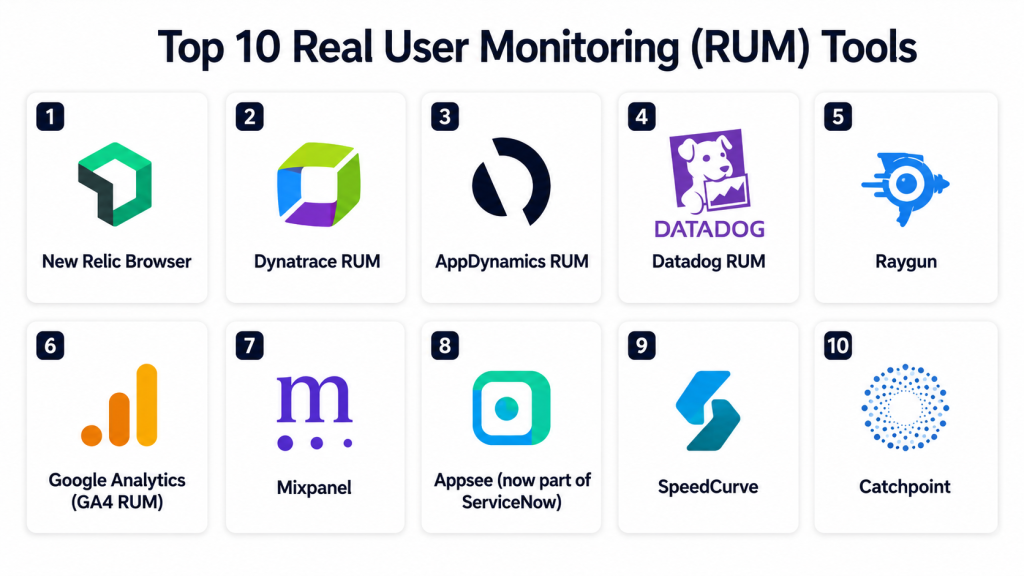
Top 10 Real User Monitoring (RUM) Tools
#1 — New Relic Browser
Short description: New Relic Browser provides real-time RUM for web applications, capturing detailed user interactions and page performance metrics for enterprises and digital teams.
Key Features
- JavaScript performance monitoring
- Page load and transaction tracking
- Error and crash detection
- Session and user interaction analytics
- Real-time dashboards
- AI-powered performance insights
- Customizable alerting and notifications
Pros
- Strong integration with New Relic APM
- Real-time performance visibility
- AI-assisted problem detection
Cons
- Advanced features require subscription
- Complex dashboards for new users
- Web-only monitoring without mobile coverage
Platforms / Deployment
Web / Linux / Windows / macOS
Cloud
Security & Compliance
SSO, RBAC, MFA, encryption; GDPR and SOC 2 compliance supported.
Integrations & Ecosystem
- New Relic APM
- CI/CD pipelines
- Alerting tools like PagerDuty
- Cloud services (AWS, Azure, GCP)
- REST APIs for automation
Support & Community
Documentation, enterprise support, community forums, and professional services.
#2 — Dynatrace RUM
Short description: Dynatrace RUM monitors end-user experience across web and mobile apps with AI-driven insights for performance optimization.
Key Features
- Real-time user session monitoring
- JavaScript and mobile SDK tracking
- Page load and interaction metrics
- AI-based anomaly detection
- Multi-channel dashboards
- Automated alerting
- User journey analytics
Pros
- Full-stack visibility with AI insights
- Cloud-native and mobile support
- Enterprise scalability
Cons
- Steep learning curve for advanced features
- Higher subscription cost for large traffic
- Complex setup for hybrid deployments
Platforms / Deployment
Web / iOS / Android
Cloud / Hybrid
Security & Compliance
SSO, RBAC, encryption; SOC 2, ISO 27001 compliance supported.
Integrations & Ecosystem
- Kubernetes and container monitoring
- Cloud providers
- APM integration
- Alerting systems
- CI/CD pipelines
Support & Community
Enterprise support, documentation, onboarding materials, and active user community.
#3 — AppDynamics RUM
Short description: AppDynamics RUM provides real-time visibility into user experience, tracking performance metrics, errors, and transaction behavior for web and mobile applications.
Key Features
- User session tracking
- Browser and mobile SDK monitoring
- End-to-end transaction visibility
- Real-time dashboards and alerts
- AI-assisted anomaly detection
- Geolocation-based analytics
- Conversion and performance insights
Pros
- Deep integration with AppDynamics APM
- Enterprise-grade analytics
- Strong AI-driven insights
Cons
- Cost may be high for SMBs
- Learning curve for dashboard customization
- Mobile instrumentation setup required
Platforms / Deployment
Web / iOS / Android
Cloud / Hybrid
Security & Compliance
SSO, RBAC, MFA, encryption; ISO 27001 and SOC 2 compliance supported.
Integrations & Ecosystem
- AppDynamics APM
- CI/CD tools
- Cloud services
- Alerting and ITSM tools
- API access
Support & Community
Professional support, documentation, tutorials, and community forums.
#4 — Datadog RUM
Short description: Datadog RUM captures user interactions, page load times, and error events across web and mobile apps with integrated observability analytics.
Key Features
- Real-time user session monitoring
- Page load and transaction metrics
- Error detection and crash reporting
- Mobile SDK tracking
- Dashboards and alerting
- AI-assisted anomaly detection
- Integration with observability platform
Pros
- Unified with Datadog metrics and traces
- Cloud-native support
- Real-time actionable insights
Cons
- Subscription cost scales with volume
- Complexity for large deployments
- Advanced mobile features require configuration
Platforms / Deployment
Web / iOS / Android
Cloud
Security & Compliance
SSO, MFA, RBAC, encryption; SOC 2, ISO 27001 supported.
Integrations & Ecosystem
- AWS, Azure, GCP
- Kubernetes, Docker
- CI/CD pipelines
- Slack, PagerDuty
- APIs for custom automation
Support & Community
Enterprise support, documentation, community forums, onboarding resources.
#5 — Raygun
Short description: Raygun RUM provides end-user experience monitoring with crash reporting, performance insights, and session tracking for web and mobile applications.
Key Features
- Real-time user monitoring
- Page load and interaction metrics
- Error and crash reporting
- Session replay
- Dashboards and alerts
- Performance degradation detection
- Multi-platform support
Pros
- Easy to implement
- Session replay for debugging
- Supports web and mobile apps
Cons
- Limited enterprise-scale analytics
- Advanced reporting may require premium plan
- Smaller integration ecosystem
Platforms / Deployment
Web / iOS / Android
Cloud
Security & Compliance
SSO, encryption, RBAC; GDPR-compliant.
Integrations & Ecosystem
- Slack, Jira
- CI/CD pipelines
- Cloud services
- APIs for automation
- Mobile SDKs
Support & Community
Documentation, enterprise support, and community resources.
#6 — Google Analytics (GA4 RUM)
Short description: GA4 includes real-user monitoring capabilities to track page performance, user interactions, and engagement across web and mobile applications.
Key Features
- User interaction and session tracking
- Page load performance metrics
- Real-time dashboards
- Conversion and engagement analytics
- Event-based monitoring
- Multi-platform support
- Integration with Google ecosystem
Pros
- Easy to implement
- Free for standard usage
- Integration with Google Ads and marketing tools
Cons
- Limited detailed technical performance metrics
- Not specialized for DevOps or SRE workflows
- Privacy and consent management needed
Platforms / Deployment
Web / iOS / Android
Cloud
Security & Compliance
Supports encryption, RBAC; GDPR and CCPA compliance configurable.
Integrations & Ecosystem
- Google Ads
- Firebase
- Marketing analytics
- API access for custom reporting
Support & Community
Documentation, community forums, and online resources.
#7 — Mixpanel
Short description: Mixpanel RUM tracks user behavior, page interactions, and events for analytics-driven insights into application performance and user engagement.
Key Features
- Event and interaction tracking
- Real-time dashboards
- Funnel and retention analysis
- Mobile and web support
- Alerts and notifications
- Custom metrics tracking
- Integration with analytics workflows
Pros
- Strong for user behavior analysis
- Real-time insights for product teams
- Easy to integrate
Cons
- Limited technical performance metrics
- Not focused on DevOps troubleshooting
- Some advanced analytics require subscription
Platforms / Deployment
Web / iOS / Android
Cloud
Security & Compliance
SSO, encryption; GDPR-compliant.
Integrations & Ecosystem
- Slack, Jira
- Marketing tools
- API for custom tracking
- Cloud services
Support & Community
Documentation, support plans, and community resources.
#8 — Appsee (now part of ServiceNow)
Short description: Appsee offers RUM for mobile applications with detailed session replay, crash tracking, and performance monitoring.
Key Features
- Mobile app session replay
- Crash and error tracking
- User interaction metrics
- Real-time performance dashboards
- Alerts and notifications
- User behavior analytics
Pros
- Detailed mobile UX insights
- Session replay enhances debugging
- Useful for product and UX teams
Cons
- Focused on mobile; limited web support
- Integration with DevOps tools may be limited
- Advanced analytics may require subscription
Platforms / Deployment
iOS / Android
Cloud
Security & Compliance
Encryption, secure SDK; privacy compliance configurable.
Integrations & Ecosystem
- Mobile SDKs
- Analytics dashboards
- CI/CD integration
- Alerting workflows
Support & Community
Documentation, enterprise support, and onboarding resources.
#9 — SpeedCurve
Short description: SpeedCurve RUM provides performance monitoring and user experience metrics for web applications, focusing on speed and frontend performance.
Key Features
- Real-time web performance metrics
- User experience monitoring
- Page load and transaction tracking
- Dashboards and alerting
- Synthetic and RUM data correlation
- Historical trend analysis
Pros
- Focus on user-centric performance
- Combines synthetic and real-user monitoring
- Easy-to-read dashboards
Cons
- Limited mobile monitoring
- Advanced DevOps integrations may require additional setup
- Enterprise scalability may be limited
Platforms / Deployment
Web
Cloud
Security & Compliance
Encryption, access controls; privacy compliance supported.
Integrations & Ecosystem
- Google Analytics
- CI/CD pipelines
- Alerting systems
- Dashboard integration
Support & Community
Documentation, tutorials, and support options.
#10 — Catchpoint
Short description: Catchpoint RUM tracks web and mobile application performance from the end-user perspective, providing real-time visibility and alerting.
Key Features
- Real-user session tracking
- Web and mobile performance metrics
- Page load and transaction monitoring
- Dashboards and reporting
- Alerts and anomaly detection
- Integration with DevOps and APM tools
Pros
- Comprehensive monitoring for web and mobile
- Real-time actionable insights
- Enterprise-grade dashboards
Cons
- Cost may be high for smaller teams
- Complex setup for distributed environments
- Learning curve for advanced features
Platforms / Deployment
Web / iOS / Android
Cloud
Security & Compliance
SSO, RBAC, encryption; SOC 2 and GDPR compliance configurable.
Integrations & Ecosystem
- APM tools
- CI/CD pipelines
- Cloud platforms
- Alerting and reporting systems
- APIs for automation
Support & Community
Documentation, enterprise support, and community resources.
Comparison Table
| Tool Name | Best For | Platform(s) Supported | Deployment | Standout Feature | Public Rating |
|---|---|---|---|---|---|
| New Relic Browser | Web app RUM | Web | Cloud | End-to-end web monitoring | N/A |
| Dynatrace RUM | Web & mobile | Web / iOS / Android | Cloud / Hybrid | AI-driven insights | N/A |
| AppDynamics RUM | Enterprise apps | Web / iOS / Android | Cloud / Hybrid | End-to-end transaction visibility | N/A |
| Datadog RUM | Cloud-native apps | Web / iOS / Android | Cloud | Unified observability | N/A |
| Raygun | Web & mobile UX | Web / iOS / Android | Cloud | Session replay & crash tracking | N/A |
| GA4 RUM | Web & mobile | Web / iOS / Android | Cloud | Free real-user analytics | N/A |
| Mixpanel | UX & product analytics | Web / iOS / Android | Cloud | Event tracking & funnels | N/A |
| Appsee | Mobile apps | iOS / Android | Cloud | Session replay for mobile | N/A |
| SpeedCurve | Web performance | Web | Cloud | Synthetic + RUM correlation | N/A |
| Catchpoint | Web & mobile | Web / iOS / Android | Cloud | End-to-end RUM and alerting | N/A |
Evaluation & Scoring of Real User Monitoring Tools
| Tool Name | Core (25%) | Ease (15%) | Integrations (15%) | Security (10%) | Performance (10%) | Support (10%) | Value (15%) | Weighted Total (0–10) |
|---|---|---|---|---|---|---|---|---|
| New Relic Browser | 9 | 8 | 9 | 8 | 9 | 8 | 7 | 8.45 |
| Dynatrace RUM | 9 | 7 | 8 | 8 | 9 | 8 | 7 | 8.25 |
| AppDynamics RUM | 9 | 7 | 8 | 8 | 8 | 8 | 7 | 8.10 |
| Datadog RUM | 8 | 8 | 9 | 8 | 8 | 8 | 7 | 8.00 |
| Raygun | 8 | 8 | 7 | 7 | 8 | 7 | 7 | 7.60 |
| GA4 RUM | 7 | 9 | 7 | 7 | 7 | 7 | 8 | 7.55 |
| Mixpanel | 7 | 8 | 7 | 7 | 7 | 7 | 8 | 7.50 |
| Appsee | 7 | 7 | 6 | 7 | 7 | 6 | 7 | 6.85 |
| SpeedCurve | 8 | 7 | 7 | 7 | 8 | 7 | 7 | 7.55 |
| Catchpoint | 9 | 7 | 8 | 8 | 9 | 8 | 7 | 8.20 |
Scores are comparative and help identify strengths across real-time performance, integrations, ease of use, and value.
Which Real User Monitoring Tool Is Right for You?
Solo / Freelancer
GA4 RUM, Raygun, or SpeedCurve are practical, easy-to-deploy options for small web projects or mobile apps.
SMB
Datadog RUM, New Relic Browser, and Mixpanel provide dashboards, alerts, and analytics suitable for SMBs seeking insights into UX and performance.
Mid-Market
AppDynamics RUM, Datadog RUM, and Dynatrace are recommended for monitoring distributed applications and multi-region deployments.
Enterprise
New Relic Browser, Dynatrace, AppDynamics, Catchpoint, and Datadog RUM provide AI-driven insights, scalability, and compliance support for enterprise workloads.
Budget vs Premium
Budget-conscious teams can start with GA4 RUM, Mixpanel, or Raygun. Premium teams may benefit from Dynatrace, AppDynamics, or New Relic for advanced analytics and integrations.
Feature Depth vs Ease of Use
GA4 RUM, Raygun, and Mixpanel are easy to use. Dynatrace, AppDynamics, and New Relic offer deeper performance insights for complex applications.
Integrations & Scalability
Enterprise-scale deployments should prioritize platforms with strong CI/CD, cloud, and APM integrations such as Dynatrace, Datadog, and New Relic.
Security & Compliance Needs
Teams requiring SOC 2, GDPR, or ISO 27001 compliance should focus on New Relic, Dynatrace, and AppDynamics.
Frequently Asked Questions
What is Real User Monitoring (RUM)?
RUM tracks actual user interactions and experiences with web and mobile applications to provide performance and engagement insights.
Why is RUM important?
It ensures applications meet performance expectations, helps reduce churn, and provides data for proactive optimization.
Can RUM tools monitor mobile applications?
Yes. Tools like Dynatrace, AppDynamics, and Raygun provide SDKs for iOS and Android.
Do RUM tools integrate with CI/CD?
Yes. Most modern RUM tools integrate with deployment pipelines to monitor changes and detect regressions.
What metrics are tracked in RUM?
Page load times, transaction durations, errors, crashes, user interactions, and frontend resource performance are commonly tracked.
Are RUM tools different from synthetic monitoring?
Yes. RUM captures real user data, while synthetic monitoring simulates traffic to test performance.
How often should RUM data be analyzed?
Continuous real-time analysis is recommended, with aggregated reporting for trend detection.
Are open-source RUM solutions available?
Open-source RUM tools exist but may require more setup. Most enterprise environments prefer SaaS platforms.
Can RUM help with UX optimization?
Yes. By analyzing user interactions, session replays, and engagement, teams can improve design and performance.
How should a team choose the right RUM tool?
Consider traffic volume, web and mobile coverage, integration needs, AI analytics, and compliance requirements.
Conclusion
Real User Monitoring (RUM) tools are essential for understanding end-user experiences, optimizing performance, and reducing downtime. Dynatrace, New Relic, AppDynamics, Datadog, and Catchpoint offer enterprise-grade RUM with AI insights and scalability. GA4 RUM, Raygun, Mixpanel, and SpeedCurve provide cost-effective options for small to mid-market teams.
