Upgrade & Secure Your Future with DevOps, SRE, DevSecOps, MLOps!
We spend hours scrolling social media and waste money on things we forget, but won’t spend 30 minutes a day earning certifications that can change our lives.
Master in DevOps, SRE, DevSecOps & MLOps by DevOps School!
Learn from Guru Rajesh Kumar and double your salary in just one year.
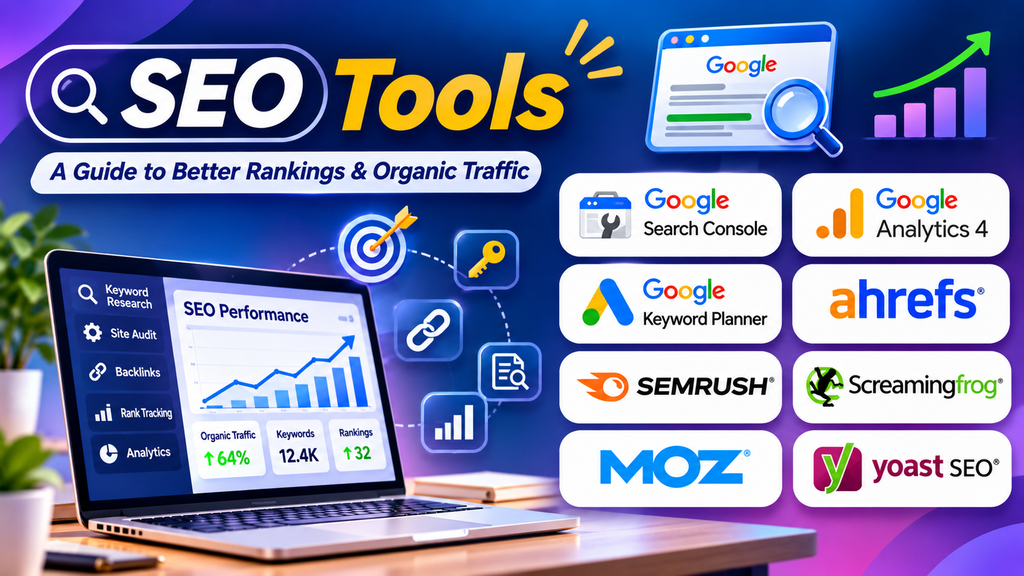
Search Engine Optimization (SEO) Tools: A Guide to Better Rankings and Organic Traffic
Search engine optimization (SEO) helps businesses improve their visibility in unpaid search results and attract people who are actively looking for relevant information, products, or services. However, understanding search performance, finding suitable keywords, identifying technical issues, and monitoring competitors can be difficult without the right tools.
SEO tools help marketers research keywords, analyze websites, monitor search rankings, review backlinks, audit technical performance, and measure organic traffic. When used together with useful content and a strong website experience, they support a more informed SEO strategy.
What Are SEO Tools?
SEO tools are software applications that help website owners and marketers understand how search engines discover, crawl, index, and rank webpages. They provide data and recommendations that can guide decisions about content, website structure, technical improvements, and authority building.
Some tools focus on one specific activity, such as keyword research, while others combine multiple SEO functions in a single platform.
Types of SEO Tools
1. Keyword Research Tools
Keyword research tools help discover the search terms people use and assess their relevance, estimated demand, and competition. They can also reveal related questions and content opportunities.
Popular options include Google Keyword Planner, Ahrefs, Semrush, and Ubersuggest.
Use these tools to identify a primary topic, understand search intent, discover supporting keywords, and build a practical content plan. Search-volume estimates are directional and should not be treated as exact traffic forecasts.
2. Website Analytics Tools
Analytics tools help measure what visitors do after reaching a website. Google Analytics 4 can report traffic sources, engagement, conversions, and other configured events.
Analytics data complements SEO data, but it does not directly explain every ranking change. Configure events and conversions carefully so that reports reflect meaningful business outcomes.
3. Search Performance Tools
Google Search Console is a key tool for monitoring how a website performs in Google Search. It provides information about search queries, clicks, impressions, click-through rate, indexing, and certain website issues.
It helps marketers identify pages that receive impressions but few clicks, discover queries that generate organic visits, and investigate indexing problems.
4. Technical SEO Audit Tools
Technical SEO tools can crawl websites to find issues such as broken links, redirect chains, duplicate or missing metadata, crawlability problems, and inconsistent canonical tags.
Common options include Screaming Frog SEO Spider, Sitebulb, and Semrush’s site audit features.
A crawl report is a diagnostic starting point, not a list of issues that must all be fixed immediately. Prioritize problems according to their impact on crawling, indexing, user experience, and important pages.
5. Backlink Analysis Tools
Backlink tools help evaluate links pointing to a website, discover potential link-building opportunities, and compare backlink profiles with competitors.
Ahrefs, Semrush, and Moz Link Explorer provide backlink research capabilities. Different providers maintain different link indexes, so their reported totals may not match.
Focus on relevant, trustworthy links earned through valuable content and genuine relationships. Avoid buying manipulative links or using automated link schemes.
6. On-Page SEO Tools
On-page SEO tools help review page titles, meta descriptions, headings, internal links, content structure, and related optimization opportunities.
Examples include Yoast SEO and Rank Math for supported WordPress workflows, along with broader SEO platforms such as Semrush.
Use recommendations as guidance rather than rigid rules. Content should answer the reader’s question naturally instead of repeating keywords unnecessarily.
7. Local SEO Tools
Local SEO tools help businesses manage their local search presence, business information, reviews, and visibility in location-based searches.
Google Business Profile is especially important for eligible businesses serving local customers. Other tools, including BrightLocal and Semrush, offer local SEO research or management features.
Keep business name, address, phone number, opening hours, and service details accurate. Encourage genuine customer reviews and respond professionally.
8. Content Optimization Tools
Content tools help identify relevant subtopics, questions, related terms, and gaps in existing content. Some platforms also compare a page with competing search results.
Examples include Semrush, Surfer, and Clearscope. Their features and pricing vary.
Use content optimization to improve coverage, clarity, and usefulness—not to produce text that simply matches a competitor’s wording.
Popular SEO Tools Compared
| Tool | Primary use |
|---|---|
| Google Search Console | Google Search performance and indexing insights |
| Google Analytics 4 | Website traffic, engagement, and configured conversions |
| Google Keyword Planner | Keyword discovery and advertising-related keyword estimates |
| Ahrefs | Keyword research, backlink analysis, and competitor research |
| Semrush | SEO research, site audits, keyword tracking, and competitive analysis |
| Screaming Frog SEO Spider | Website crawling and technical SEO audits |
| Moz Pro | Keyword research, link analysis, and SEO tracking |
| Yoast SEO | On-page SEO assistance for WordPress websites |
Capabilities, limits, and pricing depend on the specific product plan. Free tools can provide a strong starting point, while paid platforms may be useful for larger websites or more extensive research.
Key Benefits of SEO Tools
- Better keyword targeting: Discover topics aligned with what people are searching for.
- Technical issue detection: Identify problems that may affect crawling, indexing, or page experience.
- Performance monitoring: Track impressions, clicks, rankings, traffic, and configured conversions.
- Competitive insights: Understand competing pages, content gaps, and backlink opportunities.
- Content improvement: Find ways to make pages more complete, clear, and useful.
- Local visibility: Improve the consistency and management of local business information.
- More informed decisions: Use data to prioritize tasks rather than relying entirely on guesswork.
SEO tools support decision-making, but no tool can guarantee a specific ranking or a fixed amount of organic traffic.
How to Choose the Right SEO Tool
Define Your SEO Goals
Decide whether you need keyword research, technical auditing, local SEO, backlink analysis, content optimization, or reporting. A clear goal makes it easier to select a suitable tool.
Consider Your Website Size
A small business website may need only a few core tools. Large websites, online stores, and agencies may benefit from advanced crawling, automated reporting, and broader competitor analysis.
Evaluate Data and Integrations
Check which search engines and databases the tool covers, how frequently data is updated, and whether it integrates with your analytics or content management systems.
Compare Pricing and Limits
Review project limits, crawl limits, tracked keywords, report exports, user seats, and subscription terms. Choose a plan that matches actual usage rather than paying for features you may not need.
Test Before Committing
Use available free versions or trials where offered. Compare the findings with your website data and determine whether the tool provides actionable insights.
A Practical SEO Workflow
- Establish a baseline: Record current organic clicks, impressions, important landing pages, and conversions.
- Research keywords: Find relevant search terms and identify the intent behind them.
- Audit the website: Check crawling, indexing, internal links, redirects, and important technical issues.
- Improve priority pages: Update titles, headings, content, internal links, and calls to action where appropriate.
- Publish helpful content: Answer real audience questions with accurate, original information.
- Build relevant authority: Promote useful resources and develop genuine relationships that may earn relevant links.
- Measure progress: Review performance trends and investigate significant changes before making major adjustments.
- Repeat and refine: Use the evidence to select the next set of improvements.
Common SEO Mistakes to Avoid
Relying only on keyword volume: A high-volume term may not attract the right audience. Consider intent, relevance, and business value.
Following every automated warning: Tools can flag low-priority or context-dependent issues. Validate findings before making changes.
Keyword stuffing: Repeating keywords unnaturally can harm readability and does not guarantee better rankings.
Ignoring search intent: A page should match what users want to accomplish, whether they need an explanation, comparison, service, or product.
Expecting immediate results: SEO performance often changes gradually, and outcomes depend on competition, website quality, content, and search engine systems.
Neglecting measurement: Rankings alone do not show whether visitors are engaging or converting. Combine search performance with suitable analytics.
Free SEO Tools for Beginners
Beginners can start with Google Search Console for search visibility and indexing, Google Analytics 4 for website behavior, Google Keyword Planner for keyword ideas, and a free website crawling option where available.
This combination provides a useful foundation without requiring an expensive all-in-one subscription. As SEO needs become more advanced, a paid platform may add value through deeper competitor research, larger crawl limits, and more extensive reporting.
Conclusion
SEO tools make it easier to research keywords, diagnose website problems, understand search performance, improve content, and monitor progress. The most effective toolkit is not necessarily the one with the largest feature list; it is the one that helps you make accurate, useful decisions consistently.
Start with clear goals, choose tools that match your needs, validate their recommendations, and focus on helping people find the information or services they genuinely need. A structured approach to SEO can support sustainable organic visibility over time.
