Upgrade & Secure Your Future with DevOps, SRE, DevSecOps, MLOps!
We spend hours scrolling social media and waste money on things we forget, but won’t spend 30 minutes a day earning certifications that can change our lives.
Master in DevOps, SRE, DevSecOps & MLOps by DevOps School!
Learn from Guru Rajesh Kumar and double your salary in just one year.
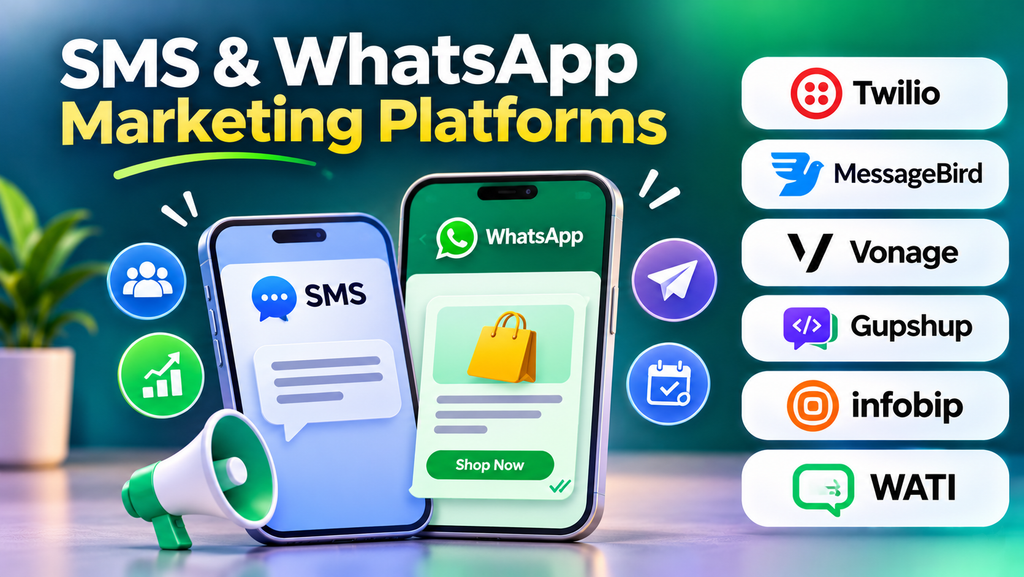
Customers increasingly expect businesses to provide quick, convenient communication through channels they already use. SMS and WhatsApp make it possible to share important updates, answer questions, confirm appointments, and deliver promotional messages without requiring customers to visit a website or open a separate application.
SMS marketing uses mobile text messages, while WhatsApp marketing uses the WhatsApp messaging ecosystem, including business profiles and, where appropriate, the WhatsApp Business Platform. Both channels can support customer engagement, but they have different capabilities, costs, consent requirements, and limitations.
What Are SMS and WhatsApp Marketing Platforms?
These platforms help organizations send, manage, and measure business communications through mobile messaging channels.
SMS platforms typically provide message delivery APIs, contact management, campaign scheduling, delivery reports, and integrations with business applications. Some also support two-way messaging, automated replies, and number management.
WhatsApp marketing platforms may offer approved message templates, customer conversation management, chatbot integrations, team inboxes, automation, and connections to CRM or e-commerce systems. Advanced functionality generally depends on the WhatsApp Business Platform and the provider’s integration.
A business should distinguish between the WhatsApp Business app, which is designed for many small-business workflows, and the WhatsApp Business Platform, which supports more advanced integrations and scaled messaging through supported providers.
Essential Features to Evaluate
Contact Management and Consent
A messaging platform should help businesses organize customer records and maintain evidence of appropriate permission to contact people.
SMS and WhatsApp have different requirements for consent, templates, and message initiation. The platform should make it possible to respect opt-outs, suppress ineligible contacts, and apply communication preferences across relevant campaigns.
A contact database alone does not establish permission to send marketing messages.
Campaign Scheduling and Personalization
Scheduling allows teams to send messages at appropriate times and coordinate campaigns with promotions, appointments, or customer events.
Personalization may include a customer’s name, order status, booking details, or other relevant information. Businesses should verify that data is accurate before inserting it into messages, especially when sending sensitive transactional information.
Automation and Chatbots
Automation can trigger messages when an order is placed, an appointment approaches, or a customer requests assistance. Chatbots may answer common questions, collect basic information, and route complex conversations to a human agent.
Effective automation needs clear stopping conditions and a reliable handoff to customer support. Customers should not be trapped in repetitive automated replies when their situation requires human attention.
Two-Way Messaging and Team Inboxes
Two-way messaging enables customers to reply to businesses rather than receiving one-way announcements only.
A shared inbox can help support teams assign conversations, track responses, and coordinate service across multiple agents. For businesses handling high message volumes, access controls and conversation ownership are especially important.
Reporting and Integration
Useful reporting can include delivery status, failed messages, responses, clicks where tracked, conversions, and opt-out activity. Available metrics vary by channel and provider.
Integrations with CRM systems, online stores, booking tools, and customer support platforms can help businesses connect messages to real customer events.
SMS Marketing Platforms Worth Considering
The right provider depends on whether a business needs developer APIs, no-code campaign tools, international coverage, or integrated customer engagement features.
Twilio
Twilio provides programmable communications infrastructure, including SMS APIs and messaging capabilities that developers can integrate into websites, applications, and business workflows.
It can be a strong option when a business needs flexible message delivery, application integrations, and custom communication logic. Implementation typically requires technical work, and costs may depend on destination, message type, sender configuration, and other usage factors.
Textmagic
Textmagic offers business text messaging capabilities, including SMS campaigns and two-way messaging features. It may suit organizations that want to coordinate customer updates and promotional messages through a dedicated messaging service.
Before choosing it, evaluate destination-country coverage, sender options, contact management, reporting, and the pricing applicable to the expected sending volume.
SimpleTexting
SimpleTexting provides SMS marketing tools for businesses that need campaign management, subscriber organization, and automated text communication.
It may be useful for organizations looking for campaign-oriented features rather than building messaging infrastructure from scratch. Verify supported countries, available integrations, sending limits, and plan-specific features before committing.
Sinch
Sinch provides communications infrastructure and APIs across messaging and other communication channels. Its SMS capabilities can support businesses that need to integrate messaging into applications or customer communication systems.
Organizations should assess regional coverage, sender registration requirements, delivery reporting, integration complexity, and commercial terms for their intended use cases.
Plivo
Plivo provides programmable communications APIs, including SMS capabilities for application-driven messaging workflows.
It can be relevant to development teams building order notifications, verification messages, appointment reminders, or custom customer communication systems. Teams should review supported destinations, message throughput, regulatory requirements, and the engineering effort needed to manage the integration.
WhatsApp Business Marketing Platforms Worth Considering
WhatsApp solutions vary significantly. Some providers specialize in API connectivity, while others provide a broader platform for campaign management, customer engagement, and conversational commerce.
Interakt
Interakt offers WhatsApp Business Platform-related capabilities aimed at businesses that want to manage customer conversations and messaging workflows. Depending on the plan, features may include campaigns, automation, and integrations with business systems.
It may be worth evaluating for small and growing businesses seeking a more accessible interface for WhatsApp customer engagement. Check template management, team inbox functionality, integration options, and the total cost of provider and WhatsApp messaging charges.
WATI
WATI provides WhatsApp-focused business messaging and engagement tools, including shared inbox and automation capabilities depending on the plan.
It can be relevant to customer support teams, service businesses, and online retailers that need to manage multiple conversations and automate common workflows. Evaluate agent limits, automation capabilities, integration requirements, and how the platform handles consent and opt-outs.
AiSensy
AiSensy offers WhatsApp marketing and customer communication capabilities built around the WhatsApp Business Platform. Its available features can include campaign management, automation, and customer engagement workflows.
It may be useful for businesses that want to manage WhatsApp campaigns through a dedicated interface. Verify current message categories, campaign rules, integration support, and all applicable platform and messaging charges.
Gupshup
Gupshup provides conversational messaging infrastructure and business messaging solutions, including WhatsApp-related capabilities. Its offerings can support organizations that need to integrate messaging with customer service, commerce, or application workflows.
The appropriate solution depends on the organization’s technical requirements, expected message volume, supported integrations, and need for managed campaign tools versus APIs.
Respond.io
Respond.io focuses on customer conversation management across supported messaging channels. It can help teams coordinate incoming conversations, assign agents, and connect communication with automation and customer workflows.
It may suit businesses that receive enquiries across multiple channels and need a shared environment for handling them. Confirm the available WhatsApp integration, automation features, channel coverage, and subscription limits.
Comparing the Main Platforms
| Platform | Primary focus | Important consideration |
|---|---|---|
| Twilio | Programmable SMS and communications APIs | Technical implementation and usage-based costs |
| Textmagic | Business text messaging | Regional availability and sending costs |
| SimpleTexting | SMS campaigns and subscriber management | Country coverage and plan limits |
| Sinch | Communications infrastructure and messaging APIs | Integration and regional requirements |
| Plivo | Programmable messaging APIs | Development effort and regulatory requirements |
| Interakt | WhatsApp customer engagement | Plan features and messaging charges |
| WATI | WhatsApp conversations and automation | Agent limits and workflow requirements |
| AiSensy | WhatsApp marketing and customer communication | Template rules and total campaign costs |
| Gupshup | Business messaging infrastructure | Solution complexity and integration fit |
| Respond.io | Multi-channel customer conversation management | Channel coverage and subscription requirements |
These products are not identical, and availability varies by country and configuration. Some provide the underlying messaging infrastructure, while others add a user interface, automation, or customer conversation management.
SMS vs. WhatsApp: Which Channel Should You Choose?
SMS can be appropriate for short notifications, one-time passcodes, appointment reminders, and situations where a conventional text message is suitable. It does not require the recipient to use WhatsApp, although delivery still depends on the phone number, carrier, country, and sender configuration.
WhatsApp can support richer conversations, business profiles, interactive message formats, and media where supported. It can be particularly useful when customers already use WhatsApp to communicate with a business.
However, WhatsApp marketing is governed by its business messaging policies, approved template requirements where applicable, customer service windows, and other rules. SMS has its own sender registration, consent, and local regulatory requirements.
A business should choose the channel based on customer preference, the purpose of the message, reach, cost, and operational requirements rather than assuming one channel is always better.
Understanding Messaging Costs
Messaging costs are more complex than a simple price per campaign.
SMS expenses may depend on the destination country, message length, sender type, carrier fees, and whether messages are inbound or outbound. Long messages may be split into multiple billable segments.
WhatsApp costs can depend on the applicable message category, recipient country, provider charges, and the current WhatsApp pricing model. A business may also pay a separate subscription fee for its third-party platform.
Before comparing providers, calculate the total cost for the expected mix of marketing, utility, authentication, and customer service messages. Confirm current pricing directly with the provider and the official channel documentation.
Privacy, Consent, and Responsible Messaging
Direct messaging reaches customers through personal communication channels, so trust is essential.
Obtain the required permission before sending promotional messages, clearly identify the business, and provide a practical way to stop further marketing communication. Maintain suppression lists and ensure opt-outs are respected across connected systems.
For WhatsApp, follow the applicable business messaging policies and use approved templates where required. For SMS, follow the applicable local rules for sender registration, commercial messaging, and consent. In India, businesses should pay particular attention to applicable TRAI requirements and the relevant sender and template registration processes.
Protect customer information, limit access to conversation histories, and avoid including unnecessary sensitive details in notifications. The exact legal obligations depend on the message type, location, and business context.
Common Mistakes to Avoid
Sending unsolicited promotions: Unwanted messages can create complaints, opt-outs, and reputational damage. Build campaigns around appropriate permission and customer expectations.
Ignoring message frequency: Even relevant messages become intrusive when sent too often. Coordinate campaigns and transactional notifications to avoid overwhelming recipients.
Choosing a provider without checking local support: A platform may support a channel in one country but have different sender requirements, pricing, or feature availability elsewhere.
Automating every conversation: Bots can handle routine requests, but customers need an accessible path to human support for complex problems.
Ignoring failed delivery: Monitor unsuccessful messages and investigate invalid numbers, template errors, sender configuration, and other delivery problems.
Measuring sends instead of outcomes: High message volume does not guarantee successful engagement. Track meaningful responses, conversions, customer satisfaction, and opt-out rates.
A Practical Implementation Plan
- Define the main purpose, such as order updates, appointment reminders, customer support, or promotional campaigns.
- Choose SMS, WhatsApp, or a combination based on customer needs and applicable requirements.
- Review existing contact data, consent records, and opt-out processes.
- Compare providers based on integrations, automation, reporting, regional coverage, and total cost.
- Configure sender details, message templates, access controls, and customer support handoffs.
- Test delivery, personalization, opt-outs, and failure handling before launching.
- Begin with a limited campaign and measure the results before increasing message volume.
For example, a Hyderabad-based training academy could use SMS for time-sensitive class reminders and WhatsApp for answering course enquiries or sharing approved course information. It should collect the appropriate permissions, clearly explain the communication purpose, and monitor whether these messages improve attendance and enquiry handling.
Choosing the Right Messaging Platform
SMS and WhatsApp marketing platforms can help businesses improve customer communication when they combine relevant messages, reliable delivery, thoughtful automation, and responsible data practices.
Twilio, Sinch, and Plivo are worth considering for programmable messaging infrastructure, while platforms such as Interakt, WATI, AiSensy, and Respond.io may be relevant for businesses seeking more managed customer engagement workflows. The best choice depends on the channel, audience, technical resources, and required integrations.
Start with one clearly defined use case, verify the applicable messaging rules, and calculate the full cost of delivering and managing messages. A focused, permission-based messaging strategy is more sustainable than simply maximizing the number of messages sent.
