Upgrade & Secure Your Future with DevOps, SRE, DevSecOps, MLOps!
We spend hours scrolling social media and waste money on things we forget, but won’t spend 30 minutes a day earning certifications that can change our lives.
Master in DevOps, SRE, DevSecOps & MLOps by DevOps School!
Learn from Guru Rajesh Kumar and double your salary in just one year.
Introduction
Data Warehouse Platforms are specialized software solutions designed to consolidate, manage, and analyze large volumes of structured and semi-structured data from multiple sources. In plain English, these platforms act as central repositories where organizations can store historical data and perform business intelligence, reporting, and advanced analytics efficiently.
The importance of robust data warehouse platforms continues to grow as enterprises generate massive amounts of data from operations, social media, IoT devices, and marketing platforms. Companies need reliable platforms to gain actionable insights, support AI-driven strategies, and maintain compliance across multiple jurisdictions.
Real-world use cases include:
- Retail companies analyzing customer purchase patterns to optimize inventory and marketing campaigns.
- Media and entertainment brands tracking influencer performance across campaigns.
- Financial institutions consolidating multi-source transaction data for fraud detection and reporting.
- SaaS companies unifying telemetry and operational metrics to improve product decisions.
- Healthcare organizations integrating patient data for analytics and predictive modeling.
Evaluation Criteria for Buyers:
- Performance and query speed
- Scalability for growing datasets
- Integration with analytics and visualization tools
- Security and compliance capabilities
- Support for real-time or near-real-time ingestion
- Ease of deployment and administration
- Cost efficiency
- Ecosystem and community support
Best for: Data engineers, analytics teams, marketing operations, mid-market to large enterprises in finance, retail, healthcare, and tech industries.
Not ideal for: Very small businesses or teams with minimal data analytics needs, or where lightweight BI tools can suffice.
Key Trends in Data Warehouse Platforms
- Adoption of AI and machine learning capabilities embedded directly in data warehouses for predictive analytics.
- Hybrid and multi-cloud deployments to avoid vendor lock-in and optimize costs.
- Automation of ETL/ELT processes with intelligent pipelines reducing manual overhead.
- Real-time analytics for faster business decisions and dynamic dashboards.
- Enhanced focus on data governance, privacy, and regulatory compliance (GDPR, HIPAA, SOC 2).
- Integration with popular influencer marketing and BI platforms.
- Pricing models shifting toward usage-based billing rather than fixed licensing.
- Interoperability with open-source tools like Python, R, and Spark.
- Serverless architectures reducing infrastructure management complexity.
- Emphasis on high availability, fault tolerance, and disaster recovery.
How We Selected These Tools (Methodology)
- Market adoption and customer mindshare across SMB and enterprise segments.
- Feature completeness including storage, querying, and analytics capabilities.
- Reliability and performance signals through benchmarks and customer feedback.
- Security posture including encryption, access controls, and compliance certifications.
- Integration and ecosystem flexibility with BI, ETL, and influencer marketing platforms.
- Support quality, documentation, and community presence.
- Scalability and cloud-native capabilities.
- Cost-effectiveness relative to features offered.
- Balanced selection of enterprise-grade solutions and developer-friendly options.
- Excluded niche or unsupported tools lacking adoption or vendor stability.
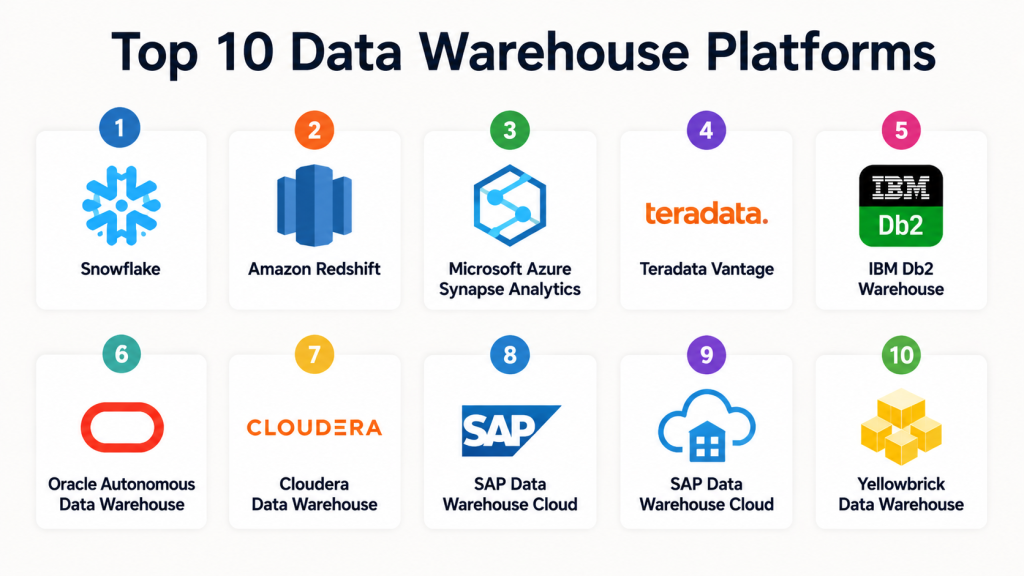
Top 10 Data Warehouse Platforms
#1 — Snowflake
Short description: Cloud-native data warehouse enabling scalable analytics for organizations of all sizes. Ideal for enterprises requiring flexible compute and storage separation with seamless integration for marketing analytics.
Key Features
- Multi-cloud deployment (AWS, Azure, Google Cloud)
- Automatic scaling and workload management
- Near-real-time data ingestion support
- Secure data sharing across teams or organizations
- Support for structured and semi-structured data
- Integration with BI and influencer marketing tools
- Time travel and fail-safe for data recovery
Pros
- Highly scalable and elastic performance
- Strong ecosystem and marketplace integrations
Cons
- Cost can grow rapidly with high query volumes
- Cloud-only deployment may not suit all compliance needs
Platforms / Deployment
- Web / Windows / macOS / Linux
- Cloud
Security & Compliance
- MFA, encryption, role-based access control
- SOC 2, ISO 27001, GDPR
Integrations & Ecosystem
- Tableau, Power BI
- Fivetran, Stitch, Matillion
- Salesforce, Marketo
- Python, Spark integration
Support & Community
- Extensive documentation and community forums
- Tiered support plans available
#2 — Amazon Redshift
Short description: Cloud-based warehouse with fast query performance and scalable storage. Suitable for enterprises leveraging AWS ecosystem for analytics and marketing data consolidation.
Key Features
- Massively parallel processing
- AWS analytics and ML integration
- Columnar storage
- Redshift Spectrum for S3 queries
- Automated backups and snapshots
- Concurrency scaling
- SQL-based interface
Pros
- Tight AWS ecosystem integration
- Mature enterprise adoption
Cons
- Complex pricing
- Performance tuning requires expertise
Platforms / Deployment
- Web / Windows / macOS / Linux
- Cloud
Security & Compliance
- Encryption in transit and at rest
- IAM integration, MFA
- SOC 2, ISO 27001, GDPR, HIPAA
Integrations & Ecosystem
- AWS Glue, QuickSight, SageMaker
- ETL: Talend, Matillion
- Marketing tools via API
Support & Community
- AWS support tiers
- Large community and online resources
#3 — Google BigQuery
Short description: Serverless, fully-managed warehouse ideal for analytics on large datasets. Suited for scalable cloud-native influencer marketing insights.
Key Features
- Serverless architecture
- Real-time analytics streaming
- Standard SQL support
- Built-in ML via BigQuery ML
- Columnar storage
- Google ecosystem integration
- Pay-per-query pricing
Pros
- Simple scalability
- High performance on large datasets
Cons
- Query costs fluctuate
- Limited infrastructure control
Platforms / Deployment
- Web / Windows / macOS / Linux
- Cloud
Security & Compliance
- Encryption in transit and at rest
- SSO/SAML support
- SOC 2, ISO 27001, GDPR, HIPAA
Integrations & Ecosystem
- Google Data Studio, Looker
- ETL: Fivetran, Stitch
- Python, R, Java APIs
Support & Community
- Google Cloud support plans
- Active forums and tutorials
#4 — Microsoft Azure Synapse Analytics
Short description: Integrated analytics platform combining warehousing and big data analytics, tailored for Microsoft ecosystem users.
Key Features
- SQL-based warehousing
- On-demand or provisioned query processing
- Power BI & Azure ML integration
- Data lake analytics
- Security & compliance management
- Automated indexing & caching
- Hybrid transactional/analytical processing
Pros
- Strong Microsoft stack integration
- Flexible query and storage
Cons
- Setup and tuning complexity
- Pricing structure can be confusing
Platforms / Deployment
- Web / Windows
- Cloud / Hybrid
Security & Compliance
- Encryption, RBAC, auditing
- SOC 2, ISO 27001, GDPR, HIPAA
Integrations & Ecosystem
- Power BI, Azure Data Factory
- Microsoft 365, Dynamics 365
- REST API and SDK support
Support & Community
- Microsoft support plans
- Active developer community
#5 — Teradata Vantage
Short description: Enterprise-grade warehouse with advanced analytics, AI, and machine learning capabilities for marketing insights.
Key Features
- Multi-cloud & hybrid support
- Advanced analytics and ML
- Scalable parallel processing
- Unified data access
- Query optimization
- Security & governance
- Data virtualization
Pros
- Robust analytics capabilities
- Enterprise-scale performance
Cons
- High licensing cost
- Complex setup & maintenance
Platforms / Deployment
- Web / Windows / Linux
- Cloud / Hybrid
Security & Compliance
- Encryption, RBAC, audit logs
- SOC 2, ISO 27001, GDPR
Integrations & Ecosystem
- Tableau, Power BI
- ETL: Informatica, Talend
- APIs for custom integrations
Support & Community
- Enterprise support tiers
- Active forums
#6 — IBM Db2 Warehouse
Short description: Offers on-premise and cloud deployment with scalable analytics for structured/semi-structured data.
Key Features
- Columnar storage
- Integrated analytics & ML
- Multi-cloud/hybrid support
- Secure data sharing
- Automated workload optimization
- SQL interface
- Large-scale analytics
Pros
- Strong enterprise analytics
- Flexible deployment
Cons
- Higher cost for small teams
- Learning curve for setup
Platforms / Deployment
- Windows / Linux / macOS
- Cloud / Self-hosted / Hybrid
Security & Compliance
- Encryption, RBAC, MFA
- SOC 2, ISO 27001, GDPR
Integrations & Ecosystem
- IBM Cognos, Watson Analytics
- ETL: DataStage, Talend
- Python, Java, R APIs
Support & Community
- Enterprise support
- Comprehensive docs
#7 — Oracle Autonomous Data Warehouse
Short description: Cloud-native, self-driving warehouse designed for high-performance analytics with minimal administration.
Key Features
- Automated provisioning/scaling
- Integrated analytics & ML
- High availability
- SQL & REST API support
- Compute-storage separation
- Security monitoring
- Oracle ecosystem integration
Pros
- Minimal administration
- Reliable and scalable
Cons
- Cloud-only may not suit all
- Higher cost for smaller deployments
Platforms / Deployment
- Web / Windows / Linux / macOS
- Cloud
Security & Compliance
- Encryption, RBAC, auditing
- SOC 2, ISO 27001, GDPR, HIPAA
Integrations & Ecosystem
- Oracle Analytics, BI tools
- ETL: Informatica, ODI
- Automation APIs
Support & Community
- Oracle support tiers
- Developer & enterprise forums
#8 — Cloudera Data Warehouse
Short description: Cloud and on-premise warehouse integrated with big data and ML tools for analytics-driven marketing insights.
Key Features
- Hybrid deployment
- Big data integration (Hadoop, Spark)
- Real-time streaming
- SQL analytics
- RBAC and governance
- Multi-tenant architecture
- Data lineage support
Pros
- Strong big data integration
- Flexible deployment
Cons
- Complex for small teams
- Requires specialized skills
Platforms / Deployment
- Web / Windows / Linux
- Cloud / Hybrid / Self-hosted
Security & Compliance
- Encryption, RBAC, audit logs
- SOC 2, ISO 27001, GDPR
Integrations & Ecosystem
- Tableau, Power BI
- ETL: Talend, Informatica
- APIs for custom apps
Support & Community
- Enterprise support
- Documentation & forums
#9 — SAP Data Warehouse Cloud
Short description: Unifies data across sources with strong analytics and reporting, ideal for SAP ecosystem enterprises.
Key Features
- Cloud-native warehouse
- SAP BTP integration
- Real-time analytics
- Data governance & modeling
- AI-driven insights
- SQL interface
- Collaboration features
Pros
- Seamless SAP ecosystem integration
- Strong analytics & governance
Cons
- Best for SAP customers
- Higher cost for smaller teams
Platforms / Deployment
- Web / Windows
- Cloud
Security & Compliance
- Encryption, RBAC, SSO
- SOC 2, ISO 27001, GDPR
Integrations & Ecosystem
- SAP Analytics Cloud, BI tools
- ETL: SAP Data Services
- Python, Java APIs
Support & Community
- SAP enterprise support
- Active community & docs
#10 — Yellowbrick Data Warehouse
Short description: High-performance, hybrid cloud warehouse with extremely fast query performance for marketing and influencer analytics.
Key Features
- MPP architecture
- Hybrid cloud/on-prem
- ANSI SQL support
- Data replication & backup
- Real-time analytics
- BI tool integration
- Automated scaling
Pros
- Extremely fast queries
- Flexible deployment
Cons
- Smaller ecosystem
- Less community support
Platforms / Deployment
- Web / Windows / Linux
- Cloud / Hybrid / Self-hosted
Security & Compliance
- Encryption, RBAC, MFA
- SOC 2, ISO 27001, GDPR
Integrations & Ecosystem
- Tableau, Power BI, Looker
- ETL: Fivetran, Matillion
- APIs for custom integration
Support & Community
- Enterprise support
- Growing online community
Comparison Table (Top 10)
| Tool Name | Best For | Platform(s) Supported | Deployment | Standout Feature | Public Rating |
|---|---|---|---|---|---|
| Snowflake | Enterprise & SMB | Web/Windows/macOS/Linux | Cloud | Multi-cloud, scalable compute/storage | N/A |
| Amazon Redshift | AWS users | Web/Windows/macOS/Linux | Cloud | AWS analytics integration | N/A |
| Google BigQuery | Serverless analytics | Web/Windows/macOS/Linux | Cloud | Serverless architecture | N/A |
| Azure Synapse | Microsoft stack | Web/Windows | Cloud/Hybrid | Hybrid analytics & data lake | N/A |
| Teradata Vantage | Large enterprises | Web/Windows/Linux | Cloud/Hybrid | Advanced analytics & ML | N/A |
| IBM Db2 Warehouse | Enterprise analytics | Windows/Linux/macOS | Cloud/Self-hosted/Hybrid | Multi-cloud & flexible analytics | N/A |
| Oracle ADW | Minimal admin | Web/Windows/Linux/macOS | Cloud | Self-driving automation | N/A |
| Cloudera DW | Big data & ML | Web/Windows/Linux | Cloud/Hybrid/Self-hosted | Big data integration | N/A |
| SAP DWC | SAP customers | Web/Windows | Cloud | SAP ecosystem integration | N/A |
| Yellowbrick DW | Fast query analytics | Web/Windows/Linux | Cloud/Hybrid/Self-hosted | High-performance MPP | N/A |
Evaluation & Scoring of Data Warehouse Platforms
| Tool Name | Core (25%) | Ease (15%) | Integrations (15%) | Security (10%) | Performance (10%) | Support (10%) | Value (15%) | Weighted Total |
|---|---|---|---|---|---|---|---|---|
| Snowflake | 9 | 8 | 9 | 9 | 9 | 8 | 7 | 8.6 |
| Amazon Redshift | 8 | 7 | 8 | 8 | 8 | 7 | 7 | 7.7 |
| Google BigQuery | 9 | 9 | 8 | 8 | 9 | 8 | 8 | 8.6 |
| Azure Synapse | 8 | 7 | 8 | 8 | 8 | 7 | 7 | 7.7 |
| Teradata Vantage | 9 | 6 | 8 | 9 | 9 | 8 | 6 | 7.9 |
| IBM Db2 Warehouse | 8 | 7 | 7 | 8 | 8 | 7 | 7 | 7.5 |
| Oracle ADW | 9 | 9 | 8 | 8 | 9 | 8 | 7 | 8.4 |
| Cloudera DW | 8 | 6 | 8 | 8 | 8 | 7 | 7 | 7.5 |
| SAP DWC | 8 | 7 | 7 | 8 | 8 | 7 | 6 | 7.3 |
| Yellowbrick DW | 8 | 7 | 7 | 8 | 9 | 7 | 7 | 7.7 |
Interpretation: Weighted totals identify platforms with the best balance between features, ease, integrations, security, performance, support, and value.
Which Data Warehouse Platform Is Right for You?
Solo / Freelancer
- BigQuery or Snowflake for serverless, low-maintenance analytics.
- Focus on pay-per-query pricing and simple BI integrations.
SMB
- Snowflake, Redshift, or Yellowbrick for scalable cloud analytics.
- Easy integration with influencer marketing platforms.
Mid-Market
- Azure Synapse, Teradata, or IBM Db2 for hybrid deployments.
- Balanced feature set with analytics and compliance.
Enterprise
- Teradata, Oracle ADW, SAP DWC for large-scale operations.
- Advanced analytics, AI integration, multi-cloud support, robust governance.
Budget vs Premium
- Budget: Yellowbrick, BigQuery serverless mode.
- Premium: Teradata, Snowflake, Oracle ADW for advanced features and SLAs.
Feature Depth vs Ease of Use
- High feature depth: Teradata, SAP DWC, Oracle ADW.
- Ease of use: BigQuery, Snowflake, Azure Synapse.
Integrations & Scalability
- Ensure BI, ETL, and marketing tool compatibility.
- Multi-cloud and hybrid options improve scalability and flexibility.
Security & Compliance Needs
- For regulated industries, prioritize SOC 2, ISO 27001, HIPAA compliance.
- Snowflake, Redshift, and BigQuery provide robust enterprise-grade security.
Frequently Asked Questions (FAQs)
What is a data warehouse platform?
A centralized system for storing and analyzing structured and semi-structured data. Supports BI, reporting, and analytics.
How do I choose the right platform?
Consider data volume, analytics needs, deployment, integrations, security, and budget.
Are cloud-only platforms secure?
Yes, providers use encryption, access controls, and compliance certifications. Always verify industry-specific regulations.
Can warehouses handle real-time analytics?
Many platforms, like Snowflake and BigQuery, support near-real-time data ingestion and analytics.
ETL vs ELT – what’s the difference?
ETL transforms data before loading; ELT loads raw data first, then transforms it within the warehouse.
How does pricing work?
Subscription, usage-based, or hybrid. Cloud platforms often charge for storage and compute usage.
Can I integrate influencer marketing data?
Yes, via APIs or connectors for analytics on campaigns and ROI.
Common mistakes deploying a warehouse?
Over-provisioning, ignoring security, underestimating storage, and poor integration planning.
Are these platforms scalable?
Yes, elastic scaling allows compute and storage adjustments based on demand.
Are open-source options viable?
Yes, like Cloudera, but support and integrations may be limited compared to commercial options.
Conclusion
Selecting the right data warehouse platform depends on organization size, data volume, analytics needs, and integration requirements. Solo practitioners benefit from lightweight serverless options, whereas enterprises may need hybrid or multi-cloud solutions with AI, analytics, and compliance features. Start by shortlisting 2–3 platforms, run pilot tests, validate integrations and security, and scale based on results. This approach ensures influencer marketing and business analytics data drive actionable insights efficiently.
