Upgrade & Secure Your Future with DevOps, SRE, DevSecOps, MLOps!
We spend hours scrolling social media and waste money on things we forget, but won’t spend 30 minutes a day earning certifications that can change our lives.
Master in DevOps, SRE, DevSecOps & MLOps by DevOps School!
Learn from Guru Rajesh Kumar and double your salary in just one year.
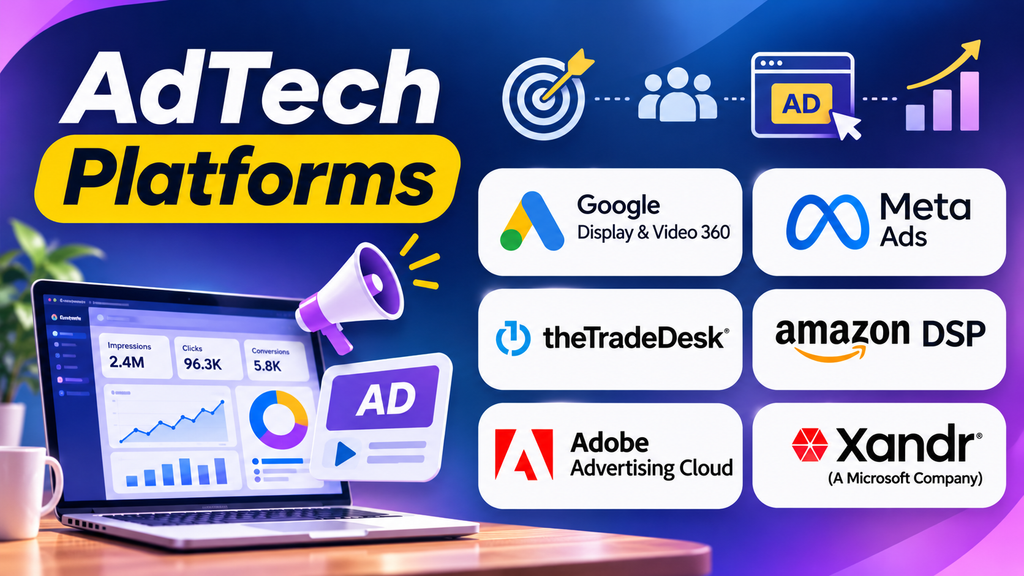
AdTech Platforms: A Complete Guide
Digital advertising has become an essential part of modern marketing. Businesses use online ads to reach potential customers, increase brand awareness, generate leads, and drive sales. Managing these campaigns across multiple channels can be challenging without the right technology. This is where advertising technology, commonly known as AdTech, plays an important role.
AdTech platforms help advertisers plan, buy, deliver, measure, and optimize digital advertising campaigns. They use data, automation, targeting, and analytics to make advertising more efficient and measurable.
What Are AdTech Platforms?
AdTech platforms are software solutions that support the buying, selling, delivery, and measurement of digital advertisements. They connect advertisers, publishers, advertising exchanges, and data systems to help deliver relevant ads to audiences across websites, apps, video platforms, and other digital channels.
Depending on the platform, marketers may use AdTech tools to manage search ads, display advertising, video campaigns, programmatic media buying, or connected-TV advertising.
How AdTech Platforms Work
A typical digital advertising process involves several connected components:
- Campaign planning: Advertisers define their objectives, target audience, budget, and performance goals.
- Audience targeting: Available signals and permitted data help advertisers identify relevant audience groups.
- Ad buying: Advertisers purchase advertising placements directly or through automated programmatic systems.
- Ad delivery: The selected creative is served across eligible websites, apps, or other digital properties.
- Measurement: Campaigns are evaluated using metrics such as impressions, clicks, conversions, reach, and cost.
- Optimization: Marketers adjust bids, budgets, creative assets, and targeting to improve performance.
The exact process varies by platform, campaign type, and privacy requirements.
Types of AdTech Platforms
1. Demand-Side Platforms (DSPs)
A demand-side platform helps advertisers and agencies purchase digital advertising inventory programmatically. It can provide access to multiple publishers and exchanges through one buying interface.
Examples include The Trade Desk, Google Display & Video 360, and Amazon DSP. Their capabilities, inventory access, and eligibility requirements differ.
2. Ad Networks
Ad networks aggregate advertising inventory from publishers and offer it to advertisers. They can simplify campaign setup and help advertisers access particular audiences or placements.
Google Ads supports search, display, video, and other campaign types. Although it is a broad advertising platform rather than simply an ad network, it is widely used by businesses managing paid digital campaigns.
3. Ad Exchanges
Ad exchanges facilitate the buying and selling of advertising inventory, often through real-time auctions. They connect eligible buyers and sellers and help determine which advertisement wins an available impression.
4. Ad Servers
Ad servers manage the delivery of advertisements and can support creative rotation, impression tracking, campaign pacing, and reporting. Google Campaign Manager 360 is an example of an ad management and measurement solution used in more complex advertising operations.
5. Retail Media Advertising Platforms
Retail media platforms let brands advertise through retailer-owned properties and related advertising inventory. They are especially useful when brands want to reach shoppers closer to the point of purchase.
Examples include Amazon Ads and Walmart Connect, subject to their respective market and account requirements.
6. Connected TV (CTV) and Video Advertising Platforms
These solutions support video advertising across streaming services and connected television environments. Depending on the platform, advertisers can plan, buy, and measure video campaigns across eligible inventory.
Popular AdTech Platforms to Know
| Platform | Common use |
|---|---|
| Google Ads | Search, display, video, and other digital advertising campaigns |
| Google Display & Video 360 | Programmatic media planning, buying, and campaign management |
| The Trade Desk | Independent programmatic advertising and media buying |
| Amazon DSP | Programmatic advertising using eligible Amazon and third-party inventory |
| Meta Ads Manager | Advertising across Facebook, Instagram, and supported placements |
| Google Campaign Manager 360 | Ad serving, campaign management, and measurement |
| Microsoft Advertising | Search advertising and other supported advertising formats |
| Walmart Connect | Retail media advertising for eligible brands and sellers |
These platforms are not interchangeable. Some focus on specific channels, while others support broader media buying, campaign management, or measurement workflows.
Key Features to Look For
Audience targeting: Look for tools that help reach relevant audiences while respecting applicable consent, privacy, and platform policies.
Campaign automation: Automated bidding, budget pacing, and rules can reduce repetitive work and help teams respond to performance changes.
Cross-channel management: If a business advertises across multiple channels, it may benefit from tools that consolidate campaign operations or reporting.
Analytics and attribution: Reliable reporting helps marketers understand how campaigns contribute to outcomes. Attribution models have limitations, so reported conversions should be interpreted in context.
Creative testing: Testing variations in headlines, images, videos, and calls to action can reveal which messages resonate with the target audience.
Brand safety and fraud prevention: Suitable controls can help reduce exposure to inappropriate placements and suspicious traffic.
Privacy and data governance: Evaluate consent management, data access controls, retention practices, and compliance support before adopting a platform.
Benefits of Using AdTech Platforms
- Improved efficiency: Automation can simplify campaign execution and routine optimization.
- Better budget management: Performance reporting helps marketers identify areas where spending may need to change.
- Broader reach: Eligible platforms can connect advertisers with audiences across different digital environments.
- More measurable campaigns: Reporting tools make it easier to monitor delivery and performance against defined goals.
- Faster experimentation: Creative and audience tests can help teams learn what works.
- Scalable operations: Centralized workflows can support campaigns across multiple markets or channels.
Results depend on campaign quality, budget, measurement setup, audience availability, and the suitability of the platform.
How to Choose the Right AdTech Platform
Start with the business objective rather than choosing a platform based only on popularity.
- Define the goal. Lead generation, online sales, brand awareness, and app installs require different campaign strategies.
- Identify your audience and channels. Choose a solution that reaches your intended audience in the environments where they spend time.
- Set a realistic budget. Consider media spend, platform fees, creative production, implementation, and ongoing management.
- Check measurement capabilities. Confirm that the platform can track the outcomes that matter to your business.
- Review integrations. Assess compatibility with your analytics tools, CRM, consent systems, and existing marketing technology.
- Evaluate privacy and brand safety. Review data handling, placement controls, reporting transparency, and relevant compliance requirements.
- Run a controlled test. Start with a focused campaign, establish a baseline, and scale only when performance supports it.
Small businesses may find that Google Ads or Meta Ads Manager provides enough functionality to begin. Larger advertisers and agencies may need programmatic buying, more advanced measurement, or retail media capabilities.
AdTech vs. MarTech
AdTech and MarTech are related but serve different primary purposes.
| Area | AdTech | MarTech |
|---|---|---|
| Main focus | Paid advertising and media delivery | Broader marketing activities and customer relationships |
| Common tasks | Media buying, ad serving, targeting, campaign measurement | Email marketing, CRM, automation, content, and customer engagement |
| Typical goal | Reach audiences and improve advertising outcomes | Manage customer journeys and support long-term engagement |
| Example tools | The Trade Desk, Google Display & Video 360 | HubSpot, Mailchimp, and supported CRM platforms |
Businesses often integrate both categories to connect advertising activity with lead management, sales, and customer retention.
Best Practices for Better AdTech Performance
- Establish clear campaign objectives and measurable KPIs before launching.
- Use high-quality creative assets that fit each placement and audience.
- Test one or two meaningful changes at a time when practical.
- Monitor conversion tracking and verify that events are recorded correctly.
- Review placement quality, traffic validity, and brand-safety settings.
- Use first-party data responsibly and only where appropriate permissions and policies allow.
- Compare platform-reported results with analytics and business outcomes, accounting for attribution differences.
- Review performance regularly instead of relying on automated settings without oversight.
Common Challenges
AdTech can introduce complexity through fragmented reporting, different attribution methods, platform fees, privacy restrictions, and limited transparency across parts of the advertising supply chain. Teams may also struggle when conversion tracking is incomplete or when campaign objectives do not match the selected buying strategy.
To reduce these risks, document measurement rules, audit tracking, establish clear ownership, and evaluate results against business outcomes rather than impressions or clicks alone.
Conclusion
AdTech platforms help businesses plan, deliver, manage, and measure digital advertising across an increasingly complex media landscape. From self-service advertising tools to enterprise programmatic platforms, the right solution depends on business objectives, budget, audience, channels, and measurement needs.
By selecting suitable technology, maintaining responsible data practices, testing campaigns methodically, and reviewing meaningful performance indicators, marketers can build a more structured and effective digital advertising strategy.
