Upgrade & Secure Your Future with DevOps, SRE, DevSecOps, MLOps!
We spend hours scrolling social media and waste money on things we forget, but won’t spend 30 minutes a day earning certifications that can change our lives.
Master in DevOps, SRE, DevSecOps & MLOps by DevOps School!
Learn from Guru Rajesh Kumar and double your salary in just one year.
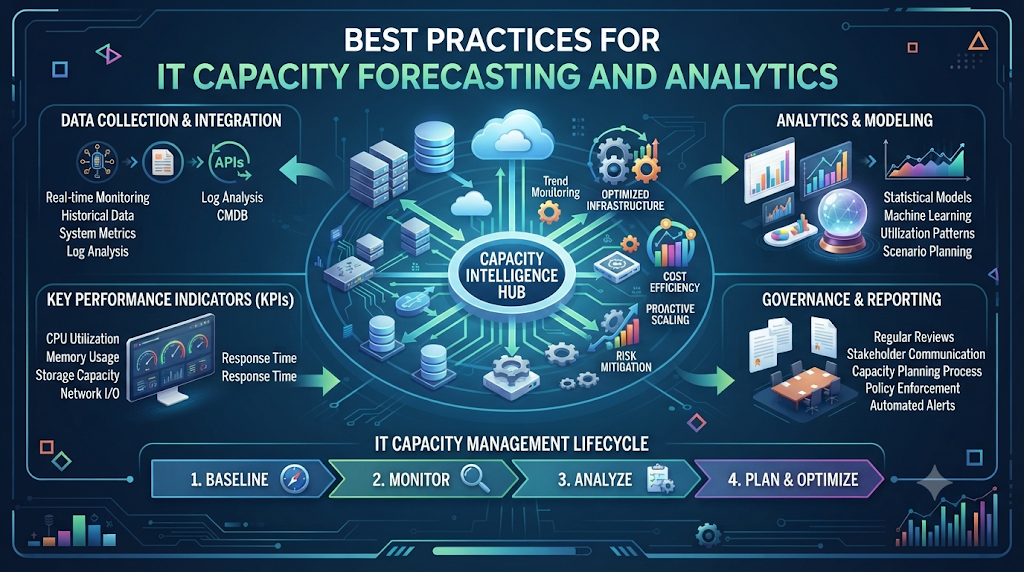
Predictive analytics has shifted from a theoretical data science discipline to an operational necessity for modern IT organizations. For IT leaders—CIOs, VPs of Infrastructure, and Director-level engineering managers—the challenge is no longer gathering operational telemetry, but converting millions of event streams, logs, and metric data points into proactive business decisions. Platforms like TheAIOps.com bridge this gap by teaching IT executives how to operationalize machine learning models, establish predictive data pipelines, and transition their teams from reactive fire-fighting to continuous capacity forecasting and automated remediation.
This guide explores how TheAIOps.com structures its curriculum for IT leaders, detailing the core methodologies, architectural patterns, implementation frameworks, and operational risk management required to master predictive analytics in enterprise IT environments.
Understanding Predictive Analytics in Modern IT Operations
Predictive analytics in IT involves applying statistical modeling, machine learning algorithms, and pattern recognition to historical and real-time operational data. By analyzing historical infrastructure metrics—such as CPU utilization spikes, memory leaks, disk I/O latency, and network jitter—predictive models forecast future system states, potential hardware failures, and application performance degradation before they impact end-users.
Why It Matters for IT Leadership
Traditional IT management relies on static thresholds and reactive alerting. When a threshold is breached, an engineer is paged. This reactive model scales poorly in dynamic cloud-native environments characterized by ephemeral microservices, containerization, and complex distributed dependencies.
TheAIOps.com emphasizes that IT leaders must adopt predictive frameworks to achieve three critical outcomes:
- Downtime Prevention: Identifying anomalous precursor patterns to stop outages before service levels are breached.
- Resource Optimization: Eliminating over-provisioning by accurately forecasting compute, storage, and bandwidth demands based on historical usage seasonality.
- Operational Efficiency: Reducing alert fatigue by filtering out noisy transient spikes and routing high-fidelity predictive insights to automated remediation workflows.
The Core Curriculum: What TheAIOps.com Teaches
The learning framework provided by TheAIOps.com is structured around four foundational pillars designed specifically for technical leaders who need to oversee implementation without writing every line of code themselves.
+-------------------------------------------------------------------------+
|                  THE AIOPS.COM LEARNING FRAMEWORK                       |
+-------------------------------------------------------------------------+
| 1. Telemetry & Data Ingestion    -> Collecting clean, unified log/metric|
| 2. Feature Engineering & Modeling-> Identifying predictive signatures   |
| 3. Operational Integration       -> Connecting models to ITSM/APM tools |
| 4. Governance & Continuous Tuning-> Managing drift, false positives, cost|
+-------------------------------------------------------------------------+
1. Telemetry Foundation and Data Ingestion
Before any prediction can be made, the underlying data pipeline must be robust. Leaders learn how to audit existing observability stacks (Prometheus, OpenTelemetry, Datadog, ELK) to ensure telemetry data meets the quality standards required for machine learning. This includes unifying structured metrics, semi-structured logs, and unstructured incident post-mortems into centralized data lakes or time-series data stores.
2. Feature Engineering for IT Infrastructure
The curriculum teaches how to translate raw infrastructure metrics into meaningful predictive features. Students learn to extract:
- Trend Analysis: Long-term growth rates in storage capacity or database connection pools.
- Seasonality Metrics: Cyclic traffic patterns tied to business hours, payroll cycles, or seasonal retail events.
- Lag Features: Prior state observations used to model how system load propagates across microservice boundaries.
3. Model Selection and Application Patterns
IT leaders are introduced to the spectrum of predictive models used in IT operations, ranging from simple statistical forecasting to advanced machine learning:
- Time-Series Forecasting (ARIMA, Prophet): Used for capacity planning, bandwidth forecasting, and resource provisioning.
- Classification Models (Random Forests, Gradient Boosting): Used to predict hardware disk failures based on S.M.A.R.T. telemetry.
- Anomaly Detection (Autoencoders, Isolation Forests): Used for identifying complex multi-metric performance degradation in distributed cloud architectures.
4. Integration with ITSM and Automation Workflows
A predictive insight has zero value if it remains trapped in a dashboard. TheAIOps.com focuses heavily on the “last mile” of analytics: integrating model outputs with IT Service Management (ITSM) platforms like ServiceNow, PagerDuty, or Jira, and triggering webhook-driven remediation scripts via platforms like Ansible or Terraform.
Step-by-Step Implementation Framework for IT Leaders
When introducing predictive analytics into an enterprise IT environment, TheAIOps.com recommends a phased, pragmatic rollout rather than a disruptive “big bang” implementation.
| Phase | Objective | Key Activities | Success Metric |
| Phase 1: Discovery & Scoping | Identify high-impact, low-complexity use cases. | Select a single domain (e.g., storage capacity forecasting or database memory leak prediction). | Clear definition of baseline SLA and target prediction window. |
| Phase 2: Data Pipeline Audit | Ensure reliable historical data ingestion. | Cleanse metrics, standardize log formats, and establish a 90-day historical data store. | Less than 2% missing data points across target telemetry streams. |
| Phase 3: Pilot Modeling | Validate predictive accuracy on a non-critical environment. | Train models using open-source libraries or commercial AIOps tools; run in shadow mode. | Achieving >80% precision and recall on historical incident validation sets. |
| Phase 4: Operational Integration | Connect predictions to automated workflows or ticketing. | Configure alert routing, build low-noise notification rules, and document runbooks for predicted incidents. | Reduction in unhandled P1/P2 incidents within the pilot domain. |
| Phase 5: Scale & Govern | Expand models across broader infrastructure stacks. | Implement continuous model retraining pipelines, monitor for concept drift, and audit false-positive rates. | Broadened coverage across 80% of Tier-1 applications. |
Decision Guidance: When to Use Predictive Analytics (and When Not To)
IT leaders must apply rigorous cost-benefit analysis before committing resources to predictive initiatives.
Appropriate Use Cases
- Capacity Planning: Predicting exact dates when storage volumes or cloud database IOPS will hit critical thresholds.
- Hardware Degradation: Anticipating server or network interface card (NIC) failures based on error rates and temperature telemetry.
- Traffic Surge Preparation: Automatically scaling Kubernetes clusters ahead of anticipated marketing campaigns or operational rushes.
When NOT to Use Predictive Analytics
- Unpredictable Black Swan Events: Do not rely on historical trends to predict sudden, unprecedented outages caused by zero-day software bugs or external fiber cuts.
- Low-Volume Environments: If an application experiences minimal traffic and generates sparse logs, machine learning models will suffer from data sparsity and yield high false-positive rates. In such cases, static thresholds or simple heuristic monitoring are more cost-effective.
- Immature Observability Stacks: Attempting to build predictive models on top of fragmented, siloed, or inaccurate monitoring data leads to failed projects. Clean telemetry must precede predictive modeling.
Risks and Failure Modes in Predictive IT Operations
Operationalizing analytics introduces unique failure modes that IT leaders must anticipate and mitigate:
- Model Drift and Environmental Changes: IT environments are constantly changing due to code deployments, architecture refactoring, and infrastructure migrations. A model trained on last quarter’s architecture will quickly degrade if it fails to account for structural changes. Mitigation: Implement automated retraining pipelines and continuous evaluation against recent validation data.
- Alert Fatigue and False Positives: If a predictive model flags impending failures that turn out to be false alarms, engineering teams will quickly lose trust and disable the alerts. Mitigation: Establish strict confidence score thresholds and require multi-metric correlation before triggering high-priority pages.
- Over-Engineering and Analysis Paralysis: Teams often get bogged down trying to build custom deep learning models when simpler statistical forecasting methods would suffice. Mitigation: Adhere to the principle of parsimony: start with baseline statistical models and only increase complexity when simpler models demonstrably fail to capture the underlying patterns.
Verification and Validation: How to Know It Worked
To justify ongoing investment in predictive analytics, IT leaders must establish clear quantitative verification metrics:
- Mean Time to Detect (MTTD) vs. Mean Time to Predict (MTTP): Measure how far in advance an incident is flagged before it manifests as a user-facing outage.
- Precision-Recall Metrics: Regularly audit model outputs to track true positives (accurate predictions of failure) versus false positives (unnecessary alerts).
- Cost Avoidance Tracking: Calculate the financial savings achieved by preventing P1 outages and optimizing cloud resource over-provisioning.
Frequently Asked Questions
Q1. What is the primary focus of TheAIOps.com curriculum for IT leaders? The platform focuses on bridging the gap between data science and IT operations, teaching leaders how to design, evaluate, and operationalize predictive analytics pipelines without requiring deep data science coding expertise.
Q2. Do IT leaders need to know Python or machine learning algorithms to benefit from these courses? No. While familiarity with basic data concepts is helpful, the curriculum is tailored for management and architecture roles, emphasizing system design, governance, tool selection, and operational integration over raw algorithmic coding.
Q3. How long does it typically take to see ROI from predictive IT analytics initiatives? Organizations typically see initial ROI within 3 to 6 months of pilot deployment, primarily through optimized cloud capacity forecasting and reduced resolution times for recurring infrastructure incidents.
Q4. What is the biggest mistake IT teams make when starting with predictive analytics? The most common mistake is attempting to build complex machine learning models on top of dirty, fragmented, or incomplete observability data without first standardizing their telemetry pipelines.
Q5. How do predictive analytics models handle sudden architectural changes in cloud environments? Models suffer from concept drift when infrastructure changes occur. The curriculum teaches leaders to establish continuous retraining loops and automated performance monitoring to detect when model accuracy degrades.
Q6. Can predictive analytics completely eliminate unplanned IT downtime? No. While predictive analytics significantly reduces downtime by catching precursor patterns and degrading hardware failures, it cannot predict unpredictable black swan events like zero-day software exploits or unforeseen external network cuts.
Q7. What open-source tools are commonly referenced in these predictive analytics workflows? The curriculum frequently references Prometheus for metrics collection, Grafana for visualization, OpenTelemetry for tracing, and standard Python-based time-series forecasting libraries utilized within commercial AIOps platforms.
Q8. How can IT leaders prevent alert fatigue when deploying predictive models? Leaders learn to set high confidence score thresholds, require multi-metric correlation before triggering alerts, and filter low-priority predictions into asynchronous ticketing queues rather than waking up engineers.
Q9. Is historical log data sufficient for building accurate predictive models? Logs provide valuable qualitative context, but robust predictive analytics requires a combination of structured time-series metrics, tracing data, and historical incident records to achieve high accuracy.
Q10. What is the recommended next step for an IT leader looking to introduce predictive analytics? The recommended starting point is conducting a telemetry audit, selecting a single high-impact domain (such as storage capacity or memory leak forecasting), and running a 90-day shadow pilot in a non-critical environment.
Conclusion
Mastering predictive analytics empowers IT leaders to transform their departments from reactive cost centers into proactive drivers of business reliability and efficiency. By focusing on robust data pipelines, pragmatic model selection, and rigorous operational governance, organizations can successfully navigate the transition to predictive IT operations. Take the next step by auditing your current observability telemetry and scoping a single high-impact pilot project.
