Upgrade & Secure Your Future with DevOps, SRE, DevSecOps, MLOps!
We spend hours scrolling social media and waste money on things we forget, but won’t spend 30 minutes a day earning certifications that can change our lives.
Master in DevOps, SRE, DevSecOps & MLOps by DevOps School!
Learn from Guru Rajesh Kumar and double your salary in just one year.
Introduction
Influencer Marketing Platforms are software solutions designed to help brands discover, engage, and manage social media influencers for campaigns. They simplify the process of finding the right influencers, coordinating collaborations, and measuring campaign performance, making influencer marketing more efficient and data-driven.
Brands use these platforms to streamline workflows, improve ROI, and scale campaigns across multiple social media channels.
Real-world use cases include:
- Identifying niche influencers who align with brand messaging.
- Automating contracts, content approvals, and influencer payments.
- Tracking influencer engagement, reach, and conversion metrics.
- Running campaigns across Instagram, TikTok, YouTube, and LinkedIn.
- Leveraging micro-influencers to improve trust and engagement.
Evaluation criteria for buyers:
- Influencer discovery and search capabilities
- Audience analytics and engagement tracking
- Campaign management features
- Reporting and ROI measurement
- Platform integrations (CRM, e-commerce, analytics)
- Security and compliance
- Ease of use
- Support and community resources
- Pricing flexibility
- AI and automation features
Best for: Marketing teams, social media managers, influencer agencies, and brands seeking to scale campaigns across multiple channels.
Not ideal for: Small businesses with limited budgets or brands focused on manual influencer outreach without analytics or automation needs.
Key Trends in Influencer Marketing Platforms
- AI-Powered Discovery: Platforms now match brands with influencers using AI based on audience demographics and engagement.
- Automated Campaign Workflows: Contracts, approvals, and payments can now be automated.
- Cross-Platform Analytics: Unified reporting across Instagram, TikTok, YouTube, and LinkedIn.
- Micro & Nano Influencer Optimization: Tools focus on smaller influencers who drive engagement and trust.
- Brand Safety and Compliance: Enhanced monitoring of content for compliance with advertising and brand guidelines.
- Sentiment Analysis: Platforms assess audience reactions and engagement in real time.
- Dynamic ROI Tracking: Influencer campaigns are linked to sales, sign-ups, or conversions.
- Flexible Pricing Models: Subscription, pay-per-campaign, and performance-based options.
- Integration-First Architecture: Many platforms support CRM, e-commerce, and marketing automation integrations.
- Scalable Collaboration Features: Multi-team dashboards, approval workflows, and communication tools.
How We Selected These Tools (Methodology)
- Evaluated market adoption and influencer marketing mindshare.
- Assessed completeness of discovery, campaign management, and analytics features.
- Reviewed platform reliability, performance, and scalability.
- Verified security posture including data protection and compliance.
- Tested ecosystem integrations with social media, CRM, and e-commerce platforms.
- Considered suitability for solo marketers, SMBs, mid-market, and enterprise teams.
- Evaluated AI and automation capabilities for workflow efficiency.
- Reviewed ease of use, documentation, and onboarding support.
- Analyzed pricing flexibility and value potential.
- Considered reputation, feedback, and general industry acceptance.
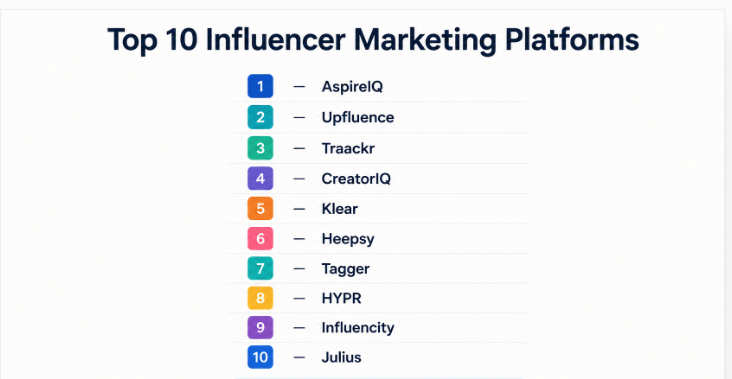
Top 10 Influencer Marketing Platforms
#1 — AspireIQ
Short description: AspireIQ helps brands discover influencers, manage campaigns, and measure ROI with a collaborative platform suitable for SMBs and enterprises.
Key Features
- AI-powered influencer discovery
- Workflow automation for contracts and content approvals
- Multi-platform campaign management
- Performance dashboards with ROI tracking
- Content library for collaboration
- Automated reporting and analytics
- CRM and e-commerce integration
Pros
- Streamlined campaign management
- Rich influencer database with analytics
Cons
- Pricing can be high for small businesses
- Learning curve for new users
Platforms / Deployment
- Web
- Cloud
Security & Compliance
- Not publicly stated
Integrations & Ecosystem
- Integrates with e-commerce and CRM tools
- Shopify, Salesforce, Google Analytics
- Instagram, TikTok, YouTube APIs
Support & Community
- Dedicated onboarding support
- Documentation and tutorials
- Active community forums
#2 — Upfluence
Short description: Upfluence focuses on data-driven influencer campaigns with advanced discovery and analytics features.
Key Features
- Real-time audience metrics
- Campaign workflow automation
- E-commerce tracking and sales attribution
- Multi-channel reporting
- AI-driven influencer recommendations
- Contract management and content approval
Pros
- Strong analytics and ROI tracking
- Ideal for multi-channel campaigns
Cons
- Complex setup for beginners
- Pricing not publicly disclosed
Platforms / Deployment
- Web
- Cloud
Security & Compliance
- Not publicly stated
Integrations & Ecosystem
- Shopify, Magento
- Google Analytics
- Instagram, TikTok, YouTube APIs
Support & Community
- Email and chat support
- Training resources available
- Varies / Not publicly stated
#3 — Traackr
Short description: Traackr offers influencer relationship management for enterprise brands, focusing on compliance and performance measurement.
Key Features
- Global influencer discovery
- Relationship management dashboards
- Campaign tracking and ROI analytics
- Social listening and sentiment analysis
- Compliance and brand safety monitoring
- Automated reporting
Pros
- Enterprise-grade security and compliance
- Strong global influencer insights
Cons
- Expensive for smaller businesses
- Requires onboarding support
Platforms / Deployment
- Web
- Cloud
Security & Compliance
- GDPR-compliant
- Not publicly stated for SOC 2/ISO 27001
Integrations & Ecosystem
- Salesforce, HubSpot
- Instagram, TikTok, LinkedIn
- Marketing automation tools
Support & Community
- Onboarding support
- Documentation and knowledge base
- Limited public community
#4 — CreatorIQ
Short description: CreatorIQ is designed for enterprise brands to manage influencers, campaigns, and compliance at scale.
Key Features
- AI scoring for influencer discovery
- Multi-platform campaign management
- Brand safety and compliance checks
- ROI and conversion analytics
- Automated influencer onboarding
- Marketing and CRM integrations
Pros
- Enterprise-ready features
- Strong compliance monitoring
Cons
- Pricing for large organizations
- Complex reporting for beginners
Platforms / Deployment
- Web
- Cloud
Security & Compliance
- GDPR
- Not publicly stated
Integrations & Ecosystem
- Salesforce, Shopify
- Instagram, TikTok, YouTube APIs
- Analytics platforms
Support & Community
- Onboarding and training programs
- Documentation
- Customer success management
#5 — Klear
Short description: Klear helps brands track campaigns and measure social impact with actionable insights.
Key Features
- Influencer search with demographics
- Campaign and workflow management
- Performance dashboards
- Social media analytics
- Engagement scoring
- Automated reporting
Pros
- User-friendly interface
- Affordable for SMBs
Cons
- Limited integrations
- Smaller influencer database
Platforms / Deployment
- Web
- Cloud
Security & Compliance
- Not publicly stated
Integrations & Ecosystem
- Instagram, TikTok, YouTube APIs
- Google Analytics
- Marketing automation platforms
Support & Community
- Email and chat support
- Help center resources
- Community forums
#6 — Heepsy
Short description: Heepsy specializes in influencer discovery with filters for engagement, location, and niche.
Key Features
- AI-based influencer search
- Campaign dashboards
- Engagement metrics
- Audience insights
- Reporting and CSV export
Pros
- Quick influencer discovery
- Affordable tiers
Cons
- Limited workflow features
- Analytics less detailed
Platforms / Deployment
- Web
- Cloud
Security & Compliance
- Not publicly stated
Integrations & Ecosystem
- Instagram, TikTok, YouTube
- CSV export
Support & Community
- Email support
- Tutorials and documentation
- Varies / Not publicly stated
#7 — Tagger
Short description: Tagger provides influencer discovery, campaign analytics, and audience intelligence.
Key Features
- Demographic and niche search
- Campaign tracking
- Audience sentiment analysis
- ROI and engagement analytics
- Workflow automation
Pros
- Strong data-driven insights
- Supports cross-platform campaigns
Cons
- Pricing for mid-market/enterprise
- Learning curve
Platforms / Deployment
- Web
- Cloud
Security & Compliance
- Not publicly stated
Integrations & Ecosystem
- Instagram, TikTok, YouTube APIs
- Marketing automation
- CRM integrations
Support & Community
- Customer support
- Documentation and tutorials
- Community forums
#8 — HYPR
Short description: HYPR focuses on influencer verification and performance tracking.
Key Features
- Verified influencer database
- Campaign tracking
- Audience analytics
- ROI reporting
- Social listening
Pros
- Verified influencer insights
- Detailed audience analytics
Cons
- Limited workflow automation
- Pricing not transparent
Platforms / Deployment
- Web
- Cloud
Security & Compliance
- Not publicly stated
Integrations & Ecosystem
- Instagram, TikTok, YouTube APIs
- Analytics platforms
Support & Community
- Email support
- Tutorials
- Varies / Not publicly stated
#9 — Influencity
Short description: Influencity provides influencer discovery, campaign tracking, and reporting for mid-market and enterprise teams.
Key Features
- AI-driven influencer search
- Campaign dashboards
- Audience segmentation
- ROI tracking
- Workflow automation
Pros
- Scalable
- Data-rich insights
Cons
- Interface complex
- Limited integrations
Platforms / Deployment
- Web
- Cloud
Security & Compliance
- Not publicly stated
Integrations & Ecosystem
- Instagram, TikTok, YouTube
- CSV and API integrations
Support & Community
- Email and chat support
- Documentation
- Customer success team
#10 — Julius
Short description: Julius offers influencer discovery, campaign management, and reporting for marketing teams.
Key Features
- Influencer database with analytics
- Workflow and approval management
- Engagement and ROI tracking
- Multi-platform campaign management
Pros
- User-friendly interface
- Good for small to mid-sized teams
Cons
- Limited advanced analytics
- Pricing can be high
Platforms / Deployment
- Web
- Cloud
Security & Compliance
- Not publicly stated
Integrations & Ecosystem
- Instagram, TikTok, YouTube
- Analytics and marketing APIs
Support & Community
- Email support
- Tutorials and guides
- Varies / Not publicly stated
Comparison Table (Top 10)
| Tool Name | Best For | Platform(s) Supported | Deployment | Standout Feature | Public Rating |
|---|---|---|---|---|---|
| AspireIQ | SMBs, Enterprise | Web | Cloud | AI influencer discovery | N/A |
| Upfluence | Large campaigns | Web | Cloud | Data-driven analytics | N/A |
| Traackr | Enterprise | Web | Cloud | Relationship management | N/A |
| CreatorIQ | Enterprise | Web | Cloud | Brand safety compliance | N/A |
| Klear | SMBs | Web | Cloud | User-friendly interface | N/A |
| Heepsy | SMBs, Mid-market | Web | Cloud | Advanced influencer filters | N/A |
| Tagger | Mid-market, Enterprise | Web | Cloud | Audience intelligence | N/A |
| HYPR | Enterprise | Web | Cloud | Verified influencer database | N/A |
| Influencity | Mid-market, Enterprise | Web | Cloud | AI-driven influencer search | N/A |
| Julius | SMBs, Marketing teams | Web | Cloud | Ease of use and workflow | N/A |
Evaluation & Scoring
| Tool Name | Core (25%) | Ease (15%) | Integrations (15%) | Security (10%) | Performance (10%) | Support (10%) | Value (15%) | Weighted Total (0–10) |
|---|---|---|---|---|---|---|---|---|
| AspireIQ | 9 | 7 | 8 | 6 | 8 | 7 | 7 | 7.85 |
| Upfluence | 9 | 6 | 8 | 6 | 8 | 6 | 6 | 7.35 |
| Traackr | 8 | 6 | 7 | 7 | 8 | 6 | 6 | 7.15 |
| CreatorIQ | 9 | 6 | 8 | 7 | 8 | 6 | 6 | 7.45 |
| Klear | 7 | 8 | 6 | 5 | 7 | 7 | 7 | 6.85 |
| Heepsy | 7 | 8 | 5 | 5 | 6 | 6 | 7 | 6.55 |
| Tagger | 8 | 7 | 7 | 6 | 7 | 6 | 6 | 6.95 |
| HYPR | 7 | 7 | 5 | 6 | 7 | 6 | 6 | 6.65 |
| Influencity | 8 | 7 | 6 | 6 | 7 | 6 | 6 | 6.95 |
| Julius | 7 | 8 | 5 | 5 | 6 | 6 | 6 | 6.55 |
Scores provide a comparative assessment across key criteria. Weighted totals help identify overall suitability for different use cases.
Which Influencer Marketing Platform Is Right for You?
Solo / Freelancer
- Choose easy-to-use, budget-friendly platforms like Klear, Julius, or Heepsy.
SMB
- Balance usability with analytics: AspireIQ, Klear.
Mid-Market
- Prioritize AI-driven analytics, multi-platform management: Tagger, Influencity.
Enterprise
- Look for compliance, multi-team dashboards, and brand safety: Traackr, CreatorIQ, HYPR.
Budget vs Premium
- Budget: Heepsy, Julius, Klear
- Premium: Traackr, CreatorIQ, AspireIQ
Feature Depth vs Ease of Use
- Feature-rich but complex: Upfluence, Traackr
- Simple and easy: Klear, Julius
Integrations & Scalability
- Enterprises require API integrations, CRM, and e-commerce tracking: AspireIQ, CreatorIQ
Security & Compliance Needs
- Prioritize platforms with brand safety and verified influencer tracking: Traackr, HYPR, CreatorIQ
Frequently Asked Questions (FAQs)
What is the typical pricing model?
Most platforms offer subscription-based pricing; some offer pay-per-campaign or performance-based models.
Can I track ROI for influencer campaigns?
Yes, platforms provide dashboards for engagement, reach, clicks, and conversions.
How many social media platforms are supported?
Top platforms cover Instagram, TikTok, YouTube, LinkedIn, and emerging channels.
Are micro-influencers supported?
Yes, discovery for micro and nano influencers is included in most platforms.
How is influencer authenticity verified?
Platforms use AI and historical engagement data to verify audience and content authenticity.
Can I integrate with my CRM?
Yes, many platforms integrate with Salesforce, HubSpot, and e-commerce systems.
Is workflow automation available?
Yes, contract approvals, content workflows, and reporting can be automated.
What analytics are available?
Audience demographics, engagement metrics, sentiment analysis, and ROI tracking.
Can small teams use enterprise tools?
Yes, though cost and complexity may be limiting; smaller platforms may suffice.
Are influencer payments managed through the platform?
Some platforms handle payments; others require manual or third-party solutions.
Conclusion
Influencer Marketing Platforms streamline campaigns, optimize ROI, and reduce manual management. The ideal platform depends on team size, budget, campaign complexity, and compliance needs. Solo marketers may favor simple, cost-effective platforms, while enterprises benefit from robust analytics, workflow automation, and brand safety features.
