Upgrade & Secure Your Future with DevOps, SRE, DevSecOps, MLOps!
We spend hours scrolling social media and waste money on things we forget, but won’t spend 30 minutes a day earning certifications that can change our lives.
Master in DevOps, SRE, DevSecOps & MLOps by DevOps School!
Learn from Guru Rajesh Kumar and double your salary in just one year.
Introduction
Search relevance tuning tools are platforms designed to improve the accuracy and quality of search results by adjusting ranking algorithms, relevance scores, and retrieval mechanisms. These tools help organizations ensure that users can find the most relevant information quickly, enhancing user experience, engagement, and business outcomes. In 2026 and beyond, with AI-powered search, large-scale knowledge bases, and multi-modal content, relevance tuning has become critical for enterprises, e-commerce, SaaS platforms, and content-heavy applications.
Real-world use cases include:
- Optimizing e-commerce search results to increase conversions
- Improving enterprise knowledge base search for faster support
- Fine-tuning AI search engines for context-aware retrieval
- Enhancing recommendation engines with relevance scoring
- Adjusting search algorithms for multilingual or domain-specific content
Buyers should evaluate:
- Support for AI-based ranking and scoring
- Integration with existing search engines and databases
- Real-time relevance tuning and A/B testing
- Analytics and feedback loops for search performance
- Scalability for high-volume queries
- Security and compliance features
- Ease of use and UI for tuning relevance
- Workflow automation for search adjustments
- Multi-platform and multi-index support
- Community and enterprise support
Best for: Search engineers, product managers, data scientists, e-commerce teams, enterprise AI teams, and SaaS companies.
Not ideal for: Small websites with basic search needs, or teams without dedicated search or analytics resources.
Key Trends in Search Relevance Tuning Tools
- AI-driven relevance scoring with large language models
- Real-time user feedback integration for adaptive search
- Multi-index and multi-source search tuning
- Integration with RAG (Retrieval-Augmented Generation) pipelines
- Analytics dashboards for monitoring search KPIs
- Automated A/B testing and relevance optimization
- Hybrid cloud and on-premise deployment flexibility
- Security features like RBAC, encryption, and audit logging
- Multilingual and domain-specific tuning capabilities
- Open-source and commercial ecosystems with extensible APIs
How We Selected These Tools
- Market adoption and industry usage patterns
- Feature completeness: tuning, analytics, AI scoring, A/B testing
- Reliability and performance under large-scale search workloads
- Security and compliance capabilities
- Integration with databases, search engines, and ML pipelines
- Customer fit across solo developers, SMBs, mid-market, and enterprise
- Ease of deployment, learning curve, and UI experience
- Documentation and support quality
- Extensibility and API flexibility
- Real-world effectiveness in improving search relevance
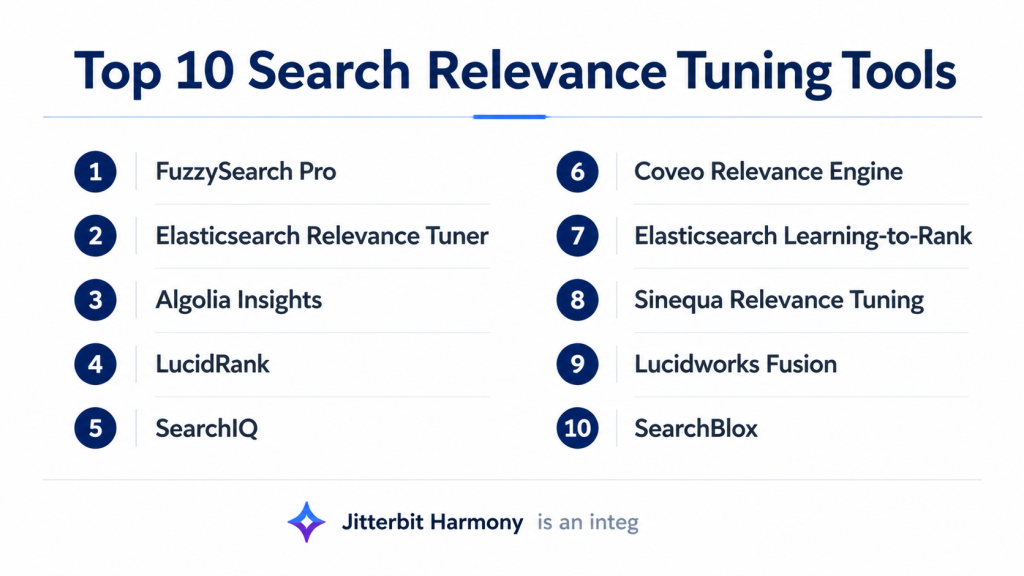
Top 10 Search Relevance Tuning Tools
#1 — FuzzySearch Pro
Short description: FuzzySearch Pro is a robust search relevance tuning toolkit designed for e-commerce and enterprise applications. It provides AI-powered ranking, typo-tolerance, and user-behavior-based adjustments. Teams can analyze search analytics, conduct A/B tests, and implement real-time tuning across multiple indexes.
Key Features
- AI-powered ranking and scoring
- Typo-tolerance and fuzzy matching
- Real-time search analytics
- A/B testing for relevance tuning
- Multi-index support
- Integration with e-commerce platforms
- Feedback loops for continuous improvement
Pros
- Improves user engagement and conversion
- Real-time relevance adjustments
- Strong analytics dashboards
Cons
- Requires technical setup for large datasets
- Premium pricing for enterprise features
- Limited support for non-e-commerce use cases
Platforms / Deployment
Windows / macOS / Linux / Cloud / Hybrid
Security & Compliance
- SOC 2, encryption
- RBAC
- Audit logging supported
Integrations & Ecosystem
- Shopify, Magento, Salesforce
- REST API and SDKs
- Web analytics and feedback tools
Support & Community
Documentation, enterprise support, community forums.
#2 — Elasticsearch Relevance Tuner
Short description: Elasticsearch Relevance Tuner extends Elasticsearch with advanced relevance tuning capabilities. Users can adjust scoring algorithms, configure query boosts, and implement custom ranking logic. It supports multi-language indexing and AI-based scoring enhancements.
Key Features
- Custom scoring algorithms
- AI-assisted ranking
- Multi-language support
- Query boosting and weighting
- Integration with Kibana dashboards
- Real-time analytics
- Multi-index and multi-cluster support
Pros
- Deep integration with Elasticsearch
- Scalable for enterprise search
- Flexible custom ranking options
Cons
- Requires Elasticsearch expertise
- Complex setup for large deployments
- Limited out-of-the-box visual tuning
Platforms / Deployment
Windows / macOS / Linux / Cloud / Self-hosted
Security & Compliance
- RBAC, encryption, audit logs
- GDPR compliance support
- SOC 2 varies / N/A
Integrations & Ecosystem
- Kibana, Logstash
- REST API
- AI scoring frameworks
Support & Community
Documentation, enterprise support, active forums.
#3 — Algolia Insights
Short description: Algolia Insights focuses on real-time search relevance and analytics for SaaS and e-commerce platforms. It provides AI-powered ranking, click-through optimization, and analytics dashboards to monitor and tune search relevance.
Key Features
- AI-powered relevance ranking
- Click-through and conversion analytics
- Query suggestion optimization
- Real-time search analytics
- Multi-platform support
- API-based integration
- Feedback-driven tuning
Pros
- Easy-to-use interface
- Real-time relevance adjustments
- Strong SaaS integration
Cons
- Premium pricing for advanced features
- Limited on-premise options
- May require adaptation for complex enterprise use
Platforms / Deployment
Windows / macOS / Linux / Cloud
Security & Compliance
- Encryption in transit and at rest
- RBAC supported
- GDPR compliance
Integrations & Ecosystem
- Shopify, Magento, custom web apps
- REST API, SDKs
- Analytics and A/B testing tools
Support & Community
Documentation, enterprise support, community forums.
#4 — LucidRank
Short description: LucidRank is an AI-driven search relevance tuning platform for enterprise search applications. It provides continuous relevance evaluation, automated feedback loops, and integration with internal knowledge bases.
Key Features
- AI-assisted ranking and tuning
- Multi-source knowledge integration
- Relevance feedback loops
- Analytics dashboards
- Multi-index support
- Query boosting
- A/B testing
Pros
- Enterprise-ready features
- Automated feedback improves results
- Scalable across large knowledge bases
Cons
- Learning curve for advanced tuning
- Premium pricing
- Limited open-source integration
Platforms / Deployment
Windows / macOS / Linux / Cloud / Hybrid
Security & Compliance
- SOC 2, encryption
- RBAC
- Audit logging
Integrations & Ecosystem
- Enterprise knowledge systems
- REST API
- Analytics dashboards
Support & Community
Documentation, enterprise support, community forums.
#5 — SearchIQ
Short description: SearchIQ provides fine-grained control over search relevance for e-commerce and SaaS platforms. It features AI scoring, relevance weights, and analytics for tuning search results dynamically.
Key Features
- AI relevance scoring
- Weighted attribute tuning
- Real-time analytics
- Multi-language search
- Query suggestion optimization
- API integration
- A/B testing
Pros
- Strong analytics capabilities
- Real-time relevance adjustments
- SaaS-focused integration
Cons
- Limited enterprise-scale support
- Premium pricing for advanced features
- May require developer expertise
Platforms / Deployment
Windows / macOS / Linux / Cloud
Security & Compliance
- Encryption, RBAC
- Audit logging
- GDPR compliance
Integrations & Ecosystem
- E-commerce platforms
- APIs and analytics
- SaaS integrations
Support & Community
Documentation, support services, community forums.
#6 — Coveo Relevance Engine
Short description: Coveo Relevance Engine is a platform for enterprise search relevance tuning, combining AI ranking with analytics-driven optimization. It integrates with internal data, SaaS applications, and knowledge repositories to improve search outcomes.
Key Features
- AI-powered ranking
- Query analytics and insights
- Multi-source integration
- Feedback loops for tuning
- API connectors
- Multi-index support
- Monitoring dashboards
Pros
- Enterprise-grade capabilities
- Scalable and extensible
- Strong analytics for tuning
Cons
- Costly for small teams
- Learning curve for customization
- Limited open-source components
Platforms / Deployment
Windows / macOS / Linux / Cloud / Hybrid
Security & Compliance
- SOC 2, ISO 27001
- RBAC, encryption
- Audit logging
Integrations & Ecosystem
- Salesforce, SharePoint, databases
- API integration
- Workflow connectors
Support & Community
Enterprise support, documentation, active forums.
#7 — Elasticsearch Learning-to-Rank
Short description: Learning-to-Rank adds ML-based relevance optimization on top of Elasticsearch. It uses training data to improve result ranking, enabling enterprises to tune search relevance dynamically.
Key Features
- ML-based ranking
- Integration with Elasticsearch
- Training data ingestion
- Feature weighting
- Analytics dashboards
- API access
- Multi-index support
Pros
- Improves search relevance with ML
- Scalable with Elasticsearch
- Flexible ranking configurations
Cons
- Requires ML knowledge
- Complex setup for large datasets
- Limited GUI support
Platforms / Deployment
Windows / macOS / Linux / Cloud / Self-hosted
Security & Compliance
- RBAC, encryption
- Audit logs supported
- GDPR compliance
Integrations & Ecosystem
- Elasticsearch plugins
- ML frameworks
- API connectors
Support & Community
Documentation, enterprise support, forums.
#8 — Sinequa Relevance Tuning
Short description: Sinequa is an enterprise search platform with AI relevance tuning. It integrates internal data, analytics, and ML to improve search results dynamically.
Key Features
- AI-based ranking
- Analytics-driven optimization
- Multi-source integration
- Feedback loops
- Query suggestion improvement
- Multi-index support
- API integration
Pros
- Enterprise-grade search tuning
- Strong analytics and insights
- Integrates with knowledge management
Cons
- Premium pricing
- Setup complexity
- Limited open-source options
Platforms / Deployment
Windows / macOS / Linux / Cloud / Hybrid
Security & Compliance
- SOC 2, encryption
- RBAC
- Audit logging
Integrations & Ecosystem
- Enterprise data sources
- APIs and SaaS connectors
- Analytics dashboards
Support & Community
Enterprise support, documentation, forums.
#9 — Lucidworks Fusion
Short description: Lucidworks Fusion provides relevance tuning for enterprise and e-commerce search. It includes AI scoring, analytics-driven ranking, and pipeline orchestration.
Key Features
- AI relevance ranking
- Analytics dashboards
- Multi-source data integration
- Query boosting and weighting
- Feedback loops
- API and connectors
- Multi-index support
Pros
- Enterprise-ready
- Strong analytics
- Scalable pipelines
Cons
- Premium pricing
- Requires expertise for advanced tuning
- Learning curve for pipeline customization
Platforms / Deployment
Windows / macOS / Linux / Cloud / Hybrid
Security & Compliance
- RBAC, encryption
- Audit logging
- GDPR compliance
Integrations & Ecosystem
- Enterprise apps
- APIs and SaaS connectors
- Workflow integration
Support & Community
Documentation, enterprise support, community forums.
#10 — SearchBlox
Short description: SearchBlox is a search relevance tuning toolkit focused on enterprise and SaaS platforms. It offers AI-based ranking, analytics, and automated relevance feedback loops.
Key Features
- AI-powered scoring
- Analytics and dashboards
- Multi-source integration
- Query suggestion optimization
- Feedback loops
- Multi-language support
- API access
Pros
- Easy-to-use for enterprise teams
- Analytics-driven tuning
- Flexible integration
Cons
- Premium features may be costly
- Limited open-source support
- May require developer expertise
Platforms / Deployment
Windows / macOS / Linux / Cloud / Hybrid
Security & Compliance
- Encryption, RBAC
- Audit logs
- GDPR compliance
Integrations & Ecosystem
- Databases and SaaS apps
- API connectors
- Analytics tools
Support & Community
Enterprise support, documentation, forums.
Comparison Table
| Tool Name | Best For | Platform(s) Supported | Deployment | Standout Feature | Public Rating |
|---|---|---|---|---|---|
| FuzzySearch Pro | E-commerce & enterprise | Windows / macOS / Linux | Cloud / Hybrid | AI ranking & typo tolerance | N/A |
| Elasticsearch Relevance Tuner | Enterprise search | Windows / macOS / Linux | Cloud / Self-hosted | Custom scoring algorithms | N/A |
| Algolia Insights | SaaS & e-commerce | Windows / macOS / Linux | Cloud | Real-time analytics | N/A |
| LucidRank | Enterprise search tuning | Windows / macOS / Linux | Cloud / Hybrid | Feedback loops | N/A |
| SearchIQ | SaaS & e-commerce | Windows / macOS / Linux | Cloud | Weighted attribute tuning | N/A |
| Coveo Relevance Engine | Enterprise knowledge search | Windows / macOS / Linux | Cloud / Hybrid | AI ranking + analytics | N/A |
| Elasticsearch LTR | ML-powered ranking | Windows / macOS / Linux | Cloud / Self-hosted | ML-based ranking | N/A |
| Sinequa Relevance Tuning | Enterprise & knowledge apps | Windows / macOS / Linux | Cloud / Hybrid | Analytics-driven optimization | N/A |
| Lucidworks Fusion | Enterprise & e-commerce | Windows / macOS / Linux | Cloud / Hybrid | AI scoring & pipelines | N/A |
| SearchBlox | Enterprise SaaS search | Windows / macOS / Linux | Cloud / Hybrid | Automated feedback loops | N/A |
Evaluation & Scoring of Search Relevance Tuning Tools
| Tool Name | Core (25%) | Ease (15%) | Integrations (15%) | Security (10%) | Performance (10%) | Support (10%) | Value (15%) | Weighted Total (0–10) |
|---|---|---|---|---|---|---|---|---|
| FuzzySearch Pro | 9 | 8 | 8 | 8 | 8 | 7 | 8 | 8.20 |
| Elasticsearch Relevance Tuner | 8 | 7 | 8 | 8 | 8 | 7 | 8 | 7.85 |
| Algolia Insights | 8 | 8 | 7 | 7 | 8 | 7 | 7 | 7.75 |
| LucidRank | 8 | 7 | 7 | 8 | 7 | 7 | 7 | 7.65 |
| SearchIQ | 7 | 8 | 7 | 7 | 7 | 7 | 7 | 7.25 |
| Coveo Relevance Engine | 8 | 7 | 8 | 8 | 8 | 7 | 8 | 7.85 |
| Elasticsearch LTR | 8 | 7 | 7 | 7 | 8 | 7 | 7 | 7.50 |
| Sinequa Relevance Tuning | 8 | 7 | 7 | 8 | 8 | 7 | 8 | 7.75 |
| Lucidworks Fusion | 8 | 7 | 8 | 7 | 8 | 7 | 8 | 7.80 |
| SearchBlox | 7 | 8 | 7 | 7 | 7 | 7 | 7 | 7.25 |
Interpretation: Scores reflect core tuning capabilities, integration ease, performance, and enterprise-readiness. Higher scores indicate stronger platforms for search relevance optimization in large-scale applications.
Which Search Relevance Tuning Tool Is Right for You?
Solo / Freelancer
SearchIQ, Algolia Insights, and SearchBlox are ideal for experimentation and small-scale search tuning projects.
SMB
FuzzySearch Pro, LucidRank, and Elasticsearch LTR provide scalable relevance tuning with analytics dashboards.
Mid-Market
Lucidworks Fusion, Coveo Relevance Engine, and Sinequa Relevance Tuning deliver enterprise-grade analytics, AI ranking, and multi-source integration.
Enterprise
FuzzySearch Pro, Coveo Relevance Engine, and Elasticsearch Relevance Tuner are suited for large-scale deployments requiring multi-index tuning and regulatory compliance.
Budget vs Premium
Open-source or smaller SaaS tools reduce cost but require manual setup. Premium platforms provide richer analytics, AI ranking, and enterprise support.
Feature Depth vs Ease of Use
Enterprise-grade tools offer comprehensive tuning and analytics; visual SaaS platforms like Algolia Insights simplify adoption for smaller teams.
Integrations & Scalability
Ensure connectivity to databases, vector stores, SaaS applications, and pipeline workflows for robust search relevance tuning.
Security & Compliance Needs
Look for RBAC, encryption, audit logging, and SOC 2/GDPR compliance when handling sensitive or regulated data.
Frequently Asked Questions
1. What are search relevance tuning tools?
Platforms that allow organizations to adjust ranking algorithms, relevance scores, and optimize search results for improved accuracy.
2. How do these tools improve search experience?
They enhance result quality using AI ranking, analytics, query tuning, and feedback-driven optimization.
3. Can these tools integrate with AI-based search?
Yes, modern tools support vector search, semantic ranking, and AI-driven relevance scoring.
4. Are they enterprise-ready?
Most tools provide scalable deployments, multi-index support, analytics dashboards, and monitoring.
5. How difficult is setup?
Setup ranges from simple SaaS integration to advanced enterprise deployment depending on tool complexity.
6. Do these tools support multi-language search?
Yes, several platforms provide multilingual indexing and tuning capabilities.
7. Can small teams benefit?
Yes, SaaS-focused tools like SearchBlox and Algolia Insights are suitable for small teams.
8. Do they offer real-time tuning?
Many platforms provide real-time analytics and feedback loops for dynamic relevance adjustments.
9. Is technical expertise required?
Some tools require search engine and data integration knowledge; SaaS platforms reduce technical barriers.
10. How do I choose the right tool?
Evaluate scale, integrations, deployment preferences, budget, analytics needs, and team expertise.
Conclusion
Search relevance tuning tools are essential for improving user experience, engagement, and conversions across e-commerce, enterprise, and SaaS platforms. FuzzySearch Pro, Elasticsearch Relevance Tuner, and Coveo Relevance Engine excel in enterprise capabilities, AI ranking, and multi-source integration, while smaller tools like Algolia Insights and SearchBlox are easier for small teams. Selecting the right platform depends on deployment scale, integration needs, budget, and team expertise.
