Upgrade & Secure Your Future with DevOps, SRE, DevSecOps, MLOps!
We spend hours scrolling social media and waste money on things we forget, but won’t spend 30 minutes a day earning certifications that can change our lives.
Master in DevOps, SRE, DevSecOps & MLOps by DevOps School!
Learn from Guru Rajesh Kumar and double your salary in just one year.
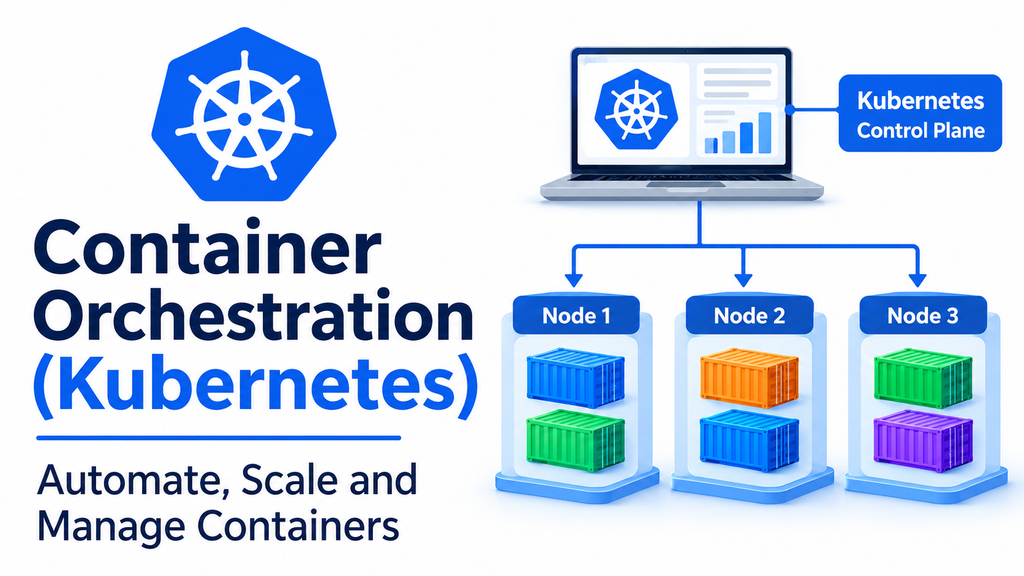
Containerized applications have transformed how organizations develop, deploy, and manage software. Containers package applications with their dependencies, making them easier to run consistently across different environments. However, managing hundreds or thousands of containers manually can become complicated. This is where container orchestration tools become essential.
Container orchestration platforms automate the deployment, scheduling, scaling, networking, and monitoring of containers. They help development and IT teams maintain application availability, improve resource utilization, and manage complex workloads across distributed infrastructure.
What Is Container Orchestration?
Container orchestration is the automated management of containerized applications across multiple servers or computing environments. It coordinates where containers run, how they communicate, how resources are allocated, and how applications recover when failures occur.
Instead of manually starting and managing individual containers, teams define the desired application configuration. The orchestration platform continuously works to maintain that desired state.
Common capabilities include:
- Automated deployment: Deploy containerized applications across clusters.
- Scaling: Increase or decrease application instances based on workload requirements.
- Load balancing: Distribute incoming traffic across available application instances.
- Self-healing: Restart failed containers and replace unhealthy workloads.
- Service discovery: Help containers and services communicate with one another.
- Resource management: Allocate CPU, memory, and other resources efficiently.
- Rolling updates: Release application changes while reducing service interruptions.
Popular Container Orchestration Tools
Several platforms provide container orchestration capabilities, ranging from open-source systems to managed cloud services.
1. Kubernetes
Kubernetes is an open-source container orchestration platform originally developed by Google. It automates container deployment, scaling, networking, and lifecycle management across clusters of machines.
Its architecture includes a control plane that manages cluster operations and worker nodes that run application workloads. Kubernetes uses objects such as Pods, Deployments, and Services to describe and manage applications.
Key capabilities:
- Automated scheduling and workload management.
- Horizontal scaling and load balancing.
- Self-healing and automated rollouts.
- Configuration and secret management.
- Extensive ecosystem of extensions and integrations.
Best suited for: Organizations managing complex containerized applications, microservices, and large-scale infrastructure.
2. Amazon Elastic Kubernetes Service (EKS)
Amazon Elastic Kubernetes Service is a managed Kubernetes service from AWS. It simplifies Kubernetes cluster operations by managing important parts of the control plane while allowing teams to run containerized workloads on AWS infrastructure.
Key capabilities:
- Managed Kubernetes control plane.
- Integration with AWS networking, identity, and security services.
- Support for managed and self-managed worker nodes.
- Workload scaling and infrastructure automation.
- Integration with AWS monitoring and deployment services.
Best suited for: Businesses already using AWS that want Kubernetes orchestration without managing every cluster component themselves.
3. Azure Kubernetes Service (AKS)
Azure Kubernetes Service is Microsoft’s managed Kubernetes offering. It helps organizations deploy and operate Kubernetes clusters while integrating with the broader Microsoft Azure ecosystem.
Key capabilities:
- Managed Kubernetes cluster operations.
- Integration with Azure identity and networking services.
- Automated scaling and application deployment.
- Monitoring and security integrations.
- Support for cloud-native development workflows.
Best suited for: Organizations using Microsoft Azure for application hosting, development, and enterprise infrastructure.
4. Google Kubernetes Engine (GKE)
Google Kubernetes Engine is a managed Kubernetes platform provided by Google Cloud. It offers cluster management capabilities and infrastructure integrations designed for running containerized workloads.
Key capabilities:
- Managed Kubernetes cluster provisioning.
- Automated node and workload scaling options.
- Monitoring and logging integrations.
- Networking and security management.
- Support for modern cloud-native applications.
Best suited for: Teams that want managed Kubernetes capabilities within Google Cloud.
5. Red Hat OpenShift
Red Hat OpenShift is an enterprise application platform built around Kubernetes. It provides additional tools and services for application development, deployment, security, and cluster management.
Key capabilities:
- Kubernetes-based container orchestration.
- Integrated developer and deployment workflows.
- Enterprise security and policy controls.
- Application lifecycle management.
- Support for hybrid and multi-cloud environments.
Best suited for: Enterprises that need an integrated application platform with governance, security, and developer productivity features.
6. Rancher
Rancher is a Kubernetes management platform designed to help teams operate multiple Kubernetes clusters across different environments. It provides centralized management capabilities for distributed infrastructure.
Key capabilities:
- Centralized multi-cluster management.
- Cluster provisioning and monitoring.
- Role-based access controls.
- Policy and security management.
- Support for different Kubernetes environments.
Best suited for: Organizations operating multiple Kubernetes clusters across cloud, data center, and edge environments.
7. HashiCorp Nomad
HashiCorp Nomad is a workload orchestrator that can schedule and manage containerized as well as non-containerized applications. It provides a relatively lightweight approach to workload scheduling.
Key capabilities:
- Container and non-container workload scheduling.
- Automated job deployment and recovery.
- Resource allocation and scheduling.
- Multi-region workload management.
- Integration with other HashiCorp infrastructure tools.
Best suited for: Teams that need flexible workload orchestration without adopting the full Kubernetes ecosystem.
Container Orchestration Tools Comparison
| Platform | Main strength | Deployment environment |
|---|---|---|
| Kubernetes | Flexible open-source orchestration | On-premises and cloud |
| Amazon EKS | Managed Kubernetes on AWS | AWS |
| Azure AKS | Managed Kubernetes on Azure | Azure |
| Google GKE | Managed Kubernetes on Google Cloud | Google Cloud |
| Red Hat OpenShift | Enterprise application platform | Hybrid and multi-cloud |
| Rancher | Multi-cluster Kubernetes management | Cloud and on-premises |
| HashiCorp Nomad | Flexible workload scheduling | Cloud and data center |
The best option depends on infrastructure, operational expertise, security requirements, application complexity, and the level of management a business wants to handle internally.
Important Features to Look For
Choosing a container orchestration platform requires evaluating more than its ability to start and stop containers. Important considerations include:
1. Automated Scaling
The platform should support scaling application instances according to workload demands. This helps maintain performance during traffic increases and avoid unnecessary resource consumption during quieter periods.
2. High Availability
Applications should continue operating when individual containers or infrastructure components fail. Look for automated recovery, workload distribution, and appropriate redundancy options.
3. Networking and Service Discovery
Containerized applications often consist of multiple services that must communicate reliably. Networking, service discovery, and traffic management features are therefore essential.
4. Security and Access Control
Evaluate identity integration, role-based access control, secrets management, network policies, image security, and compliance capabilities.
5. Monitoring and Logging
Operational visibility helps teams identify performance issues, resource constraints, deployment failures, and application errors.
6. Deployment Automation
Support for rolling updates, rollback mechanisms, configuration management, and CI/CD integrations can simplify application releases.
Business Applications of Container Orchestration
Container orchestration supports a wide range of technology and business operations.
- Microservices management: Coordinates independently deployed services that work together to deliver applications.
- E-commerce platforms: Helps applications respond to changing customer traffic and seasonal demand.
- Financial services: Supports scalable application infrastructure and controlled deployment processes.
- SaaS platforms: Helps service providers manage workloads across multiple customers and environments.
- DevOps operations: Automates application deployment and infrastructure management.
- Data processing: Coordinates containerized workloads used for analytics and distributed processing.
- Hybrid cloud environments: Helps organizations manage applications across on-premises and cloud infrastructure.
Container Orchestration vs. Containerization
Containerization and container orchestration solve different problems.
Containerization packages an application and its dependencies into a container so it can run consistently across environments. Container orchestration manages those containers after they have been created.
For example, Docker can be used to build and run containers, while Kubernetes can coordinate many containers across a cluster of machines.
Both technologies are important in modern cloud-native application development.
Common Challenges
Despite their advantages, container orchestration platforms introduce operational considerations.
- Complexity: Kubernetes and similar platforms can require specialized knowledge to configure and maintain.
- Security management: Misconfigured permissions, network policies, or secrets can create vulnerabilities.
- Monitoring requirements: Distributed applications can be difficult to troubleshoot without suitable observability tools.
- Resource costs: Poor resource allocation and excessive scaling can increase infrastructure expenses.
- Operational overhead: Cluster upgrades, configuration changes, and workload management require ongoing attention.
- Skill requirements: Teams may need training or experienced platform engineers to operate complex environments effectively.
Organizations can address these challenges through standardized configurations, automation, security policies, monitoring, and appropriate training.
How to Choose the Right Container Orchestration Tool
Before selecting a platform, evaluate your organization’s technical requirements and operational capabilities.
- Assess infrastructure: Determine whether workloads will run on public cloud, private cloud, on-premises servers, or a combination.
- Evaluate application complexity: Consider the number of services, expected traffic, and deployment requirements.
- Review team expertise: Choose a platform that matches your team’s experience or supports a realistic learning and adoption plan.
- Compare management options: Decide whether you prefer a self-managed platform or a managed cloud service.
- Check security requirements: Review access controls, compliance needs, network security, and secrets management.
- Estimate total cost: Include infrastructure, licensing where applicable, support, training, and ongoing operations.
- Test before adoption: Run a pilot deployment to evaluate reliability, performance, and operational complexity.
Conclusion
Container orchestration has become an important part of modern application infrastructure. It helps organizations automate container deployment, manage distributed workloads, improve availability, and scale applications more efficiently.
Kubernetes remains a widely adopted foundation for container orchestration, while managed services such as Amazon EKS, Azure AKS, and Google GKE simplify Kubernetes operations within their respective cloud environments. Platforms such as OpenShift and Rancher add enterprise and multi-cluster management capabilities, while Nomad offers another approach to workload scheduling.
The right solution depends on infrastructure, application needs, security requirements, budget, and team expertise. With careful planning, container orchestration can provide a reliable foundation for scalable, resilient, and modern software applications.
