Upgrade & Secure Your Future with DevOps, SRE, DevSecOps, MLOps!
We spend hours scrolling social media and waste money on things we forget, but won’t spend 30 minutes a day earning certifications that can change our lives.
Master in DevOps, SRE, DevSecOps & MLOps by DevOps School!
Learn from Guru Rajesh Kumar and double your salary in just one year.
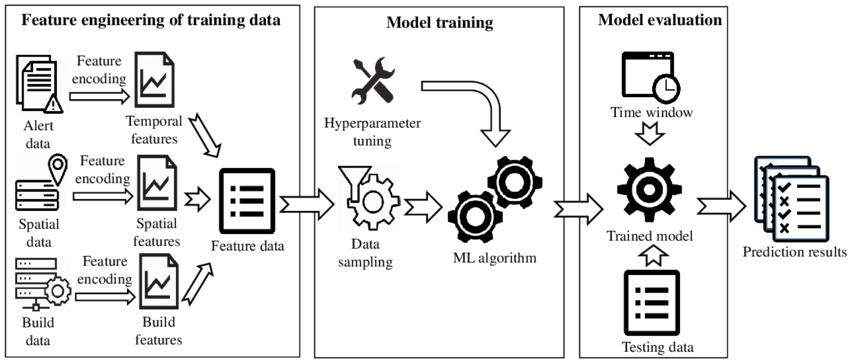
Have you ever wondered how AIOPS works? Well, you’re not alone. Many people are curious about this topic, and for good reason. AIOPS is a complex system that uses artificial intelligence, machine learning, and other advanced technologies to help businesses manage their IT operations more efficiently.
What is AIOPS?
AIOPS stands for Artificial Intelligence for IT Operations. It refers to the use of artificial intelligence and machine learning to automate and improve IT operations. This includes everything from monitoring and alerting to incident management and troubleshooting.
The goal of AIOPS is to help businesses manage their IT operations in a more proactive and efficient way. By using advanced technologies like machine learning and artificial intelligence, businesses can automate many of the routine tasks that are involved in IT operations. This frees up IT staff to focus on more strategic tasks, such as developing new products and services.
How does AIOPS work?
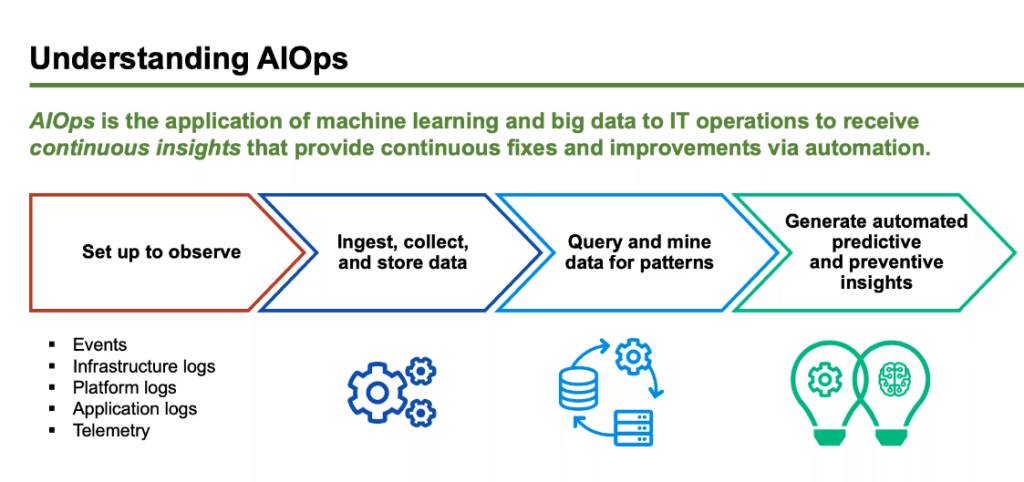
AIOPS works by using advanced technologies like machine learning and artificial intelligence to automate and improve IT operations. Here’s a closer look at how it works:
Data Collection
The first step in the AIOPS process is data collection. AIOPS systems collect data from a variety of sources, including servers, applications, and network devices. This data is then analyzed to identify patterns and anomalies.
Pattern Recognition
Once the data has been collected, AIOPS systems use pattern recognition algorithms to identify patterns and anomalies. This helps to identify potential issues before they become major problems.
Predictive Analytics
Once patterns and anomalies have been identified, AIOPS systems use predictive analytics to predict future issues. This allows IT staff to take proactive steps to prevent issues from occurring.
Automation
Finally, AIOPS systems use automation to take care of routine tasks. For example, if a server goes down, AIOPS systems can automatically spin up a new server to take its place. This helps to reduce downtime and improve the overall efficiency of IT operations.
Benefits of AIOPS
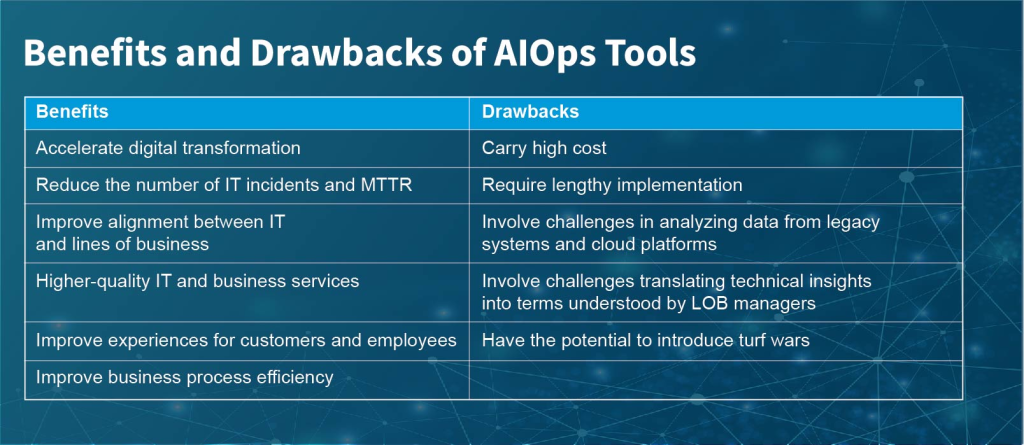
There are many benefits to using AIOPS. Here are just a few:
Improved Efficiency
By automating routine tasks, AIOPS systems help to improve the efficiency of IT operations. This frees up IT staff to focus on more strategic tasks.
Faster Incident Response
AIOPS systems can quickly identify and respond to incidents, helping to reduce downtime and improve the overall reliability of IT systems.
Proactive Issue Prevention
By using predictive analytics, AIOPS systems can identify potential issues before they become major problems. This allows IT staff to take proactive steps to prevent issues from occurring.
Conclusion
AIOPS is a complex system that uses artificial intelligence, machine learning, and other advanced technologies to help businesses manage their IT operations more efficiently. By automating routine tasks, identifying patterns and anomalies, and using predictive analytics, AIOPS systems help to improve the efficiency of IT operations, reduce downtime, and improve the overall reliability of IT systems.