Upgrade & Secure Your Future with DevOps, SRE, DevSecOps, MLOps!
We spend hours scrolling social media and waste money on things we forget, but won’t spend 30 minutes a day earning certifications that can change our lives.
Master in DevOps, SRE, DevSecOps & MLOps by DevOps School!
Learn from Guru Rajesh Kumar and double your salary in just one year.
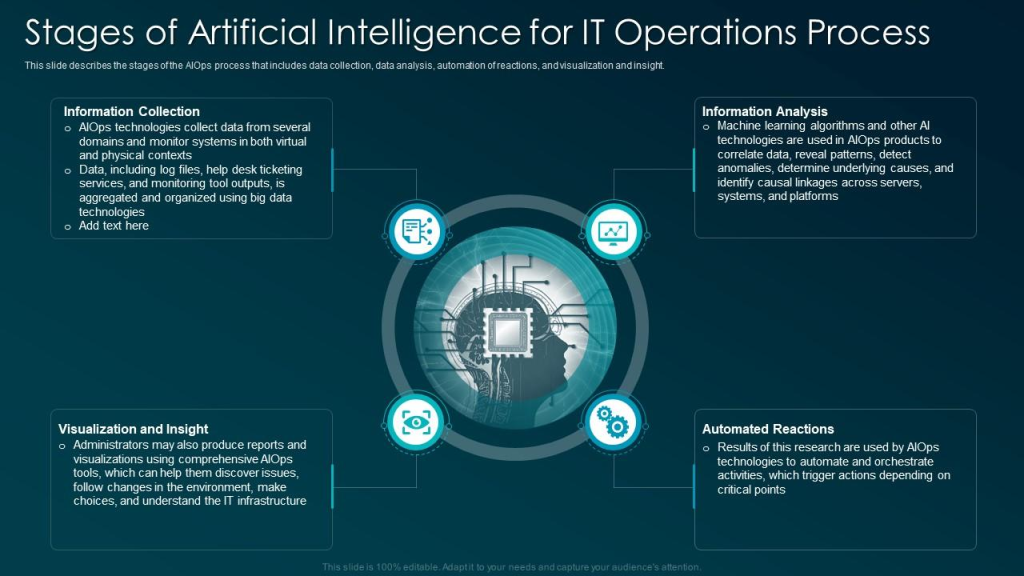
Artificial Intelligence for IT Operations (AIOps) is a rapidly growing field that combines artificial intelligence (AI) and machine learning (ML) with traditional IT operations. AIOps is designed to help IT professionals better manage complex and dynamic IT environments.
In this article, we will discuss the four key stages of AIOps and how each stage contributes to the overall success of implementing AIOps in an organization.
Stage 1: Data Collection
The first stage of AIOps is data collection. This involves the collection of data from various sources, including IT infrastructure, applications, and networks. The data collected must be relevant and in a format that can be analyzed using AI and ML algorithms.
The data collected must also be cleaned and normalized to ensure that it is accurate and consistent. This is an important step in the data collection process, as inaccurate or inconsistent data can lead to incorrect analysis and decisions.
Stage 2: Data Analysis
The second stage of AIOps is data analysis. This involves using AI and ML algorithms to analyze the data collected in stage one. The goal of data analysis is to identify patterns, anomalies, and trends in the data.
This analysis can provide valuable insights into the performance of IT infrastructure, applications, and networks. It can also identify potential issues before they become critical problems.
Stage 3: Automation
The third stage of AIOps is automation. This involves using the insights gained from data analysis to automate IT operations. Automation can help reduce manual intervention and improve the efficiency of IT operations.
Automation can also help reduce the time it takes to detect and resolve issues, which can reduce downtime and improve the overall performance of IT infrastructure, applications, and networks.
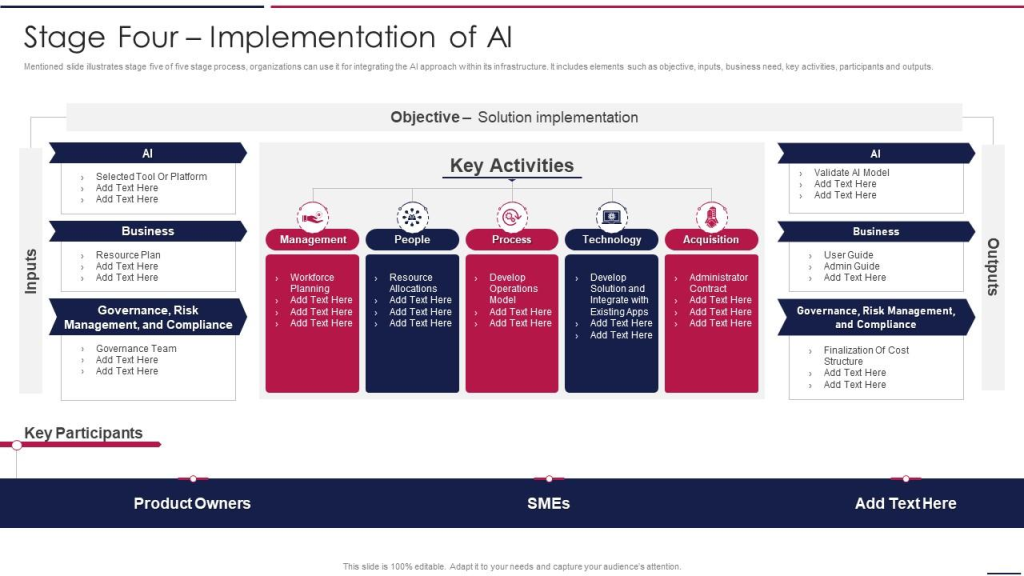
Stage 4: Collaboration
The fourth and final stage of AIOps is collaboration. This involves bringing together IT professionals, business stakeholders, and other stakeholders to work together to improve IT operations.
Collaboration can help ensure that the insights gained from data analysis and automation are used effectively to drive business outcomes. It can also help ensure that IT operations are aligned with business objectives.
Conclusion
In conclusion, AIOps is a powerful tool that can help IT professionals better manage complex and dynamic IT environments. The four key stages of AIOps – data collection, data analysis, automation, and collaboration – are critical to the success of implementing AIOps in an organization.
By following these stages, organizations can improve the performance of their IT infrastructure, applications, and networks, reduce downtime, and improve overall efficiency. With the right approach and the right tools, AIOps can be a game-changer for IT operations.