Upgrade & Secure Your Future with DevOps, SRE, DevSecOps, MLOps!
We spend hours scrolling social media and waste money on things we forget, but won’t spend 30 minutes a day earning certifications that can change our lives.
Master in DevOps, SRE, DevSecOps & MLOps by DevOps School!
Learn from Guru Rajesh Kumar and double your salary in just one year.
Introduction
Managing employee records across spreadsheets, emails, and disconnected systems can create errors and slow down HR operations. Human Resource Information System (HRIS) platforms help organizations centralize employee data, automate routine administrative tasks, and make workforce information easier to access.
From maintaining employee profiles to managing leave requests and generating HR reports, an HRIS helps businesses organize their core human resources processes more efficiently.
What Are HRIS Platforms?
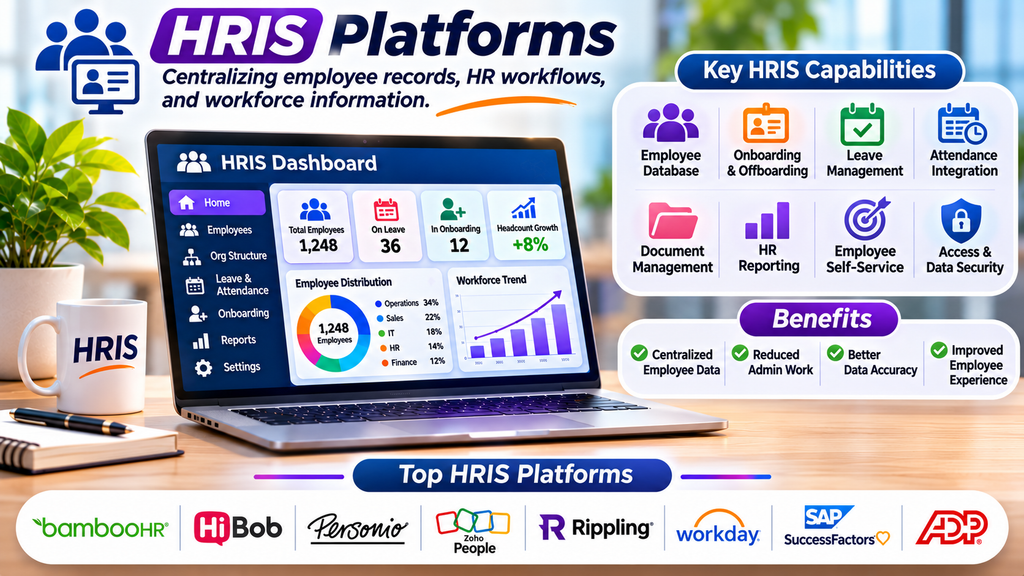
An HRIS is a digital system used to store, manage, and maintain employee information. Depending on the platform, it may include employee records, organizational structures, onboarding, leave management, attendance, document storage, and HR reporting.
Some HRIS platforms also provide recruitment, payroll, and performance-management features or integrate with dedicated tools for these functions.
Top HRIS Platforms
1. BambooHR
BambooHR provides employee records, onboarding, time-off management, reporting, and other core HR features.
Best for: Small and midsize businesses seeking accessible HR administration.
2. HiBob
HiBob offers employee data management, onboarding workflows, reporting, and employee-experience capabilities.
Best for: Growing companies seeking flexible HR processes.
3. Personio
Personio brings together core HR, recruiting, onboarding, absence management, and related workflows, with availability varying by market.
Best for: Small and midsize organizations looking for connected HR administration.
4. Zoho People
Zoho People supports employee information management, attendance, leave tracking, and configurable HR workflows.
Best for: Businesses looking for HR tools within the Zoho ecosystem.
5. Rippling
Rippling connects employee records with HR, payroll, benefits, and IT administration capabilities.
Best for: Businesses that want to connect HR data with employee technology workflows.
6. Workday
Workday provides enterprise HR capabilities, including employee data management, organizational information, reporting, and broader HCM features.
Best for: Medium and large organizations with complex HR requirements.
7. SAP SuccessFactors
SAP SuccessFactors offers core HR capabilities alongside talent-management applications and other workforce processes.
Best for: Organizations seeking HR data management within an enterprise HR ecosystem.
8. ADP
ADP offers HR and payroll services with employee information and workforce administration features that depend on the selected product.
Best for: Businesses looking to connect HR administration with payroll services.
Essential Features to Look For
- Employee database: Maintain employee profiles, job details, and organizational information.
- Document management: Organize employment documents and related records.
- Onboarding workflows: Coordinate tasks and paperwork for new employees.
- Leave management: Handle time-off requests, approvals, and balances.
- Attendance integration: Connect compatible time and attendance systems.
- Employee self-service: Let employees update permitted information and submit requests.
- HR reporting: Generate reports on headcount, turnover, and workforce trends.
- Access controls: Limit sensitive records to authorized users.
- System integrations: Connect compatible payroll, recruitment, accounting, and productivity tools.
Benefits of HRIS Platforms
Centralized records: A shared employee database can reduce duplicated and inconsistent information.
Reduced administration: Digital forms and approval workflows can cut repetitive manual tasks.
Better data quality: Standardized records and validation can help improve information accuracy.
Improved employee experience: Self-service options can make routine requests and updates easier.
Faster reporting: HR teams can retrieve workforce information more quickly for planning and decision-making.
Better information security: Role-based permissions can help protect confidential employee records when configured correctly.
How to Choose the Right HRIS
Start by identifying your employee count, current HR processes, reporting needs, and existing business systems. Decide which features are essential and whether you need a standalone HRIS or a broader HCM platform.
Compare pricing, ease of use, mobile access, customization, implementation support, data migration, and integrations. Verify that the platform supports your operating locations and applicable data-protection requirements.
Ask vendors to demonstrate everyday workflows, such as adding an employee, approving leave, updating job details, and generating a headcount report.
HRIS Implementation Best Practices
- Clean and verify employee records before migration.
- Define ownership for each HR process and data field.
- Configure permissions according to job responsibilities.
- Test integrations and approval workflows.
- Train HR teams, managers, and employees.
- Establish a process for correcting outdated or inaccurate records.
- Review adoption, data quality, and reporting needs regularly.
Conclusion
HRIS platforms help organizations centralize employee information and simplify essential HR administration. The right solution depends on company size, workflow complexity, integration requirements, and budget. By evaluating features carefully and maintaining reliable employee data, businesses can build a more organized and efficient HR operation.
