Upgrade & Secure Your Future with DevOps, SRE, DevSecOps, MLOps!
We spend hours scrolling social media and waste money on things we forget, but won’t spend 30 minutes a day earning certifications that can change our lives.
Master in DevOps, SRE, DevSecOps & MLOps by DevOps School!
Learn from Guru Rajesh Kumar and double your salary in just one year.
Introduction
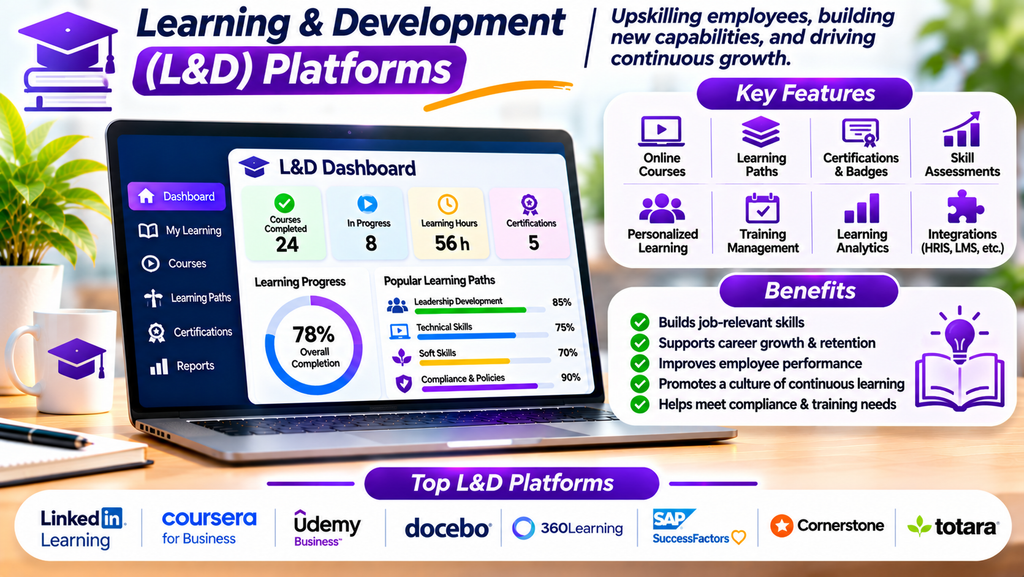
As organizations and educational institutions increasingly adopt digital learning, managing courses, learners, assessments, and progress has become more important. A Learning Management System (LMS) provides a centralized platform for delivering training, organizing educational content, tracking learner performance, and managing learning activities.
LMS platforms are used by schools, universities, corporate training departments, online educators, and businesses that want to provide consistent learning experiences. They can support self-paced courses, instructor-led sessions, compliance training, and employee development.
What Is a Learning Management System?
A Learning Management System is software used to create, deliver, organize, and track educational or training programs. Administrators can upload course materials, enroll learners, assign assessments, monitor completion, and generate reports.
Depending on the platform, an LMS may include video lessons, quizzes, certificates, discussion forums, automated reminders, learning paths, and integrations with other business or education systems.
Top Learning Management Systems
1. Moodle
Moodle is an open-source LMS that supports course creation, assignments, quizzes, grading, and collaborative learning. Organizations can customize and host it according to their requirements.
Best for: Educational institutions and organizations seeking a flexible open-source solution.
2. Canvas LMS
Canvas LMS offers tools for course delivery, assignments, assessments, grading, communication, and learner progress tracking.
Best for: Schools, colleges, and universities managing digital or blended learning.
3. Blackboard Learn
Blackboard Learn provides course management, assessments, learning content, communication tools, and reporting capabilities for educational environments.
Best for: Institutions that need a comprehensive academic learning platform.
4. TalentLMS
TalentLMS helps businesses create and deliver online training through courses, quizzes, user management, and progress tracking.
Best for: Small and mid-sized businesses delivering employee training.
5. Docebo
Docebo supports corporate learning programs with features that can include personalized learning experiences, automation, reporting, and integrations.
Best for: Organizations managing learning at scale.
6. LearnUpon
LearnUpon provides a platform for creating, delivering, and tracking training for employees, customers, and partners.
Best for: Businesses that need to manage training for multiple audiences.
7. Absorb LMS
Absorb LMS offers course administration, learner tracking, reporting, and tools for delivering organizational training.
Best for: Companies seeking structured employee and extended-enterprise learning programs.
8. 360Learning
360Learning emphasizes collaborative learning, allowing subject-matter experts to contribute to training content and learners to share knowledge.
Best for: Organizations that want teams to create and improve training collaboratively.
Available features vary by product, deployment, and subscription plan.
Essential Features of an LMS
- Course management: Organize learning materials into courses, modules, and learning paths.
- Content delivery: Support formats such as video, documents, presentations, and interactive lessons.
- Assessments and quizzes: Evaluate learner understanding and knowledge retention.
- Progress tracking: Monitor course completion, assessment results, and participation.
- Certificates: Issue completion certificates where supported.
- Reporting and analytics: Review learner progress and training outcomes.
- User and role management: Assign suitable permissions to administrators, instructors, and learners.
- Mobile learning: Enable learners to access content on supported mobile devices.
- Integrations: Connect with HR, video conferencing, content authoring, or other learning tools where available.
- Security and accessibility: Evaluate data protection, access controls, and accessibility support.
Benefits of Learning Management Systems
Centralized Learning
Course materials, assessments, learner records, and training resources can be managed in one location.
Flexible Access
Learners may be able to access courses at different times and from different locations, depending on the platform and course design.
Consistent Training
Organizations can deliver standardized learning materials to multiple teams, departments, or locations.
Easier Progress Monitoring
Administrators can track participation, completion, assessment results, and outstanding training requirements.
Reduced Administrative Work
Automated enrollments, reminders, grading, and reporting can reduce repetitive tasks when supported by the LMS.
Scalable Learning Programs
Organizations can expand training to more learners without having to manage every activity manually.
How to Choose the Right LMS
- Define your audience: Identify whether the platform is for students, employees, customers, or external partners.
- Clarify your learning needs: Decide whether you need self-paced courses, instructor-led training, compliance tracking, or blended learning.
- Check content compatibility: Confirm support for the formats and standards your courses require.
- Evaluate usability: Test course creation, enrollment, navigation, and learner access.
- Review reporting: Make sure the analytics cover your learning objectives.
- Assess integrations: Check compatibility with existing systems.
- Consider security and accessibility: Review permissions, privacy requirements, and accessibility features.
- Compare total cost: Consider licensing, hosting, implementation, support, and content development.
- Run a pilot: Test the platform with a small group before rolling it out broadly.
Best Practices for LMS Implementation
- Set clear learning objectives for every course.
- Organize content into manageable modules.
- Use assessments that measure understanding rather than simple participation.
- Keep learning materials accurate and updated.
- Make navigation straightforward for learners.
- Monitor completion and assessment results to identify difficulties.
- Gather feedback and improve courses regularly.
- Provide onboarding and support for instructors and learners.
- Measure learning outcomes, not just the number of courses completed.
Conclusion
Learning Management Systems help educational institutions and organizations deliver structured digital learning, manage courses, and measure learner progress. Platforms such as Moodle, Canvas LMS, Blackboard Learn, TalentLMS, Docebo, LearnUpon, Absorb LMS, and 360Learning serve different learning environments and operational needs.
The right LMS depends on your audience, course formats, reporting requirements, integrations, security needs, and budget. A successful implementation combines suitable software with useful learning content, clear objectives, ongoing support, and regular evaluation.
