Upgrade & Secure Your Future with DevOps, SRE, DevSecOps, MLOps!
We spend hours scrolling social media and waste money on things we forget, but won’t spend 30 minutes a day earning certifications that can change our lives.
Master in DevOps, SRE, DevSecOps & MLOps by DevOps School!
Learn from Guru Rajesh Kumar and double your salary in just one year.
Introduction
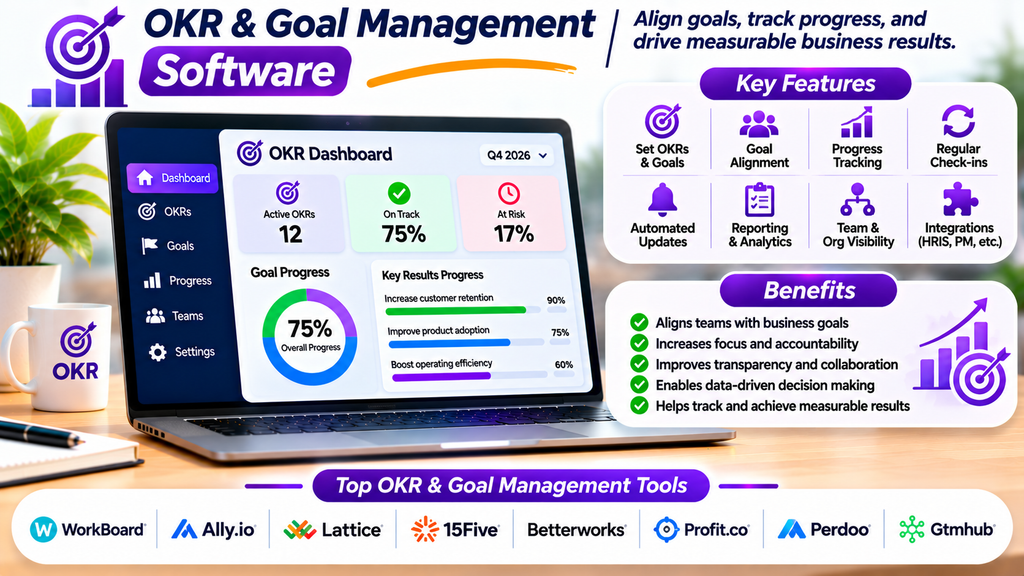
Organizations need more than ambitious plans to achieve meaningful growth. Teams must understand what they are working toward, how success will be measured, and how their daily activities contribute to larger business priorities. OKR and goal management software helps organizations connect strategic objectives with measurable outcomes, monitor progress, and improve accountability.
These platforms are useful for startups, growing businesses, and large enterprises that want to align teams around shared priorities. By making goals visible and progress easier to track, they help turn planning into consistent execution.
What Is OKR & Goal Management Software?
OKR stands for Objectives and Key Results. An objective describes what an individual, team, or organization wants to achieve, while key results define measurable outcomes that indicate progress.
OKR and goal management software provides a centralized place to set objectives, define key results, assign ownership, update progress, and review performance. Many platforms also support regular check-ins, dashboards, progress reports, and connections between company, team, and individual goals.
Top OKR & Goal Management Tools
1. WorkBoard
WorkBoard helps organizations connect strategy with execution through objectives, key results, progress tracking, and business reviews.
Best for: Enterprises that need strategic alignment and execution visibility.
2. Quantive
Quantive supports OKR planning, progress monitoring, analytics, and alignment across teams. It helps organizations understand whether their work is contributing to strategic outcomes.
Best for: Organizations seeking data-informed OKR management.
3. Betterworks
Betterworks combines goal management with performance and employee development workflows. It supports ongoing conversations and alignment between organizational objectives and employee contributions.
Best for: Businesses connecting goals with performance management.
4. Perdoo
Perdoo focuses on OKR and strategy execution, helping teams map objectives, define measurable results, and monitor progress through a shared workspace.
Best for: Teams adopting a structured OKR framework.
5. Weekdone
Weekdone combines goal tracking with regular team updates and progress reporting. It helps managers identify blockers and understand how weekly activities relate to quarterly objectives.
Best for: Small and mid-sized teams building consistent planning habits.
6. Profit.co
Profit.co offers OKR planning, goal alignment, progress tracking, and performance-related workflows. Its structured approach can help teams manage objectives throughout the planning cycle.
Best for: Organizations implementing a formal OKR process.
7. Mooncamp
Mooncamp provides tools for setting objectives, connecting goals across organizational levels, and reviewing progress. It supports teams that want a clear and organized approach to strategy execution.
Best for: Teams seeking flexible goal alignment and tracking.
8. Lattice
Lattice includes goal and OKR management alongside performance reviews, feedback, and employee development capabilities. Available features depend on the selected product plan.
Best for: Organizations linking employee goals with broader people-management processes.
Essential Features to Look For
- Goal alignment: Connect company objectives with team and individual goals.
- Measurable key results: Define clear indicators of success.
- Progress tracking: Update results and identify goals that need attention.
- Dashboards and reporting: Review progress across teams and business units.
- Regular check-ins: Encourage teams to discuss achievements, risks, and blockers.
- Ownership and accountability: Assign responsibility for each objective and key result.
- Integrations: Connect with collaboration, project management, and productivity tools.
- Permissions and visibility: Share goals with the appropriate teams while respecting access controls.
Benefits of OKR & Goal Management Software
Better Strategic Alignment
Employees can see how their work contributes to organizational priorities, reducing confusion about what matters most.
Greater Accountability
Clearly assigned owners and measurable results make responsibilities easier to understand and follow up on.
Improved Progress Visibility
Managers can identify stalled objectives, emerging risks, and areas that require additional support.
More Focused Planning
Teams can prioritize meaningful outcomes instead of measuring success only through the number of tasks completed.
Stronger Collaboration
Shared objectives help departments coordinate their efforts and reduce conflicting priorities.
Continuous Improvement
Regular reviews give teams opportunities to learn from results and adjust plans when business conditions change.
How to Choose the Right Platform
Start by defining the problem you want to solve. Some organizations need company-wide strategic alignment, while others want simpler quarterly goals and team check-ins.
Consider the following factors:
- Organization size: Choose a platform that suits your team’s structure and complexity.
- Framework support: Confirm that it supports your preferred OKR or goal-setting methodology.
- Ease of use: Employees should be able to understand goals and update progress without unnecessary effort.
- Reporting requirements: Check whether dashboards provide the level of detail leaders need.
- Integrations: Review compatibility with the tools your teams already use.
- Security and permissions: Evaluate access controls and relevant data-protection requirements.
- Pricing and scalability: Compare plan limits, available features, and expected growth.
- Trial and onboarding: Test the platform with a small group before introducing it organization-wide.
Best Practices for Successful OKR Management
- Set a limited number of meaningful objectives for each planning cycle.
- Write key results as measurable outcomes rather than lists of activities.
- Assign a clear owner to every key result.
- Review progress regularly instead of waiting until the end of the quarter.
- Make goals visible to the people who need to collaborate on them.
- Treat missed targets as opportunities to learn, not simply as reasons to assign blame.
- Connect OKRs to strategy without turning every task into a formal objective.
- Review the process after each cycle and improve it based on team feedback.
Conclusion
OKR and goal management software helps organizations translate strategy into measurable outcomes. Platforms such as WorkBoard, Quantive, Betterworks, Perdoo, Weekdone, Profit.co, Mooncamp, and Lattice offer different approaches to planning, alignment, and progress tracking.
The right choice depends on organizational size, workflow, reporting needs, integrations, and budget. Most importantly, software works best when paired with clear objectives, measurable key results, regular conversations, and a culture of continuous improvement. Feature availability can vary by product and subscription plan.
