Upgrade & Secure Your Future with DevOps, SRE, DevSecOps, MLOps!
We spend hours scrolling social media and waste money on things we forget, but won’t spend 30 minutes a day earning certifications that can change our lives.
Master in DevOps, SRE, DevSecOps & MLOps by DevOps School!
Learn from Guru Rajesh Kumar and double your salary in just one year.
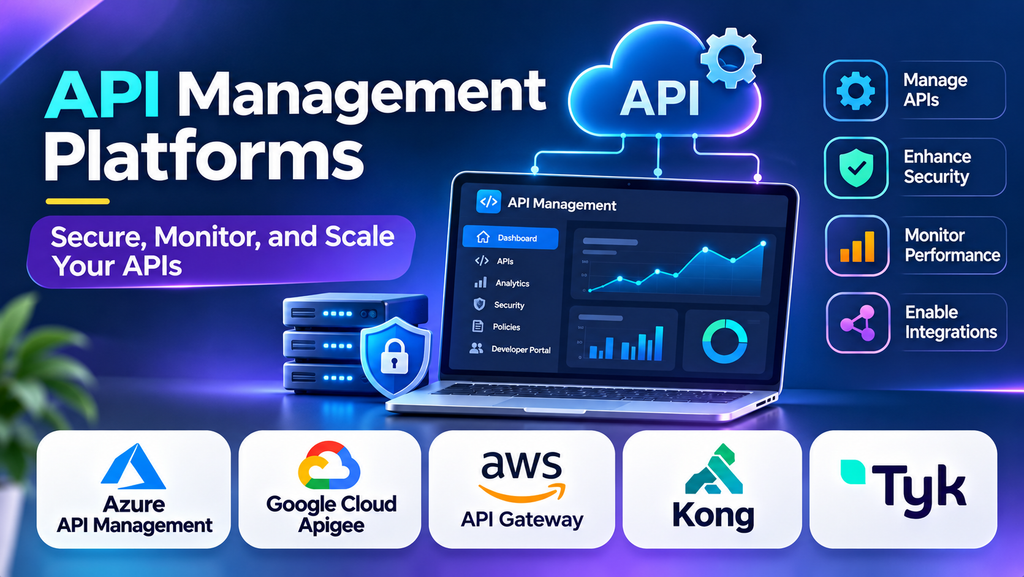
APIs allow applications, websites, and business systems to communicate with one another. As organizations build more digital services, managing these connections becomes increasingly important. Without proper controls, teams may struggle with security risks, inconsistent access policies, limited visibility, and growing maintenance demands.
API management platforms help organizations publish, secure, monitor, and govern APIs from a centralized environment. They provide tools for controlling access, applying usage limits, tracking performance, and helping developers discover and use available services.
Six API Management Platforms to Know
1. Google Apigee
Apigee is an API management platform designed to help organizations create, secure, analyze, and manage APIs. It provides capabilities for traffic policies, access control, analytics, and API lifecycle management.
It can be useful for businesses that need centralized governance and visibility across multiple APIs.
Best suited for: Organizations managing APIs across enterprise applications and cloud environments.
2. Azure API Management
Azure API Management helps organizations publish APIs through a managed gateway, apply policies, control access, and monitor usage. It integrates with Microsoft’s cloud ecosystem and supports scenarios involving existing services and backend applications.
Its policy-based controls can help teams standardize authentication, traffic handling, and API transformations.
Best suited for: Organizations using Microsoft Azure or managing APIs across connected enterprise systems.
3. Amazon API Gateway
Amazon API Gateway allows developers to create, publish, secure, and monitor APIs within Amazon Web Services. It supports common API patterns and can connect API requests to backend services, including serverless applications.
Its integration with AWS makes it useful for teams building cloud-native applications, although architecture and pricing should be evaluated against expected traffic.
Best suited for: Teams building applications and services on AWS.
4. Kong
Kong provides API gateway and API management capabilities for controlling traffic between clients and backend services. Its ecosystem supports plugins and integrations for authentication, security, observability, and traffic management.
Depending on the deployment and edition, teams can use Kong in cloud, hybrid, or self-managed environments.
Best suited for: Engineering teams that need flexible API traffic management across different environments.
5. MuleSoft Anypoint Platform
MuleSoft Anypoint Platform supports API design, integration, management, and governance. It helps organizations connect applications, data sources, and business systems through reusable APIs and integration workflows.
It is particularly relevant where API management is part of a broader enterprise integration strategy.
Best suited for: Businesses connecting many applications and data systems across an organization.
6. Tyk
Tyk offers API gateway and management capabilities, including access control, analytics, and traffic policies. Its deployment options can suit organizations that want flexibility in how API infrastructure is operated.
The right configuration depends on the required features, deployment model, and operational expertise available within the team.
Best suited for: Teams seeking flexible API management across cloud or self-managed environments.
Comparing API Management Platforms
| Platform | Key strength | Suitable for |
|---|---|---|
| Google Apigee | API governance and analytics | Enterprise API programs |
| Azure API Management | Azure integration and policy controls | Microsoft-based environments |
| Amazon API Gateway | AWS service integration | Cloud-native applications |
| Kong | Flexible gateway and plugins | Distributed and hybrid systems |
| MuleSoft Anypoint Platform | Enterprise application integration | Connected business systems |
| Tyk | Flexible API gateway deployment | Teams needing deployment choices |
Essential Features to Evaluate
Before choosing a platform, consider these capabilities:
- Security and authentication: Support for API keys, OAuth 2.0, access policies, and other suitable security controls.
- Traffic management: Rate limiting, quotas, and traffic controls to help protect backend services.
- Monitoring and analytics: Visibility into request volume, response times, errors, and usage patterns.
- Developer experience: Documentation, API catalogs, testing tools, and developer portals that make APIs easier to discover and use.
- Scalability: The ability to accommodate growing traffic and changing workloads.
- Integration: Compatibility with existing cloud services, applications, identity systems, and development workflows.
How to Choose the Right Platform
Start by identifying the environment in which your APIs run. An organization already using AWS may benefit from evaluating Amazon API Gateway, while a Microsoft-oriented business may find Azure API Management a natural fit.
For complex enterprise integrations, MuleSoft Anypoint Platform may be worth considering. Teams seeking a flexible gateway architecture can evaluate Kong or Tyk, while organizations prioritizing centralized API governance and analytics can consider Apigee.
Also compare pricing models, deployment options, operational complexity, and the skills available within your team. A platform with extensive features is not automatically the best choice if it introduces unnecessary cost or management overhead.
Best Practices for API Management
A successful API management strategy requires more than installing a gateway. Establish consistent authentication and authorization policies, protect sensitive information, monitor unusual traffic, and document APIs clearly.
Use versioning and a controlled change process to reduce disruption when APIs evolve. Test policies before deploying them, review access permissions regularly, and ensure monitoring alerts reach the appropriate team.
API management should also be part of the development lifecycle. Developers, security specialists, and operations teams need a shared understanding of how APIs are designed, released, monitored, and retired.
Conclusion
API management platforms help organizations secure their interfaces, control traffic, improve visibility, and make services easier to maintain. Google Apigee, Azure API Management, Amazon API Gateway, Kong, MuleSoft Anypoint Platform, and Tyk offer different approaches to these challenges.
The right choice depends on your existing infrastructure, security requirements, integration needs, budget, and operational capabilities. Evaluate the platforms against real workloads and test the most important requirements before making a long-term commitment.
