Upgrade & Secure Your Future with DevOps, SRE, DevSecOps, MLOps!
We spend hours scrolling social media and waste money on things we forget, but won’t spend 30 minutes a day earning certifications that can change our lives.
Master in DevOps, SRE, DevSecOps & MLOps by DevOps School!
Learn from Guru Rajesh Kumar and double your salary in just one year.
What Is Case Management?
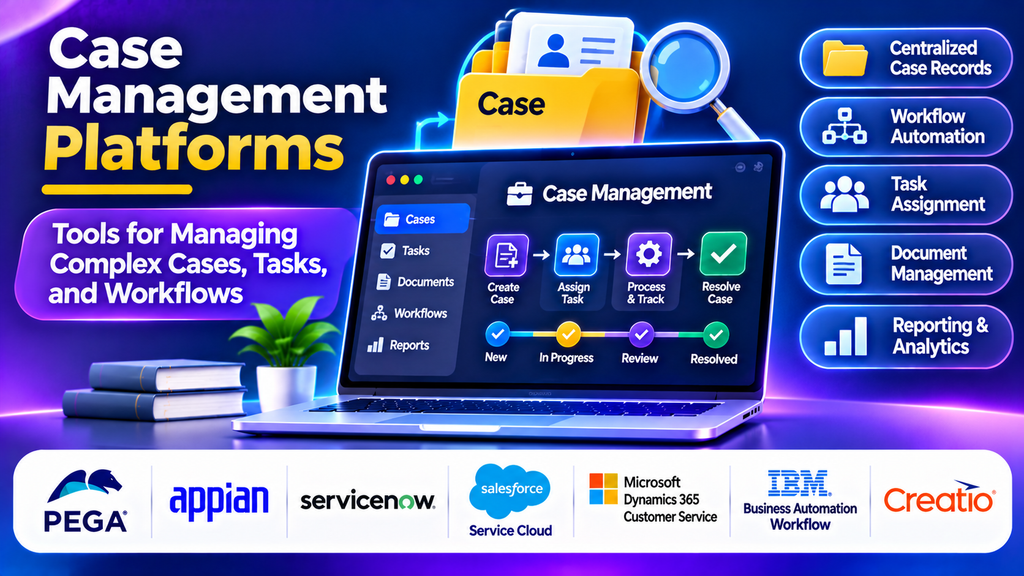
Case management is the process of organizing, tracking, and resolving cases that require multiple tasks, decisions, documents, or people. Unlike a simple linear workflow, a case may change direction as new information arrives or circumstances evolve.
Case management platforms provide a centralized workspace for handling these situations. They help teams assign responsibilities, manage documents, track progress, record decisions, and maintain an audit trail. Common applications include customer complaints, insurance claims, healthcare coordination, legal matters, employee requests, and financial services investigations.
Popular Case Management Platforms
1. Pega Platform
Pega provides case management, workflow automation, business rules, and customer engagement capabilities. Best for enterprises managing complex customer service, insurance, banking, and operational cases.
2. Appian
Appian combines case management with low-code application development and process automation. Best for customized case management applications and cross-department workflows.
3. ServiceNow
ServiceNow offers workflow and case management for IT service management, customer service, and employee service delivery. Best for organizations managing high volumes of service requests.
4. Salesforce Service Cloud
Salesforce Service Cloud supports customer service case tracking, routing, communication history, and automation. Best for customer support teams using Salesforce.
5. Microsoft Dynamics 365 Customer Service
This platform provides case tracking, customer interaction management, knowledge tools, and service workflows. Best for organizations using Microsoft business applications.
6. IBM Business Automation Workflow
IBM Business Automation Workflow supports process and case management for enterprise operations. Best for large enterprises with sophisticated workflow and governance needs.
7. Creatio
Creatio offers low-code business process automation and CRM capabilities. Best for configurable customer service workflows.
Case Management Platform Comparison
| Platform | Key Strength | Best Fit |
|---|---|---|
| Pega Platform | Complex case automation | Enterprise operations |
| Appian | Low-code case applications | Customized workflows |
| ServiceNow | Service request management | IT and employee services |
| Salesforce Service Cloud | Customer service cases | Salesforce-based support teams |
| Microsoft Dynamics 365 Customer Service | Customer issue tracking | Microsoft environments |
| IBM Business Automation Workflow | Enterprise process and case workflows | Large organizations |
| Creatio | Low-code CRM and process automation | Configurable customer workflows |
Features, pricing, and deployment options depend on the product edition and configuration.
Essential Features to Look For
- Centralized case records for details, documents, interactions, and decisions.
- Task assignment and deadline monitoring.
- Workflow automation for routing and notifications.
- Document management for forms and supporting records.
- Collaboration tools for updates and decisions.
- Reporting on case volumes, resolution times, and backlogs.
- Security controls and audit trails.
- Integrations with CRM, databases, email, and enterprise applications.
How to Choose the Right Case Management Platform
Identify case types and current process problems. Determine whether cases follow predictable steps or need flexible decisions. Assess users, case volumes, documents, integrations, reporting, and security. Evaluate usability, implementation effort, licensing, and maintenance. Pilot the platform with real cases before a wider rollout.
Best Practices for Case Management
Standardize essential case information. Assign clear ownership. Automate routine activities while preserving human judgment for complex decisions. Protect sensitive information with appropriate access controls. Monitor backlogs and resolution times. Use feedback and case data to improve processes continuously.
Conclusion
Case management platforms help organizations coordinate complex work involving multiple tasks, people, documents, and decisions. Pega, Appian, ServiceNow, Salesforce Service Cloud, Microsoft Dynamics 365 Customer Service, IBM Business Automation Workflow, and Creatio serve different operational needs. The best choice depends on case complexity, service requirements, integrations, governance, and budget. A well-implemented platform can improve collaboration, accountability, visibility, and resolution consistency.
